How Well Can Sharks Detect Blood in the Ocean?

125.5M views
•
July 28, 2019
by
Mark Rober
YouTube video player
How Well Can Sharks Detect Blood in the Ocean?

TL;DR

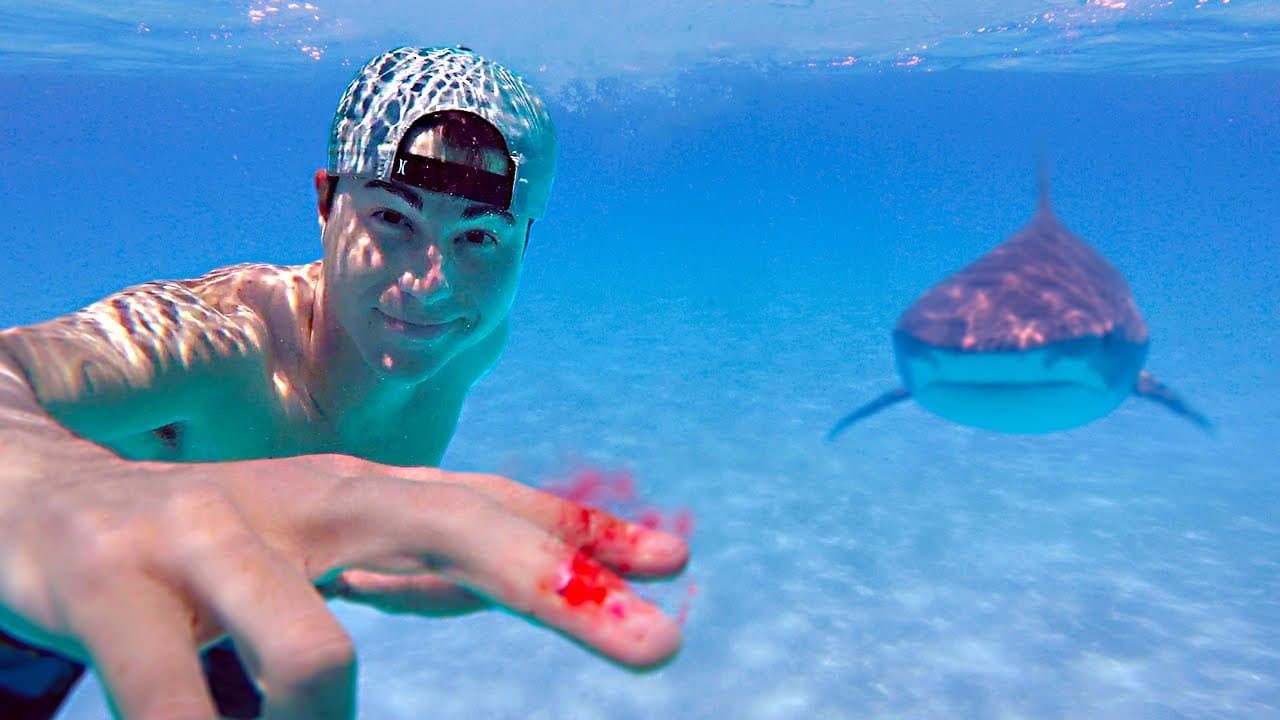
Sharks strongly preferred a large blood trail over fish oil, urine, and seawater, but they showed little interest when human blood was released at much lower rates. The experiments suggest that sharks may detect blood without responding to it, because the quantity and attractiveness of the scent determine whether they investigate.

Transcript

(water splashing) - I texted this clip to my wife who wanted proof I wasn't doing anything stupid on a recent trip to The Bahamas. Now, if you're wondering what my feet are doing in shark infested waters with a bucket of blood 20 miles away from any land, well that comes down to a conversation I had with my friends at the Discovery Channel six mont... Read More

Key Insights

  • A large cow-blood trail attracted 41 shark visits during one hour, compared with four visits to fish oil and zero visits to both urine and seawater. This result demonstrated a strong preference for blood among the four liquids tested under the experiment’s conditions.
  • Shark interest developed gradually rather than immediately after the pumps started. Little activity occurred during the first 10 minutes, and the fish oil, urine, and control boards remained especially quiet after 20 minutes, despite sharks already being present within roughly 50 yards.
  • The experiment used four surfboards placed equal distances from the boat, with a three-meter radius around each board defining a direct visit. Drone footage provided the record used to count how many sharks approached each liquid during the one-hour release period.
  • Remote-controlled pumping allowed every board to begin releasing liquid at the same time. Waterproof receiver boxes contained batteries, a custom printed circuit board, and two Arduinos, while yellow indicator lights confirmed from the boat that the corresponding pumps were operating.
  • Peristaltic pumps moved blood and urine without allowing the liquids to touch valves or other pump mechanisms. Rollers pinched and pushed the tubing, providing a sterile delivery method and enabling the bags to be emptied consistently into the surrounding ocean water.
  • Urine attracted zero direct shark visits in the first experiment, matching the seawater control. Under these test conditions, the result did not support the reported surfer belief that urinating in a wetsuit creates a scent that draws sharks toward the swimmer.
  • The second experiment released human blood at two controlled rates: one drop per minute and an average of one drop every four seconds. The faster rate was still 40 times lower than the blood release used during the first experiment.
  • Blood detection and behavioral interest are not necessarily the same response. The description proposes that sharks may smell a small amount without finding the quantity interesting, and it notes that a future comparison of human blood with fish blood would address another unanswered variable.

Install to Summarize YouTube Videos and Get Transcripts

Explore YouTube Video Summarizer or Get YouTube Transcript Extractor

Questions & Answers

Q: Can sharks smell a drop of blood in the ocean?

The experiment did not establish a maximum detection distance or prove that every detected drop causes a visible response. When human blood was released at one drop per minute, the boards remained quiet during the reported observations. The description suggests sharks may smell blood at low concentrations without investigating because the quantity is not sufficiently interesting to them.

Q: Do sharks prefer blood over fish oil, urine, and seawater?

Sharks showed a much stronger behavioral response to blood than to the other tested liquids. During the one-hour comparison, the cow-blood board received 41 direct visits, the fish-oil board received four, and both the urine and seawater boards received zero. Visits were counted when sharks entered a three-meter radius around a board in the drone footage.

Q: Does human urine attract sharks?

Human urine did not attract any direct shark visits during this experiment. Two liters were pumped into the ocean over one hour, yet the urine board received zero visits, the same result as the seawater control. The finding applies to the conditions tested and directly challenged the reported belief that urinating in a wetsuit attracts sharks.

Q: How was the shark blood experiment controlled?

Four surfboards were positioned equal distances from the boat and assigned cow blood, fish oil, urine, or seawater. The seawater served as a control for interest in the board itself. Radio-controlled pumps began simultaneously, each liquid was released over one hour, and drone footage was reviewed using a three-meter radius to define and count visits.

Q: How quickly did sharks respond to the cow blood?

The sharks did not immediately swarm the blood board. After 10 minutes, there was little activity around any board, even though multiple sharks were already nearby. Around 20 minutes, smaller fish began appearing near the blood, followed by one or two sharks. Activity became substantially stronger with about 15 minutes remaining in the hour.

Q: How much blood was released during the first experiment?

The blood board released two liters of cow blood over the course of one hour. The transcript compares that amount with the five liters of blood in a human body and states that losing two liters is fatal. Even with this large quantity and sharks nearby, the behavioral response developed gradually instead of producing an immediate feeding frenzy.

Q: Why were peristaltic pumps used for the experiment?

Peristaltic pumps provided a sterile way to transfer blood and urine from sealed bags into the ocean. The liquid remained inside tubing and did not touch a valve or internal pump component. Rollers repeatedly pinched and pushed the tubing, while remote electronics synchronized the pumps and indicator lights confirmed that each unit was working.

Q: What did the human blood experiment test?

The second experiment compared a seawater control with two release rates of human blood. One board delivered one drop per minute, while another averaged one drop every four seconds. The faster rate was 40 times lower than the first experiment’s blood flow. Despite many sharks remaining nearby, the boards appeared quiet during the reported observations.

Summary & Key Takeaways

  • Four equally spaced surfboards released two liters of cow blood, fish oil, urine, or seawater over one hour. Remote-controlled peristaltic pumps started simultaneously, while drone footage recorded every shark entering a three-meter radius around each board. This design compared scent responses while using seawater as a control.

  • The cow blood produced a visible trail and gradually attracted fish and sharks. Investigations remained limited during the early part of the hour, but activity increased near the end. The final footage showed 41 shark visits to the blood board, four to fish oil, and none to urine or seawater.

  • A second experiment compared seawater with human blood released at one drop per minute and one drop every four seconds. Despite many sharks remaining nearby, the boards appeared quiet halfway through the hour. The results support the idea that detecting blood does not automatically make its concentration interesting enough to investigate.


Read in Other Languages (beta)

Share This Summary 📚

Explore More Summaries from Mark Rober 📚