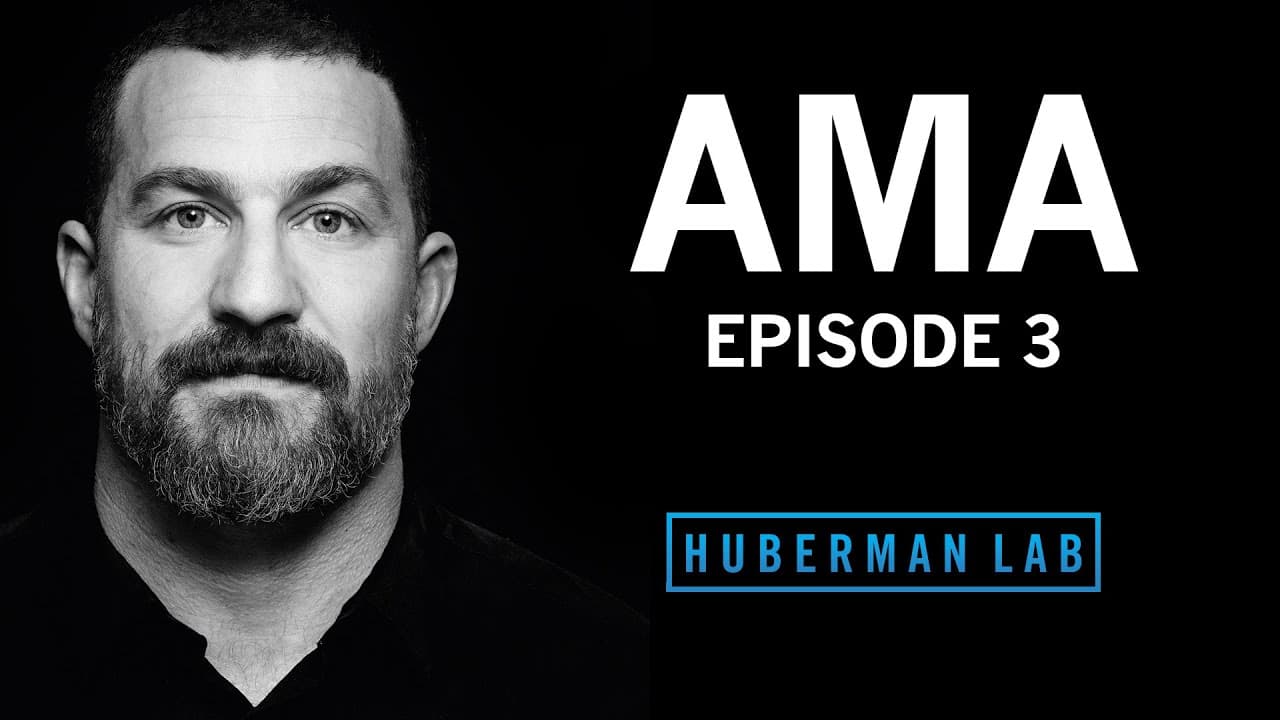
AMA #3: Adaptogens, Fasting & Fertility, Bluetooth/EMF Risks, Cognitive Load Limits & More
TL;DR
Adaptogens are compounds, including vitamins, micronutrients, and supplements, that help buffer stress and promote overall well-being.
Transcript
ANDREW HUBERMAN: Welcome to the Huberman Lab podcast, where we discuss science and science-based tools for everyday life. [MUSIC PLAYING] I'm Andrew Huberman, and I'm a professor of neurobiology and ophthalmology at Stanford School of Medicine. Today is an ask-me-anything or AMA episode, which is part of our premium subscriber content. Our premium ... Read More
Key Insights
- 😋 Adaptogens can be obtained from food, supplements, and through behavioral tools to reduce stress.
- 🥬 Dark leafy greens and cruciferous vegetables contain powerful adaptogens that promote cellular health and reduce stress.
- 🥡 Ashwagandha is a potent adaptogen that can reduce cortisol levels when taken in the afternoon and evening.
- 🏃♂️ Lion's mane and chaga mushrooms have shown to reduce cortisol and anti-inflammatory cytokines, supporting stress relief.
- 🧑🏭 Behavioral tools like mindfulness meditation, breathwork, and yoga nidra can also act as adaptogens by reducing cortisol and promoting relaxation.
- 🧑⚕️ It is important to strike a balance between reducing cortisol and maintaining optimal levels for daily functioning and health.
- ❓ Caloric intake should be sufficient to avoid chronic stress due to calorie restriction.
Install to Summarize YouTube Videos and Get Transcripts
Explore YouTube Video Summarizer or Get YouTube Transcript Extractor
Questions & Answers
Q: What are adaptogens?
Adaptogens are compounds, typically found in food, supplements, or through certain behaviors, that help the body adapt to stress by reducing reactive oxygen species, inflammatory cytokines, and cortisol levels.
Q: How can nutrition be an adaptogen?
Dark leafy greens and cruciferous vegetables contain adaptogenic compounds that reduce stress by reducing reactive oxygen species and inflammatory cytokines in the body.
Q: What is the recommended dosage for ashwagandha?
Studies have shown that taking 300 milligrams of ashwagandha twice a day can significantly reduce cortisol levels. It is recommended to take it in the afternoon and evening.
Q: How long should one take ashwagandha?
It is recommended to take ashwagandha for a maximum of 30 days, particularly during periods of moderate to extreme stress. Afterward, it is advisable to take a break for at least two to four weeks.
Q: Can supplements like lion's mane and chaga be taken together?
Yes, supplements like lion's mane and chaga can be taken together for additional stress reduction. However, it is important to cycle off them after 30 days and resume after a break.
Summary & Key Takeaways
-
Adaptogens are compounds that help the body adapt and buffer stress. They can be found in food, supplements, and through certain behaviors.
-
Dark leafy greens and cruciferous vegetables contain adaptogenic compounds that reduce reactive oxygen species and inflammatory cytokines, promoting cellular health.
-
Ashwagandha is a potent adaptogen that can reduce cortisol levels, while lion's mane and chaga mushrooms have shown to reduce cortisol and anti-inflammatory cytokines.
Read in Other Languages (beta)
Share This Summary 📚
Summarize YouTube Videos and Get Video Transcripts with 1-Click
Try YouTube Summary with ChatGPT & Claude or YouTube Transcript Generator
Explore More Summaries from Andrew Huberman 📚


Summarize YouTube Videos and Get Video Transcripts with 1-Click
Try YouTube Summary with ChatGPT & Claude or YouTube Transcript Generator