How to Stop Being Busy and Make Real Progress
TL;DR
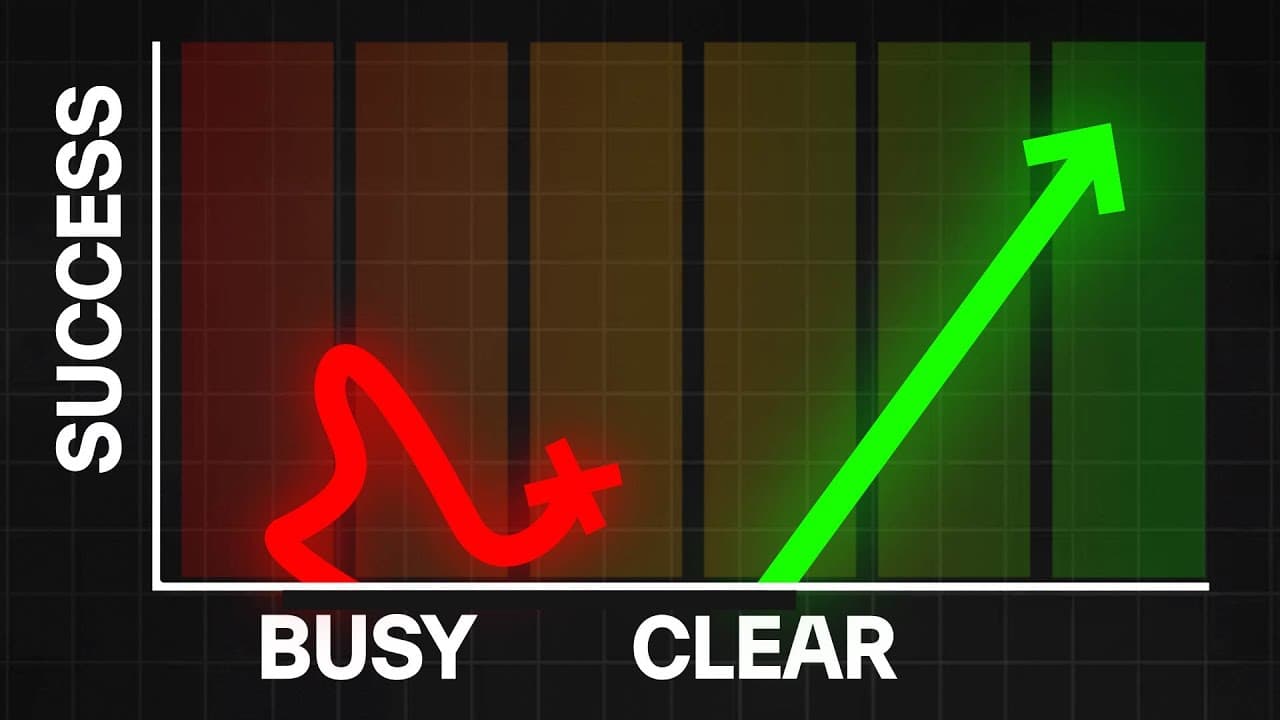
Real progress comes from choosing actions that have the strongest causal link to your desired outcome, not from maximizing busyness or focus. Keep the goal in working memory, evaluate tasks by their predicted results, and continuously redirect attention toward the shortest effective path. Flow becomes useful only when it is allocated to work that advances the target.
Transcript
Top performers aren't busier than you. They're just clearer. They know exactly what's worth doing and everything that isn't. If you're constantly busy, constantly stressed, and still not making real progress while others around you are pulling ahead, this will explain exactly why and how to fix it. Now, I'm Rian Doris, founder and CEO of flowstate.... Read More
Key Insights
- Busyness is not reliable evidence of progress because a person can complete many demanding tasks without affecting the outcome they actually need. The relevant measure is whether present activity has a clear causal relationship with the stated goal, not how much effort, stress, or concentration it requires.
- Misallocated flow is deep concentration directed toward work that has no direct link to the intended outcome. It is especially deceptive because the person feels absorbed and performs well, even while the selected task produces little or no meaningful movement toward the actual goal.
- Goal directedness is sensitivity to the relationship between an action and its predicted outcome. A highly goal-directed person repeatedly asks whether doing a particular task will produce the desired result, then favors the shortest effective path instead of choosing work merely because it appears productive.
- The goal-directed spectrum measures how precisely moment-to-moment actions align with long-term goals. People at the low end are reactive or irrelevant, those in the middle are frequently pulled off course, and those at the high end allow their goals to shape nearly every consequential decision.
- Minute-decade alignment is the condition in which daily activity directly serves long-term aims. Strong alignment does not require doing more tasks. It requires selecting fewer actions with stronger causal links to the destination, so less total movement can still produce a more accurate result.
- Peak performers are distinguished by the target of their focus, not merely its intensity or duration. They continuously recalibrate their attention, using each hour, meeting, and decision point to correct course and remain aligned with the result they are pursuing.
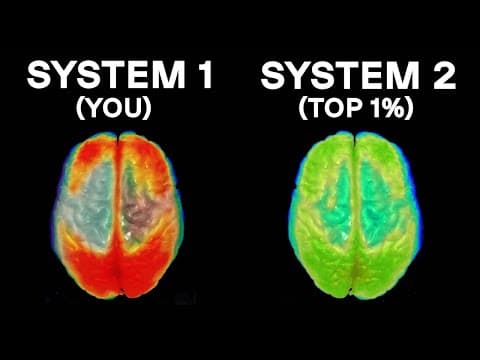
- The stimulus-response system is fast, automatic, and oriented toward conserving energy. It encourages reactions such as checking a notification, responding to a sound, or switching tasks when bored, which allows immediate circumstances to direct behavior instead of an internally maintained objective.
- The action-outcome system evaluates choices according to the results they are expected to produce. The prefrontal cortex supports strategic planning, the hippocampus connects past experience with future scenarios, and the basal ganglia helps select actions according to predicted outcomes rather than habitual responses.
Install to Summarize YouTube Videos and Get Transcripts
Explore YouTube Video Summarizer or Get YouTube Transcript Extractor
Questions & Answers
Q: How can I stop being busy without making real progress?
Start by defining the result you need, then evaluate every proposed task by its causal connection to that result. Ask which available action would move you closer faster than anything else you could do. Prioritize that action, keep the goal in working memory, and reassess at each decision point. The objective is not to maximize completed tasks, but to repeatedly choose work that directly changes the desired outcome.
Q: What is misallocated flow state?
Misallocated flow state is deep focus and full immersion applied to tasks that do not directly advance the goal being pursued. It feels productive because concentration and performance are genuinely high, but the work produces little meaningful progress. The example given is focusing on website redesign or future personal-brand content while neglecting warm prospects who could sign contracts and address an urgent need for income.
Q: How do I identify the most goal-directed task?
Identify the outcome first, then compare possible tasks according to what each one is likely to produce. Look for the shortest cause-and-effect path between action and result. For a business seeking revenue, that might mean contacting warm leads, increasing outreach, improving the offer, or shipping a retention feature. A task should rank highly because of its predicted effect, not because it is difficult, interesting, or conventionally productive.
Q: What is the goal-directed spectrum?
The goal-directed spectrum measures how precisely a person's moment-to-moment actions align with long-term goals. At the low end, someone may work hard but select irrelevant tasks or react to whatever appears. In the middle, the person has goals but is often pulled away from them. At the high end, decisions are shaped primarily by desired outcomes, with frequent adjustments that keep behavior on the most direct available path.
Q: Why is intense focus insufficient for achieving a goal?
Intense focus only increases the quality or speed of the activity currently being performed. It does not guarantee that the activity matters. Flow can therefore act like fuel for rapid movement in the wrong direction. Goal attainment depends first on selecting a target-relevant action with a clear causal link to the outcome. Focus becomes valuable after that selection, because it then strengthens execution on work capable of producing progress.
Q: How does action-outcome thinking improve performance?
Action-outcome thinking improves performance by making predicted results the basis for choosing behavior. Instead of responding automatically to notifications, boredom, meetings, or appealing tasks, a person evaluates whether doing X is likely to achieve Y. This creates an internal direction for attention, helps filter distractions that do not contribute to the outcome, and supports continuous course correction as circumstances change throughout the day.
Q: Which brain regions support goal-directed behavior?
Goal-directed behavior relies on several brain regions working together. The prefrontal cortex acts as a strategic planner by keeping the goal in working memory while possible paths are evaluated. The hippocampus connects past experiences with future scenarios, helping a person envision a direct route. The basal ganglia contributes to selecting specific actions based on predicted outcomes instead of relying only on familiar or habitual responses.
Q: Does becoming more goal directed eliminate free time?
Becoming more goal directed does not mean behaving like a robot or orienting every part of life around productive work. The concept concerns allowing goals to drive relevant daily decisions and removing actions that waste time without advancing those goals. Highly goal-directed people may gain more free time for spontaneity because they spend less energy on unnecessary activity and complete consequential work through fewer, more precisely selected actions.
Summary & Key Takeaways
-
Busyness can conceal a failure to connect present work with desired results. Allan became highly focused on website redesign and personal-brand content while neglecting warm prospects who could generate immediate income. His experience illustrates misallocated flow, where excellent concentration is directed toward tasks that feel productive but have no direct relationship to the urgent goal.
-
The goal-directed spectrum describes how precisely moment-to-moment behavior aligns with long-term objectives. People at the low end react to circumstances or pursue irrelevant activity, while people at the high end perform fewer but more consequential tasks. Minute-decade alignment occurs when daily actions serve long-term aims through a clear chain of cause and effect.
-
Goal-directed behavior uses an action-outcome system that predicts what each choice is likely to produce. The prefrontal cortex maintains the goal, the hippocampus connects previous experiences to possible futures, and the basal ganglia helps select actions based on predicted outcomes. Repeatedly using this system can make outcome-based filtering a more instinctive response over time.
Read in Other Languages (beta)
Share This Summary 📚
Summarize YouTube Videos and Get Video Transcripts with 1-Click
Try YouTube Summary with ChatGPT & Claude or YouTube Transcript Generator
Explore More Summaries from Rian Doris 📚

Summarize YouTube Videos and Get Video Transcripts with 1-Click
Try YouTube Summary with ChatGPT & Claude or YouTube Transcript Generator