A Simple Trick That Makes Hard Work Feel Easy
TL;DR
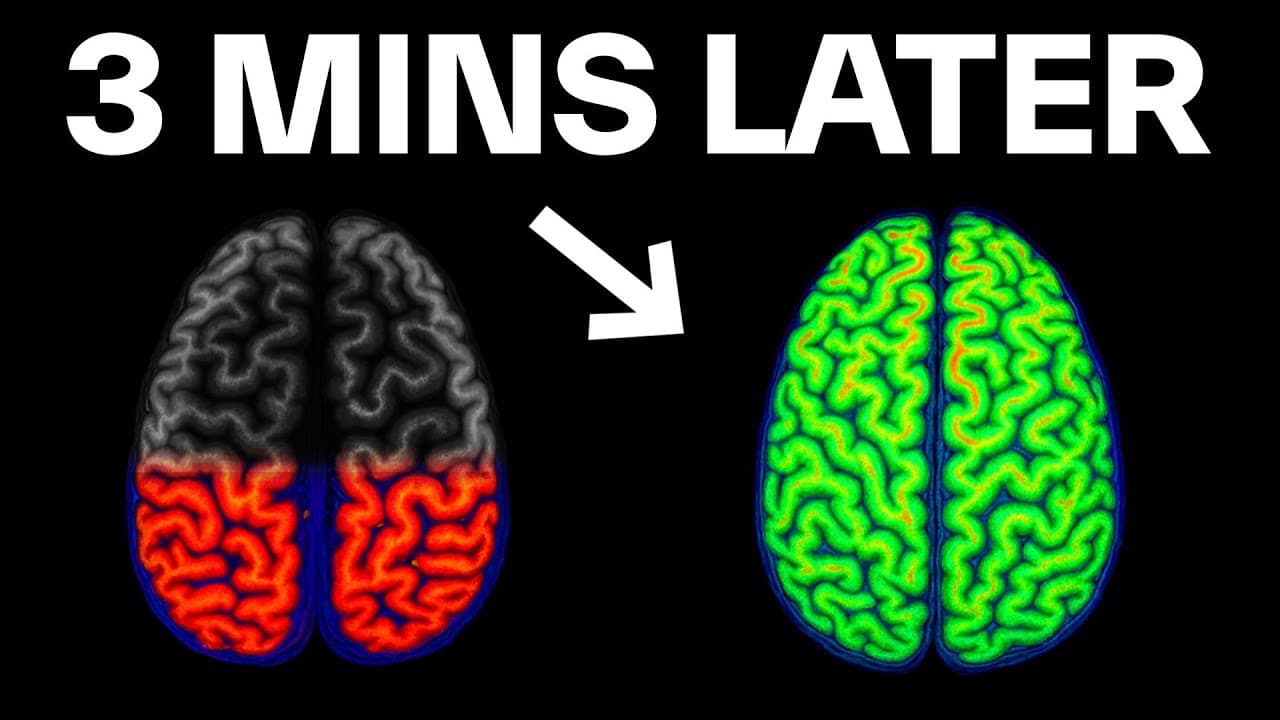
Hard work can feel easier when you change your physical position or move to a different workspace. The speaker’s rule of thumb is to change positions to reduce perceived physical exertion and change places to reset perceived mental effort; after three hours at a desk, a move to the backyard may make the work feel closer to 90 minutes. Read on for practical ways standing, walking, and environmental novelty can renew focus.
Transcript
our ancestors had a way to reboot their focus energy and productivity automatically even if they were utterly exhausted and now they did this out of necessity but you can do the same thing intentionally and by harnessing this ancient adaptation you can get three days of work done in one my name is Ryan DARS co-founder and CEO for research Collectiv... Read More
Key Insights
- 🧘 Changing positions from sitting to standing or walking can improve circulation, alertness, and cognitive function.
- 💦 Novelty in the work environment can renew motivation and enhance problem-solving abilities.
- 💦 Walking while working can stimulate flow state and increase focus on the present moment.
- 🍳 Regular breaks that boost dopamine can recharge energy levels and improve overall productivity.
- 😫 Setting up multiple work environments with minimal distractions can increase autonomy and control, facilitating flow state.
- 👋 Continuity is not always the best strategy for maintaining focus; novelty can combat fatigue and increase productivity.
- 🥺 Consistently changing positions and places can reset perceived effort and exertion, leading to sustained productivity throughout the workday.
Install to Summarize YouTube Videos and Get Transcripts
Explore YouTube Video Summarizer or Get YouTube Transcript Extractor
Questions & Answers
Q: What simple trick can make hard work feel easier?
Change your physical position or move to a different work environment. The speaker says a stiff body makes work feel hard, while a loose body makes it feel easy, and that environmental novelty can renew focus, energy, and motivation.
Q: How should you reduce perceived exertion and perceived effort?
The rule of thumb is to change positions to reduce perceived exertion, which is primarily physical. To reset perceived effort, which is primarily mental, change places.
Q: Why can moving to a new workspace restore focus?
The speaker explains that an unchanging environment can push the brain toward energy conservation, weakening effort, productivity, and creative problem-solving over time. A new environment signals potential resources, prompting a dopamine response tied to greater alertness, energy, motivation, and focus.
Q: Can changing workplaces make a long work session feel shorter?
Yes, according to the example in the transcript. After focusing for three hours at a desk, moving to the backyard may make the work feel as though it lasted only 90 minutes.
Q: How does body position affect work performance?
Remaining seated and physically stiff can create pain, fatigue, and poor posture that interfere with attention. Standing up, moving around, or otherwise changing position can reduce perceived physical exertion and help work feel easier.
Q: What happened when the speaker worked 80 hours a week at a desk?
He became increasingly hunched, found it harder to stand straight, experienced lower-back cramps, and felt his glutes go numb. The resulting physiological fatigue slowed him down when he most needed attention.
Q: Why does the speaker compare a new workspace to an oasis?
He describes an early human crossing a monotonous landscape about 250,000 years ago and then encountering an oasis with possible food and water. In his explanation, that novelty shifts the brain from conserving energy to exploring, much like changing environments during modern work.
Q: What practical workspace changes can renew productivity?
Stand up, move around, change your perspective, or relocate from a desk to another place such as the backyard. These changes introduce novelty, loosen the body, and can renew focus by resetting perceived exertion or mental effort.
Summary & Key Takeaways
-
Our ancestors naturally reset their energy and productivity by changing their environment, which we can intentionally replicate to get more work done.
-
Sitting for extended periods can lead to physical discomfort and decreased productivity, while changing positions and places can renew focus and energy.
-
Standing while working can improve posture, circulation, and cognitive function, while walking can enhance creativity and access to flow state.
Read in Other Languages (beta)
Share This Summary 📚
Summarize YouTube Videos and Get Video Transcripts with 1-Click
Try YouTube Summary with ChatGPT & Claude or YouTube Transcript Generator
Explore More Summaries from Rian Doris 📚

Summarize YouTube Videos and Get Video Transcripts with 1-Click
Try YouTube Summary with ChatGPT & Claude or YouTube Transcript Generator