Can a president declare a national emergency over elections
TL;DR
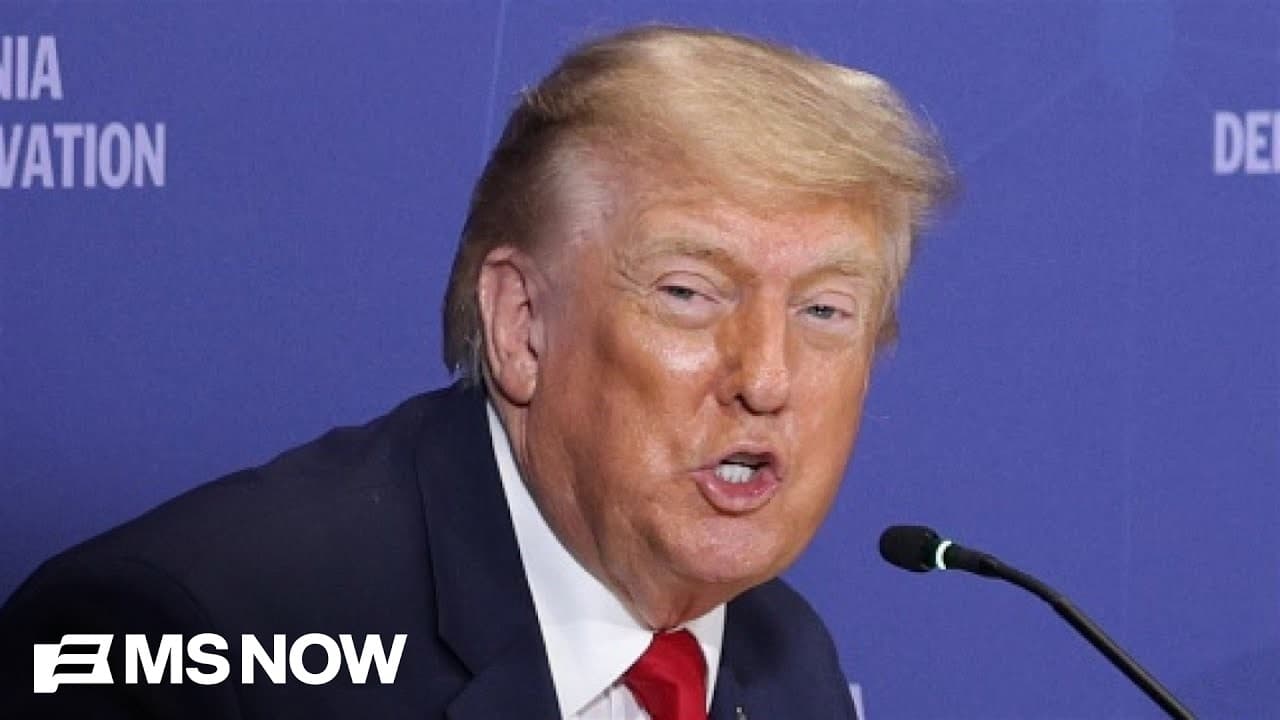
A president cannot unilaterally seize election control by declaring a national emergency. The Supreme Court’s three-part test, from the Truman steel case, requires Congress to be silent or supportive, which is not the case with elections. Legal challenges would follow immediately, and executive power over elections is not authorized by emergency statutes.
Transcript
Joining us Hofstra University law profess James Sample, MSNOW senior White House HIGH COBB WARNED LAST NIGHT THAT THAT WAS A PREDICATE FOR DONALD TRUMP TO DECLARE A NATIONAL EMERGENCY. WHAT REPORTING DO YOU HAVE? THREE AND A HALF MONTHS FROM THE MIDTERM ELECTIONS, THE PRESIDENT OF THE UNITED STATES TOLD THE AMERICAN PUBLIC THAT THEIR VOTING MA... Read More
Key Insights
- The three-part Truman test determines presidential emergency authority based on Congress silence, support, or opposition.
- Presidents have limited power over elections, and this power is not granted by emergency declarations.
- Declaring an emergency to control elections would trigger lawsuits and possible injunctions.
- The Save America Act is cited as a partisan measure that Congress has repeatedly rejected, limiting executive reach.
- States hold primary authority over elections, reducing federal leverage in the process.
- Intelligence disclosures can be selectively declassified, but do not validate extraordinary actions over elections.
- Declassified documents may mislead without supporting evidence, underscoring the risk of executive overreach.
- Foreign actors may influence or seek to influence elections, but that does not justify unilateral federal intervention.
- More videos from this channel:
- More from this channel: MS NOW
Install to Summarize YouTube Videos and Get Transcripts
Explore YouTube Video Summarizer or Get YouTube Transcript Extractor
Questions & Answers
Q: What is the core legal barrier to using a national emergency to control elections?
The core barrier is that presidential emergency powers are constrained by a three-part test from a Supreme Court opinion. Congress must be silent, supportive, or not oppose the action for the president to have a chance at authority. Elections are under state control, and no statute grants broad executive power over them during an emergency. This makes unilateral action legally risky and likely unlawful.
Q: What does the Truman three-part test require in practice?
In practice, the test checks whether Congress has been silent on the action, whether Congress supports it, or whether Congress has spoken against it. If Congress has rejected the idea, the president lacks the necessary backing to relocate constitutional authority or override legislative power. This framework keeps executive power in check during emergencies.
Q: Why are states critical in the discussion of emergency election power?
States retain primary authority over elections, including how voting machines, drop boxes, and certification are handled. A federal emergency would not automatically override state control, and states can refuse federal provisions, which limits the practical effect of any federal emergency declaration on elections.
Q: What role would lawsuits play if an emergency were declared over elections?
Lawsuits would seek injunctive relief to block the emergency actions. Courts would review the legality of the declaration, the scope of powers claimed, and potential violations of constitutional structure. Given the elevated scrutiny around elections, quick judicial intervention is likely to halt or constrain any overreach.
Q: What does the transcript suggest about declassified intelligence and its use in this context?
The transcript argues that declassification can reveal selective, unverified claims and may omit corroborating information. It cautions that presenting incomplete intelligence to justify extraordinary actions can mislead the public and create a false sense of urgency, undermining trust and legal norms.
Q: How is public rhetoric described in relation to election integrity in the video?
The discussion points to rhetoric that implies threats to election integrity while noting contradictions in supporting certain election outcomes. It emphasizes that accusations of rigging must be matched by lawful processes and that the executive cannot unilaterally fix or seize control of elections without constitutional authorization.
Q: What is implied about the Save America Act in this context?
The Save America Act is described as an example of a policy proposal repeatedly rejected by Congress, signaling that there is limited or no legislative support for expanding presidential powers over elections. This reinforces the view that emergency measures would lack the necessary congressional backing to be constitutional.
Q: What are the potential political risks of attempting to declare a national emergency over elections?
The risks include immediate legal challenges and injunctions, political backlash for overreach, and the undermining of trust in the electoral system. The legal framework and interstate dynamics favor preserving state control and congressional oversight, making unilateral emergency moves both dangerous and unlikely to succeed.
Summary & Key Takeaways
-
A summary of the legal framework shows Congress must be silent or supportive for presidential emergency powers, which is not the case for elections. The discussion highlights how states retain primary control over elections and how lawsuits would promptly challenge any emergency move.
-
The transcript notes that intelligence and declassification do not create a usable basis for emergency actions over elections and emphasizes limits on executive power in this domain.
-
The analysis concludes that attempts to declare an emergency to run elections would face immediate legal and practical obstacles, with courts likely to intervene to prevent overreach.
Read in Other Languages (beta)
Share This Summary 📚
Summarize YouTube Videos and Get Video Transcripts with 1-Click
Try YouTube Summary with ChatGPT & Claude or YouTube Transcript Generator
Explore More Summaries from MS NOW 📚
Summarize YouTube Videos and Get Video Transcripts with 1-Click
Try YouTube Summary with ChatGPT & Claude or YouTube Transcript Generator