How to Make Transparent Wood Successfully
TL;DR
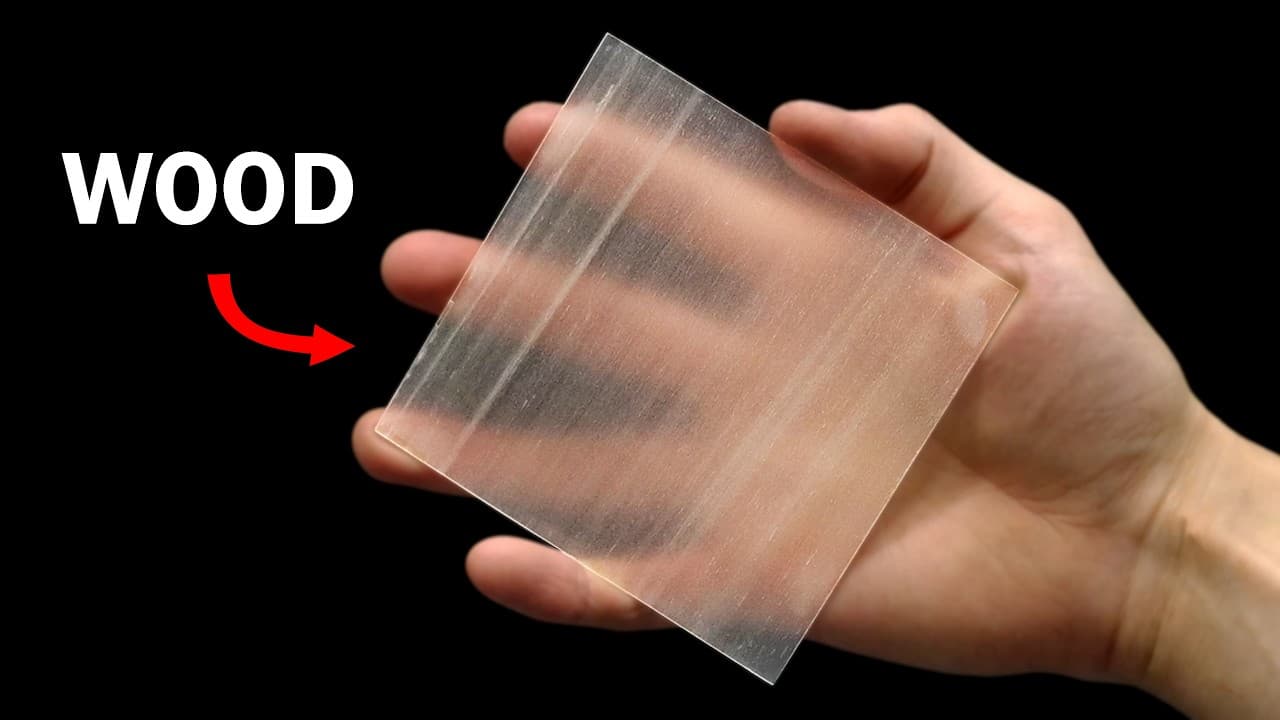
To successfully make transparent wood, start by treating balsa wood with a chemical solution that removes lignin and bleaches it. Then, infuse the wood with methyl methacrylate (MMA) through a vacuum process, ensuring correct polymerization and refining thickness for optimal clarity. Finally, polish the finished piece to enhance transparency and reveal the wood grain.
Transcript
this video has been sponsored by kiwico but more about them later a couple years ago i attempted to make transparent wood which is supposed to be almost as clear as glass but much stronger and shatterproof my main reason for making it though was mostly just because i thought it looked cool my results were kind of okay and i was able to make a few a... Read More
Key Insights
- 🌲 Making transparent wood is a complex and challenging process.
- ❓ The choice of materials and chemicals used greatly affects the outcome.
- ❓ Achieving transparency requires careful treatment, including chemical removal of lignin and precise polymerization of MMA.
- 🌲 The thickness of the wood pieces and proper polishing techniques are crucial for better results.
- 😒 The use of mold release and weight distribution in the process can help prevent issues with adherence and warping.
- 🙂 Transparent wood still has some limitations, such as slight imperfections and a yellow tint.
- 🤩 Patience, experimentation, and learning from failures are key to improving the process.
Install to Summarize YouTube Videos and Get Transcripts
Explore YouTube Video Summarizer or Get YouTube Transcript Extractor
Questions & Answers
Q: What was the motivation behind attempting to make transparent wood?
The creator's main reason for attempting this experiment was because they thought it looked cool.
Q: Why did the creator choose to try a different method from previous attempts?
The previous method resulted in cracked and warped pieces, so the creator wanted to find a more successful approach.
Q: What challenges did the creator face during the process?
The creator faced challenges with the wood cracking, the acrylic not adhering properly, and difficulties in achieving transparency.
Q: How did the creator achieve transparency in the final pieces?
The creator used a combination of chemical treatments, vacuum cycles, and polishing to achieve a more transparent result.
Q: What were the advantages of using methylmethacrylate (MMA) instead of epoxy resin?
MMA does not have the yellowing issue that epoxy resin often has when exposed to UV light, making it a more suitable choice for potential glass window replacements.
Q: What were some of the lessons learned from this experiment?
The thickness of the wood pieces, the use of mold release on glass plates, and controlling the pre-polymerization process were all important factors in achieving better results.
Q: What were the limitations of the final pieces of transparent wood?
While the transparency improved, there were still slight imperfections, a yellow tint, and inconsistencies in the quality of the finished pieces.
Q: What are the future plans for the creator regarding transparent wood?
The creator intends to scale up the process and potentially create a full-size window, but for now, they are focused on completing their new lab space.
Summary & Key Takeaways
-
The creator attempts to make transparent wood using a different method than previously tried.
-
The process involves treating balsa wood with chemicals to remove lignin and bleach it.
-
The wood is then infused with methylmethacrylate (MMA) to create an acrylic-like material.
Read in Other Languages (beta)
Share This Summary 📚
Summarize YouTube Videos and Get Video Transcripts with 1-Click
Try YouTube Summary with ChatGPT & Claude or YouTube Transcript Generator
Explore More Summaries from NileRed 📚

Summarize YouTube Videos and Get Video Transcripts with 1-Click
Try YouTube Summary with ChatGPT & Claude or YouTube Transcript Generator