What Is Data Governance and Why Is It Important?
TL;DR
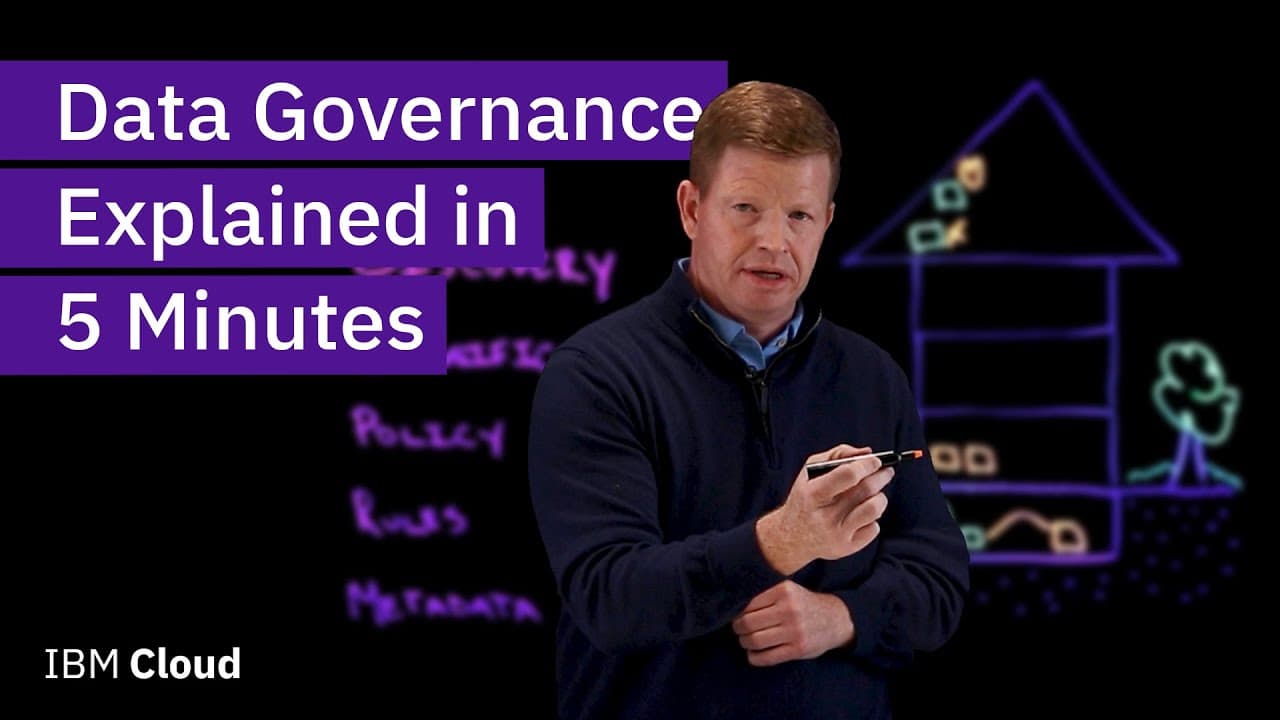
Data governance is crucial for efficiently managing and utilizing data, similar to organizing a house. It involves discovering, classifying, and applying rules to data, supported by metadata for better accessibility. Automating this process can significantly enhance data value and ensure compliance.
Transcript
hi today we're going to talk about data governance now i know some of you are thinking this is really either boring or super complex but we're going to use an analogy today to help drive home some of the key concepts around data governance after all data governance is foundational and critical to helping you take advantage of your data in the ai wo... Read More
Key Insights
- 📏 Data governance involves the process of data discovery, classification, rules enforcement, and metadata management.
- 🌍 It is essential to understand both known and unknown data assets to effectively leverage data in the AI world.
- 📏 Applying policies and rules helps organizations maintain data quality and compliance.
- ♿ Metadata improves data accessibility and usability.
- ⌛ Automating data governance processes can bring significant value by saving time and resources.
- 📼 Data governance enables organizations to monetize their data assets.
- 🏘️ The concepts learned from cleaning out a house can be analogously applied to understanding data governance.
Install to Summarize YouTube Videos and Get Transcripts
Explore YouTube Video Summarizer or Get YouTube Transcript Extractor
Questions & Answers
Q: What is the process of data discovery in data governance?
Data discovery is the process of understanding and identifying all the data assets across different repositories, including on-premises, cloud, and SaaS applications. It involves gaining insights into what data exists, even if it is unknown or hidden.
Q: How does data classification work in data governance?
Data classification in data governance involves assigning different categories or labels to data, such as customer data, product data, or financial data. This helps in organizing and managing data, ensuring it is handled according to specific guidelines.
Q: What role do rules play in data governance?
Rules in data governance are guidelines that help enforce data policies. For example, personally identifiable data like social security numbers must be masked. Rules help ensure compliance and consistency in data handling.
Q: What is the importance of metadata in data governance?
Metadata in data governance serves as a description of data assets, including their source, content, and characteristics. It functions like a card catalog in a library, making it easier to find and use data when needed.
Summary & Key Takeaways
-
Data governance is like cleaning out a house, where the first step is understanding what data assets you have (discovery).
-
The next step is classifying the data into categories and applying policies and rules for handling it.
-
Metadata plays a crucial role in describing the data, making it easier to find and use, and automating the data governance process can bring significant value to organizations.
Read in Other Languages (beta)
Share This Summary 📚
Summarize YouTube Videos and Get Video Transcripts with 1-Click
Try YouTube Summary with ChatGPT & Claude or YouTube Transcript Generator
Explore More Summaries from IBM Technology 📚






Summarize YouTube Videos and Get Video Transcripts with 1-Click
Try YouTube Summary with ChatGPT & Claude or YouTube Transcript Generator