What is the quantum metric bending electrons inside matter
TL;DR
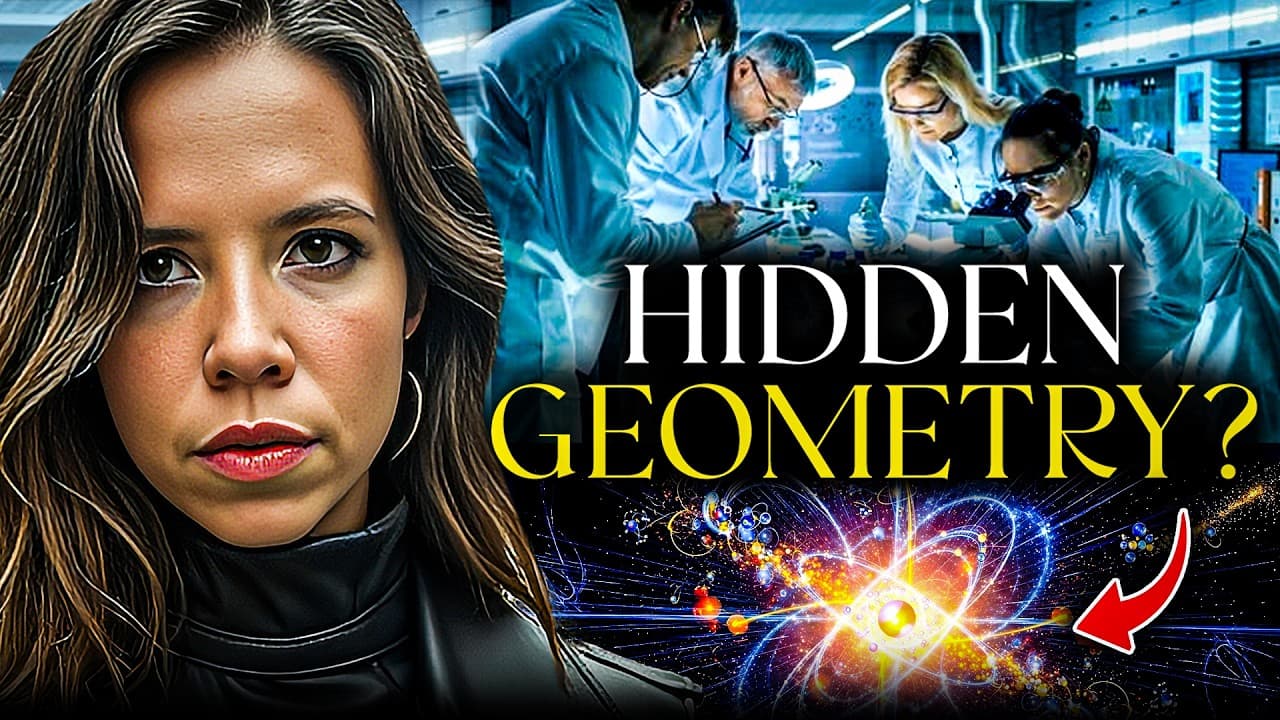
The quantum metric is a real, tunable geometry inside ordinary materials that bends electron paths, similar to how gravity bends light. Researchers demonstrated this hidden curvature in layered oxide interfaces, showing it can be controlled with gate voltages and may enable terahertz electronics and new superconducting pathways.
Transcript
February 2026, scientists at the University of Geneva just proved that there is a hidden geometry inside ordinary matter that bends electrons the same way gravity bends starlight. Not in a super collider, not in some exotic alien material. Inside common materials that labs have been growing for years, for two decades, this geometry existed only in ... Read More
Key Insights
- The quantum metric is a real curvature of quantum space through which electrons travel.
- The curvature affects electron paths and can be observed under magnetic fields in layered oxide interfaces.
- The curvature can be tuned using electrical gate voltages, making it practically controllable.
- The quantum metric exists in any material where spin momentum locking occurs, which is common.
- Terahertz electronics could be unlocked by engineering this hidden geometry.
- There is potential to improve superconductivity by manipulating quantum geometry inside materials.
- Recent work shows light can permanently flip magnetic polarity in certain materials, linking optics and magnetism.
- This discovery is presented as a step toward programmable, engineerable matter rather than pure theory.
Install to Summarize YouTube Videos and Get Transcripts
Explore YouTube Video Summarizer or Get YouTube Transcript Extractor
Questions & Answers
Q: What is the quantum metric and why does it matter for electrons in materials?
The quantum metric describes the curvature of quantum space that electrons experience as they move inside materials. It matters because this hidden geometry can distort and bend electron paths, similar to gravity bending light. By proving its existence and showing it can be tuned with gate voltages, researchers reveal a practical handle for engineering electronic properties and device performance.
Q: How was the quantum metric demonstrated in the Geneva study?
Researchers used two insulating oxide materials, strontium titanate and lanthanum aluminate, to create a two-dimensional electron gas at their boundary. Under applied magnetic fields, electron paths bent in ways that could be attributed to a hidden geometric structure. Their measurements confirmed the quantum metric and showed tunability via electrical gates, providing direct evidence of curvature in quantum space.
Q: What materials and methods were central to observing the quantum metric?
The key setup involved layered oxide interfaces that form a two-dimensional electron gas. Magnetic field application revealed distortions in electron motion consistent with a curved quantum space. The team also demonstrated that adjusting gate voltages could modify the curvature, establishing a controllable link between material structure and quantum geometry.
Q: Why is this discovery potentially important for terahertz technology?
Terahertz technology sits between microwave electronics and infrared optics, where practical devices are scarce. By leveraging the quantum metric, engineers may design materials whose electronic properties operate effectively at terahertz frequencies, enabling faster communications, imaging, and computing."This discovery provides a possible architectural bridge to access terahertz regimes without extreme conditions.
Q: How could quantum geometry influence superconductivity?
If quantum geometry can be engineered inside materials, it could alter how electrons pair and travel without resistance. Tuning the hidden curvature may lead to new pathways for superconductivity that work at higher, more practical temperatures, potentially reducing energy losses and enabling more efficient power and electronic systems.
Q: What other recent breakthroughs relate to geometry and materials science in this video?
The video highlights several converging breakthroughs, including time mirrors that make electromagnetic waves travel backward, light controlled permanent magnetism in topological materials, and a unified framework for detecting space-time fluctuations. Together, these point to a trend of engineering fundamental properties of matter through geometric and optical control.
Q: How does the speaker relate geometry to faith or philosophy?
The speaker argues that geometry is not occult but a language God used to describe physical reality. She emphasizes that geometric patterns seen in nature, like Fibonacci sequences or hexagonal symmetry, reflect a design that science can now probe at the quantum level. This framing connects scientific discovery with a view of nature as intelligible design.
Q: What is the broader takeaway about research and industry from this video?
The broader takeaway is that the fundamental building blocks of reality — space, time, energy, matter, geometry — are becoming observable and engineerable. Companies and researchers who understand these shifts will shape the next decade of technology, especially in terahertz electronics, room temperature superconductors, and geometry driven computing. First movers who study these breakthroughs now may gain a competitive edge.
Summary & Key Takeaways
-
The video explains a hidden geometry inside common materials called the quantum metric that bends electron trajectories, akin to spacetime curvature in gravity. It describes experiments on strontium titanate and another oxide to reveal and tune this curvature with electric gates. The implications span terahertz technology and potential improvements in superconductivity.
-
The talk connects geometry and materials science to argue that engineering quantum geometry could bridge technology gaps between microwave and infrared regimes, enabling faster electronics and novel devices. It also places the discovery in a broader context of converging breakthroughs across physics.
-
The speaker frames geometry as a language of nature and presents evidence that hidden geometric structures are engineering matter at the quantum level, suggesting a shift toward programmable material properties and a future where geometry informs device design and industrial innovation.
Read in Other Languages (beta)
Share This Summary 📚
Summarize YouTube Videos and Get Video Transcripts with 1-Click
Try YouTube Summary with ChatGPT & Claude or YouTube Transcript Generator
Explore More Summaries from Julia McCoy 📚






Summarize YouTube Videos and Get Video Transcripts with 1-Click
Try YouTube Summary with ChatGPT & Claude or YouTube Transcript Generator