Why AI Can Be the Best Thing Ever…Or the Worst Thing Ever (And How to Respond to Either One)
TL;DR
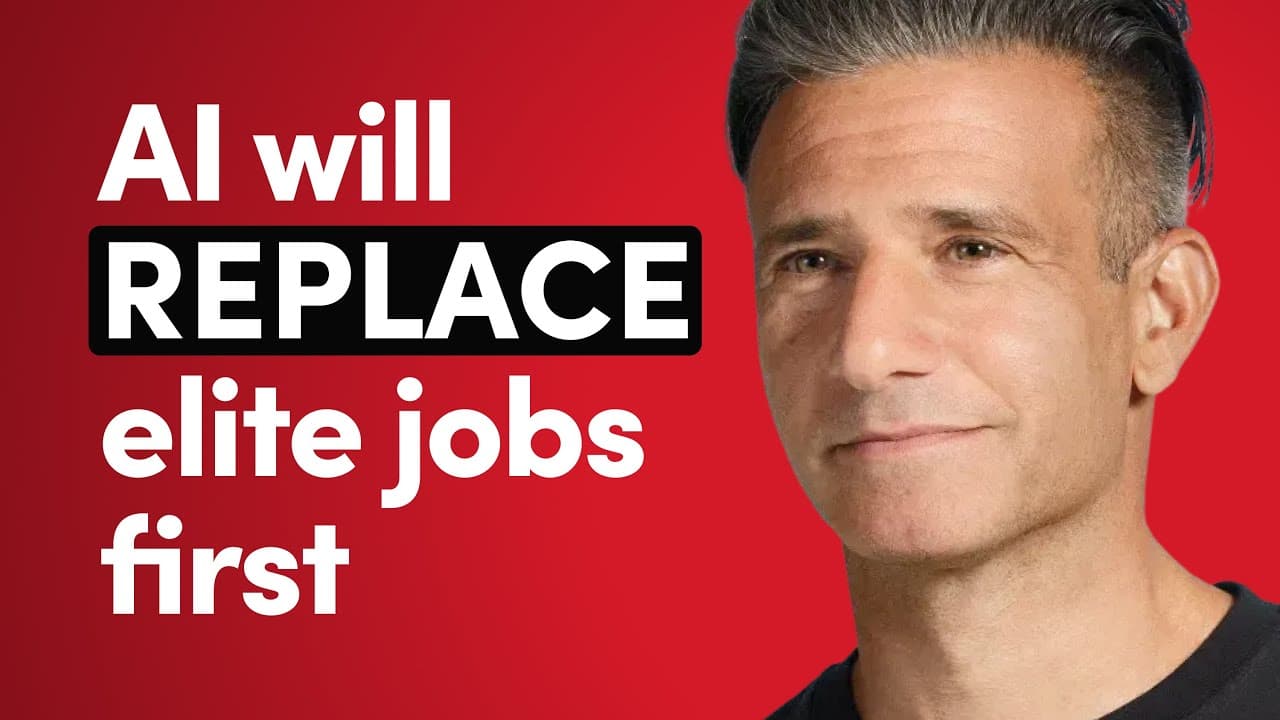
AI could be extraordinarily beneficial or harmful because it may surpass biological limits, understand people better than they understand themselves, and reshape how machines, businesses, and nations interact. Billions of dollars are already being spent on competing systems, while machines could eventually conduct science 24/7. The discussion explores how human creativity, digital interfaces, geopolitics, and judgment may change, and what people should watch as that transformation accelerates.
Transcript
look at AI right now billions of dollars being spent the flurry of all of this benefits us as consumers always and everywhere just wait and they'll compete and compete and it will accr to us as users how do we create an unfair advantage in a world of AI I think the limits to human intelligence are rooted in our biology AI over time will understand ... Read More
Key Insights
- 🫚 The limits of human intelligence are biologically rooted, yet AI can enhance understanding and capabilities in various domains.
- 🦮 AI's evolution poses both opportunities and challenges, necessitating ethical frameworks to guide its integration into society.
- 🌍 Human connection remains irreplaceable in an AI-driven world, as empathy and interpersonal experiences underpin meaningful relationships.
- 🤔 Education must evolve to prioritize creativity and critical thinking, equipping future generations with tools to thrive alongside AI advancements.
- 🤨 The geopolitical landscape is shifting towards increased competition as nations harness AI for strategic military advantages, raising ethical questions about warfare.
- 😮 There is potential for significant societal change as maintenance of existing systems gains importance in the face of rising costs and technological disruption.
- ℹ️ The digital landscape will transform information sharing and creation, emphasizing the need for discerning consumers capable of identifying credible sources amidst an abundance of content.
Install to Summarize YouTube Videos and Get Transcripts
Explore YouTube Video Summarizer or Get YouTube Transcript Extractor
Questions & Answers
Q: Why could AI become either the best thing ever or the worst thing ever?
AI may overcome limits to human intelligence that are rooted in biology, eventually understanding people better than they understand themselves. That creates enormous potential for continuous scientific and creative work, but it also raises concerns about systems influencing decisions, interacting beyond human-readable interfaces, and being used in geopolitical competition.
Q: How can people create an unfair advantage in a world of AI?
The speaker looks for areas where ignorance creates an opportunity to improve a system before most people understand it. His approach is to learn what others think, identify bottlenecks or overlooked possibilities, and then pursue a differentiated insight or “white space” answer.
Q: Will AI surpass human creativity?
The speaker argues that familiar claims of uniquely human superiority have already fallen in chess, Go, and video games, and he suggests creativity may follow. AI systems have been trained on the sum total of human creation and are increasingly trained on both human and artificial creation.
Q: How could AI change scientific research?
The speaker expects machines to conduct science 24/7. He views that capability as part of a broader expansion of creation and describes it as potentially beautiful rather than merely threatening.
Q: What currently limits AI agents such as ChatGPT Operator?
ChatGPT Operator can move only at the speed of the web, and latency can make it feel slow. The speaker is interested in technologies that could accelerate systems constrained by natural physical, biological, or digital limits.
Q: Will websites be redesigned for AI agents rather than people?
The speaker expects both human-facing and AI-first interfaces to exist. Businesses may optimize pages for AI agents researching restaurants, shopping options, or products, much as websites were optimized for Google when search became important for discovery.
Q: Why might AI lead to the decline of APIs?
APIs enable services and devices to communicate through software, but they can involve technical complexity, negotiations, legal restrictions, privacy requirements, and controls. The speaker suggests companies may instead use AI to behave like a user and operate existing interfaces directly.
Q: What geopolitical risks does the speaker connect to technological change?
The speaker highlights US-China competition, Iran-Israel conflict, and instability across the Sahel and Maghreb. He describes a contested African future involving failed states, coups, Russian mercenaries, violent extremists, Chinese infrastructure and influence, displaced European colonial powers, and returning scientists and entrepreneurs building businesses in countries including Ghana, Kenya, and Nigeria.
Summary & Key Takeaways
-
The conversation explores the impact of AI on various fields, emphasizing its potential to surpass human capabilities in creativity and decision-making, while also highlighting the importance of maintaining human connection.
-
The speaker discusses the competitive landscape of AI development, stressing the need for innovation and efficiency in AI technologies, alongside the ethical dilemmas surrounding their use in society.
-
The dialogue touches on geopolitics, technology, and societal challenges posed by AI, urging proactive measures to secure a balanced future where technology complements human life rather than diminishes it.
Read in Other Languages (beta)
Share This Summary 📚
Summarize YouTube Videos and Get Video Transcripts with 1-Click
Try YouTube Summary with ChatGPT & Claude or YouTube Transcript Generator
Explore More Summaries from The Knowledge Project Podcast 📚


Summarize YouTube Videos and Get Video Transcripts with 1-Click
Try YouTube Summary with ChatGPT & Claude or YouTube Transcript Generator