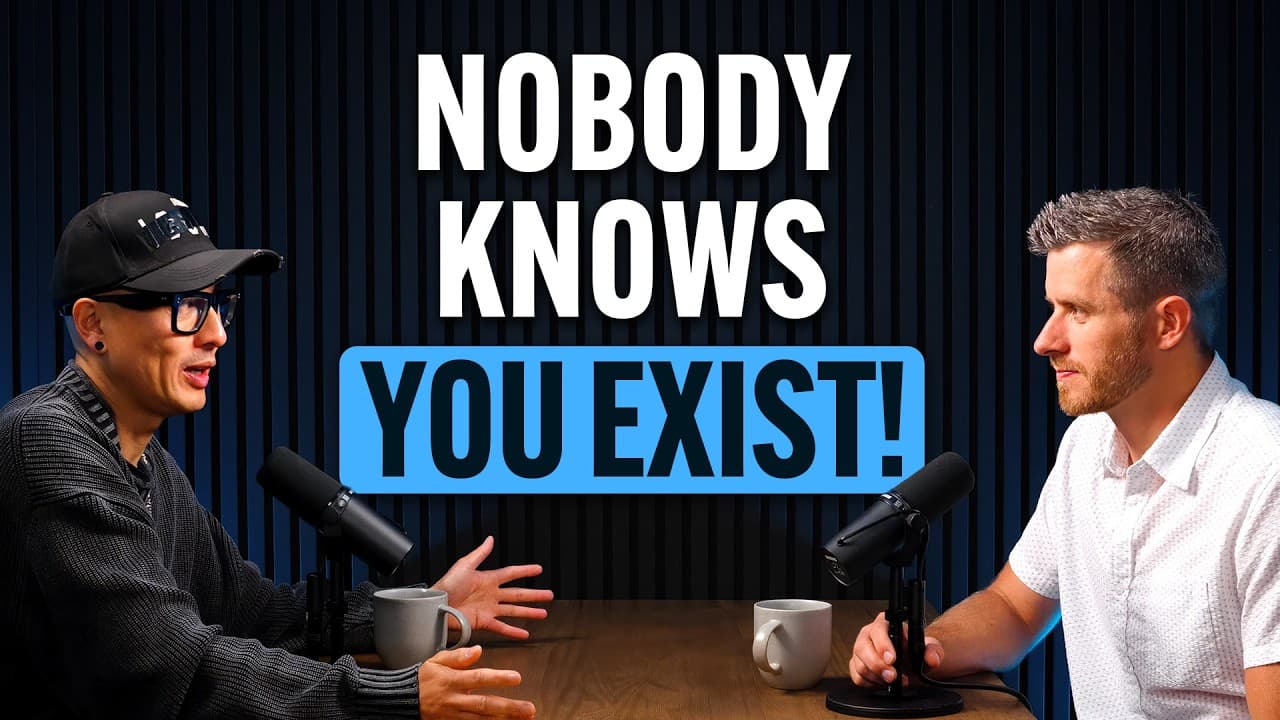
Chris Do on Building a Distinct Personal Brand
TL;DR
A personal brand is about being distinct, not just marketing, and it starts with understanding who you are beyond your work. Differentiation is the core of branding, and you should lean into a unique voice and identity to stand out. The conversation also explores internal work, identity, and how status signals shape perception.
Transcript
Personal brand is about who you are, understanding your voice in this world, your values, and being able to communicate that. It's devoid of you trying to make money. >> Chris Do is [music] an expert when it comes to personal brand. He's an Emmy award-winning designer and founder of The Futur, [music] which he's grown to 2.8 million subscribers on ... Read More
Key Insights
- A personal brand is defined by your difference from competitors, not by sameness. The key to standing out is differentiation and a clear point of view.
- The concept of unblanding yourself argues against generic, cookie cutter presence online and encourages authentic expression that helps you be memorable.
- Branding is about signaling identity and status, not just selling features or price, which influences how audiences perceive and relate to you.
- People increasingly use brand signals to infer values, taste, and success, so visuals, decisions, and packaging become extensions of identity.
- Target serves as a case study for moving from discount to affordable quality through designer collaborations and deliberate positioning.
- Status and identity signals are powerful drivers of purchase decisions, often more influential than specs when consumers want to express who they are.
- Apple versus Dell illustrates how brand perception, loyalty, and emotional resonance surpass basic specs in shaping consumer choice.
- Internal work is foundational to branding; understanding who you are enables a coherent external narrative and consistent audience trust.
Install to Summarize YouTube Videos and Get Transcripts
Explore YouTube Video Summarizer or Get YouTube Transcript Extractor
Questions & Answers
Q: What is the core difference between a personal brand and a marketing funnel, based on the discussion?
The core difference is that a personal brand is about differentiation and identity, not just a marketing funnel that pushes offers. A personal brand requires understanding what makes you unique and communicating that consistently, so people remember you for who you are rather than what you sell. This shift from tactics to identity helps build lasting trust and recognition.
Q: How does Chris Do suggest people approach their own branding to avoid blending in?
Chris Do suggests unblanding yourself by embracing a distinctive voice and point of view. He argues against following generic templates that lead to sameness and recommends leaning into what makes you different. This approach creates memorable signals that audiences can recognize and trust, rather than blending into the crowd.
Q: Why does branding matter more than just selecting a product’s features, according to the interview?
Branding matters because it communicates values, identity, and status, which influence how people perceive and connect with you beyond mere features. A strong brand creates loyalty and a personal connection that features alone cannot achieve. It helps audiences see you as a person or a concept they want to align with.
Q: What example is used to illustrate the shift from discount branding to affordable quality?
Target is used as an example of shifting from discount branding to affordable quality. By partnering with designers and creating a narrative around accessible yet elevated products, Target positions itself as offering good taste and value, which changes consumer perception and behavior without sacrificing affordability.
Q: How are Maslow’s hierarchy of needs and branding connected in the talk?
The talk connects Maslow’s hierarchy to branding by linking health and survival needs at the bottom to higher needs like status and identity at the top. Branding becomes a way for people to signal where they are in their life journey and what they aspire to be, using products and brands as cues for that signaling.
Q: What role does identity play in why people buy certain brands or products?
Identity plays a central role because people use brands to signal who they are or who they want to be. The discussion argues that purchases are often about signaling status and taste, not just function or price, which is why brands that convey a clear identity can command more loyalty and emotional resonance.
Q: What is the consequence of not knowing your authentic brand voice, according to the discussion?
Not knowing your authentic brand voice leads to inconsistency, confusion, and weaker trust with your audience. Without a clear identity, you risk appearing serviceable but forgettable, making it harder for people to remember you or feel a strong connection to your work.
Q: What practical steps does Chris Do propose for building a lasting personal brand?
Practical steps include discovering your true identity and voice, identifying what makes you different, and communicating that consistently across platforms. He also recommends considering how your visuals, statements, and actions reflect your brand, and ensuring internal alignment so your external messaging feels authentic and trustworthy.
Summary & Key Takeaways
-
The episode argues that personal branding begins with discovering your true identity and voice, not just marketing tactics. It emphasizes differentiation as the key to lasting presence, comparing brands like Apple and Dell to illustrate how identity drives recall. It also discusses the role of status and identity in everyday purchasing decisions.
-
Branding is framed as unblanding yourself, moving away from generic templates toward a distinctive point of view that resonates emotionally with an audience. The conversation uses real examples like Target’s shift to affordable quality, showing how partnerships and design influence brand perception.
-
The discussion culminates in a practical approach to branding that combines internal reflection with external storytelling. It advocates mapping values, voice, and visual cues to craft a memorable personal brand that communicates who you are and what you stand for.
Read in Other Languages (beta)
Share This Summary 📚
Summarize YouTube Videos and Get Video Transcripts with 1-Click
Try YouTube Summary with ChatGPT & Claude or YouTube Transcript Generator
Explore More Summaries from The Nathan Barry Show 📚





Summarize YouTube Videos and Get Video Transcripts with 1-Click
Try YouTube Summary with ChatGPT & Claude or YouTube Transcript Generator