How Can Immune Cells Be Reprogrammed Against Cancer?
TL;DR
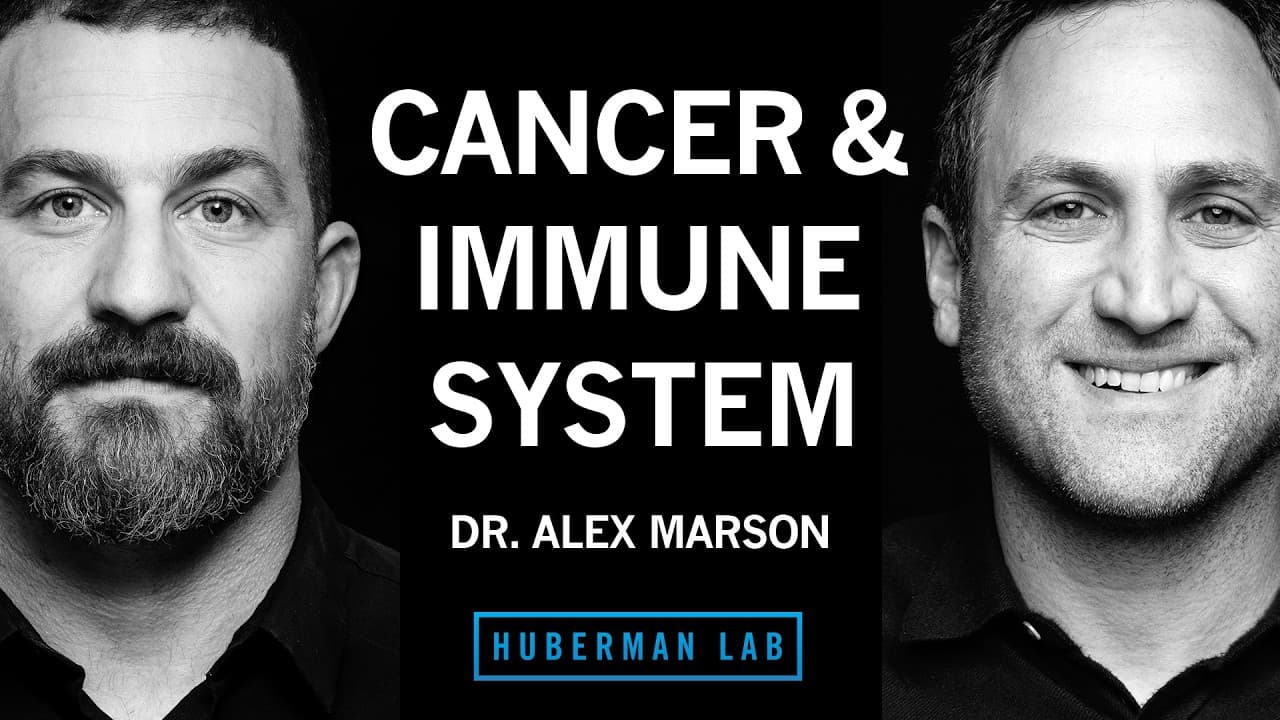
Engineered T cells can be equipped with laboratory-designed receptors that direct them to seek and destroy cancer cells after reinfusion into a patient. Advances in CRISPR, DNA sequencing, imaging, lipid nanoparticles, vaccines, large-scale experiments, and computational analysis are making it possible to study disease mechanisms and program immune-cell behavior with greater precision.
Transcript
We're living in this amazing moment of biology where we can put a gene that encodes something on the surface of T cells that will make them programmed to search and destroy for cancer cells. Mm-hmm. Now, this is largely known as CAR T cells, chimeric antigen receptor. This is a receptor that was designed in a lab, does not exist in nature. When tho... Read More
Key Insights
- The immune system is a body-wide network of white blood cells that evolved largely to protect against viruses, bacteria, fungi, and other foreign invasions while normally avoiding attacks on the body’s own healthy cells.
- The innate immune system is the first alarm system, using cells such as dendritic cells and macrophages to detect broad patterns associated with foreign material or cellular damage and then recruit other immune components.
- The adaptive immune system includes lymphocytes such as B cells and T cells, which perform specialized roles and help produce a finely tuned response after the innate immune system signals that something is wrong.
- Each T cell is equipped with a distinctive surface receptor created through largely random rearrangement of DNA segments, giving the immune system a diverse collection of sensors for recognizing different foreign proteins.
- T-cell receptor diversity is a form of biological preparation, because some T cells may already possess receptors capable of responding to bacteria or viruses that the body has never encountered before.
- CAR T cells are engineered immune cells carrying chimeric antigen receptors that were designed in a laboratory and do not naturally exist, allowing the cells to be directed toward cancer after they are reinfused into a patient.
- CRISPR and other molecular technologies can modify targeted DNA sequences in immune cells, creating opportunities to strengthen responses against cancer or adjust immune activity associated with inflammation and autoimmunity.
- Modern biological research is accelerated by large-scale experiments, DNA sequencing, imaging, and computational analysis, including AI, which together help researchers connect genetic changes with observable cellular consequences and potential clinical interventions.
Install to Summarize YouTube Videos and Get Transcripts
Explore YouTube Video Summarizer or Get YouTube Transcript Extractor
Questions & Answers
Q: How can T cells be engineered to attack cancer?
T cells can be given a gene that encodes a laboratory-designed receptor on their surface. This receptor, called a chimeric antigen receptor, directs the modified cells toward cancers. The engineered cells are then reinfused into the patient in a process compared with receiving a blood transfusion, allowing the programmed immune cells to search for and destroy cancer cells.
Q: What are CAR T cells and how do they work?
CAR T cells are T cells equipped with chimeric antigen receptors, which are receptors designed in a laboratory and not found in nature. These receptors are placed on the cells through genetic programming. Once the modified T cells are returned to a patient, the receptors direct them against cancers, turning the cells into targeted components of an immune-based treatment.
Q: What is the difference between innate and adaptive immunity?
Innate immunity acts as the immune system’s first alarm, with cells such as dendritic cells and macrophages detecting general patterns that suggest foreign material or cellular damage. Adaptive immunity includes lymphocytes such as B cells and T cells. These cells provide specialized responses, and T cells play a central role in coordinating and fine-tuning immune activity.
Q: How does the immune system distinguish the body from foreign threats?
The immune system is tuned to recognize signs of material that should not be in the body while normally avoiding attacks on cells that belong there. White blood cells circulating in the bloodstream or residing in tissues perform coordinated roles. Innate cells detect broad danger patterns, while adaptive cells use more specialized receptors to identify particular foreign signals.
Q: Why does each T cell have a different receptor?
Each T cell creates a distinctive receptor through the largely random recombination and joining of DNA segments. The receptor functions as a sensor on the cell’s surface. When it engages something it recognizes, it signals that the programmed target has been found. This diversity gives the immune system many different cells capable of detecting many possible foreign proteins.
Q: How can T cells recognize pathogens never encountered before?
T-cell receptors are generated largely at random rather than being produced only after exposure to a particular pathogen. Because many T cells carry different receptors, some may already be capable of recognizing proteins introduced by an unfamiliar bacterium or virus. This creates a diverse immune-cell population prepared for threats that have not previously entered the body.
Q: How is gene editing changing cancer and disease treatment?
Gene editing allows researchers to target and rewrite specific DNA sequences inside immune cells, potentially changing how those cells behave. The transcript describes using this capability to improve immune responses against cancer and to balance immune activity in inflammation and autoimmunity. CRISPR is one method, while lipid nanoparticles and vaccines can also deliver molecular instructions to cells.
Q: Why is biological medicine advancing more quickly now?
Biological medicine is benefiting from a convergence of tools that operate at greater scale and precision. Researchers can sequence DNA, image cells, make genetic changes in human cells, and directly observe the consequences. Computational methods, including AI, help extract insights from large datasets, while clinical trials test what happens when targeted DNA sequences and cellular behaviors are deliberately changed.
Summary & Key Takeaways
-
The immune system protects the body by distinguishing its own cells from foreign or harmful material. Innate immune cells provide an early alarm by detecting broad patterns of damage or invasion, while adaptive immune cells, particularly B cells and T cells, deliver more specialized responses and coordinate finely targeted immune activity.
-
Each T cell develops a largely random and distinctive receptor through the recombination of DNA segments. This diversity creates a population of cells capable of recognizing proteins associated with threats that a person has never encountered, including bacteria or viruses that might not yet exist when those immune cells are generated.
-
Modern cancer immunotherapy can reprogram T cells with chimeric antigen receptors designed in a laboratory. After these engineered cells are returned to a patient through a process resembling a blood transfusion, their added receptors direct them toward cancers. Gene editing and computational tools are expanding the possibilities for such targeted interventions.
Read in Other Languages (beta)
Share This Summary 📚
Summarize YouTube Videos and Get Video Transcripts with 1-Click
Try YouTube Summary with ChatGPT & Claude or YouTube Transcript Generator
Explore More Summaries from Andrew Huberman 📚





Summarize YouTube Videos and Get Video Transcripts with 1-Click
Try YouTube Summary with ChatGPT & Claude or YouTube Transcript Generator