Is Monitoring Driving Behavior Worth Sacrificing Privacy?
TL;DR
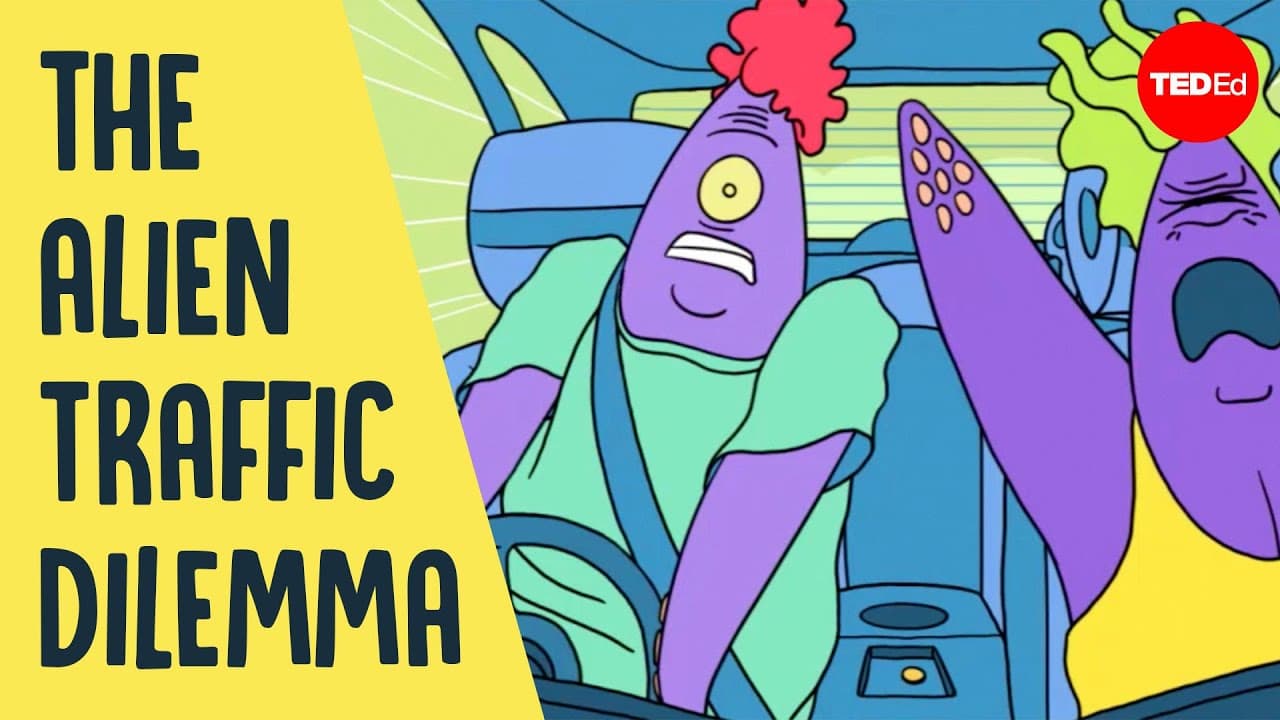
Implementing driver credit scores to enhance traffic safety raises significant privacy concerns. While the plan aims to reward responsible driving and reduce accidents, it requires constant surveillance through cameras and microphones in vehicles, prompting a complex debate about the balance between individual privacy rights and collective societal safety.
Transcript
For some reason, your otherwise peaceful planet attracts the most reckless drivers in the galaxy. So your government has introduced a plan to address the record-breaking rates of traffic tickets and deadly hovercar accidents. They propose assigning driver credit scores to every car-owning citizen. Drivers’ scores will go up when they drive in lega... Read More
Key Insights
- 💯 The introduction of driver credit scores seeks to improve road safety by incentivizing responsible driving, thereby aiming to reduce hovercar accidents.
- 🗯️ The surveillance aspect of the plan creates a dichotomy between societal safety and individual privacy rights, prompting a national discussion on government overreach.
- 🇨🇫 Historical philosophical arguments underline the tension between collective welfare and personal freedoms, impacting public opinion on policy implementation.
- 🫵 Privacy is viewed differently across philosophical ideologies, with some asserting it is vital for democracy while others believe it can be compromised for greater social benefits.
- 🦺 Empirical studies indicating decreased accidents under similar systems add complexity to the debate, as safety data challenges assumptions about privacy infringement.
- 🤨 The proposed system raises questions about the ethical implications of constant surveillance and its effect on individual behavior and social interactions.
- 🗯️ By examining the philosophical distinctions surrounding privacy rights, the discourse ponders whether these rights stem from broader entitlements, such as ownership or personal autonomy.
Install to Summarize YouTube Videos and Get Transcripts
Explore YouTube Video Summarizer or Get YouTube Transcript Extractor
Questions & Answers
Q: What is the primary goal of the government's proposed plan regarding driver credit scores?
The government's primary goal is to improve traffic safety by implementing a driver credit scoring system. This system aims to encourage safe driving practices by rewarding those who drive responsibly with benefits like lower car loan rates and vehicle fuel costs. Conversely, reckless drivers would see their scores drop, resulting in increased costs. Early tests suggest that the proposal could significantly reduce accidents and dangerous driving behavior.
Q: How does the proposed monitoring system impact driver privacy?
The proposed monitoring system, which includes installing cameras and microphones in every hovercar, poses serious privacy implications for citizens. While the initiative is intended for public safety, constant surveillance raises concerns about how personal data will be stored, used, or misused by the government. This surveillance could track every aspect of a driver’s behavior, limiting their autonomy and privacy—a critical debate point for those assessing the plan's legitimacy.
Q: What philosophical perspectives are presented regarding privacy and safety?
The content offers contrasting philosophical views on the balance between privacy and safety. Plato's perspective prioritizes the welfare of society as a whole, suggesting that individual freedoms may be sacrificed for collective justice. In contrast, others argue that privacy protects democratic rights and moral autonomy, emphasizing that a lack of privacy could lead to a tyrannical state. This debate questions whether the safety provided by government actions justifies potential privacy infringements.
Q: What concerns do some philosophers raise about the government's surveillance approach?
Some philosophers express significant concerns about the potential abuses of a government surveillance system. They argue that even in a trustworthy government, the threat of privacy invasion undermines individual freedom and democracy. Ruth Gavison highlights the necessity of privacy in fostering moral autonomy and independent judgment, which are essential for a healthy democratic society. Such concerns compel citizens to question who benefits from surveillance and who may suffer from its consequences.
Summary & Key Takeaways
-
The government aims to reduce hovercar accidents by implementing driver credit scores, rewarding safe driving behaviors while penalizing reckless ones.
-
A monitoring system involving cameras and microphones in vehicles is proposed to gather data on driver behavior, igniting discussions about personal privacy rights.
-
The debate centers on the value of privacy versus the greater societal good, with philosophical arguments weighing individual freedoms against collective safety and democracy.
Read in Other Languages (beta)
Share This Summary 📚
Summarize YouTube Videos and Get Video Transcripts with 1-Click
Try YouTube Summary with ChatGPT & Claude or YouTube Transcript Generator
Explore More Summaries from TED-Ed 📚






Summarize YouTube Videos and Get Video Transcripts with 1-Click
Try YouTube Summary with ChatGPT & Claude or YouTube Transcript Generator