How Anthropic Built Claude Into a Coding Product
TL;DR
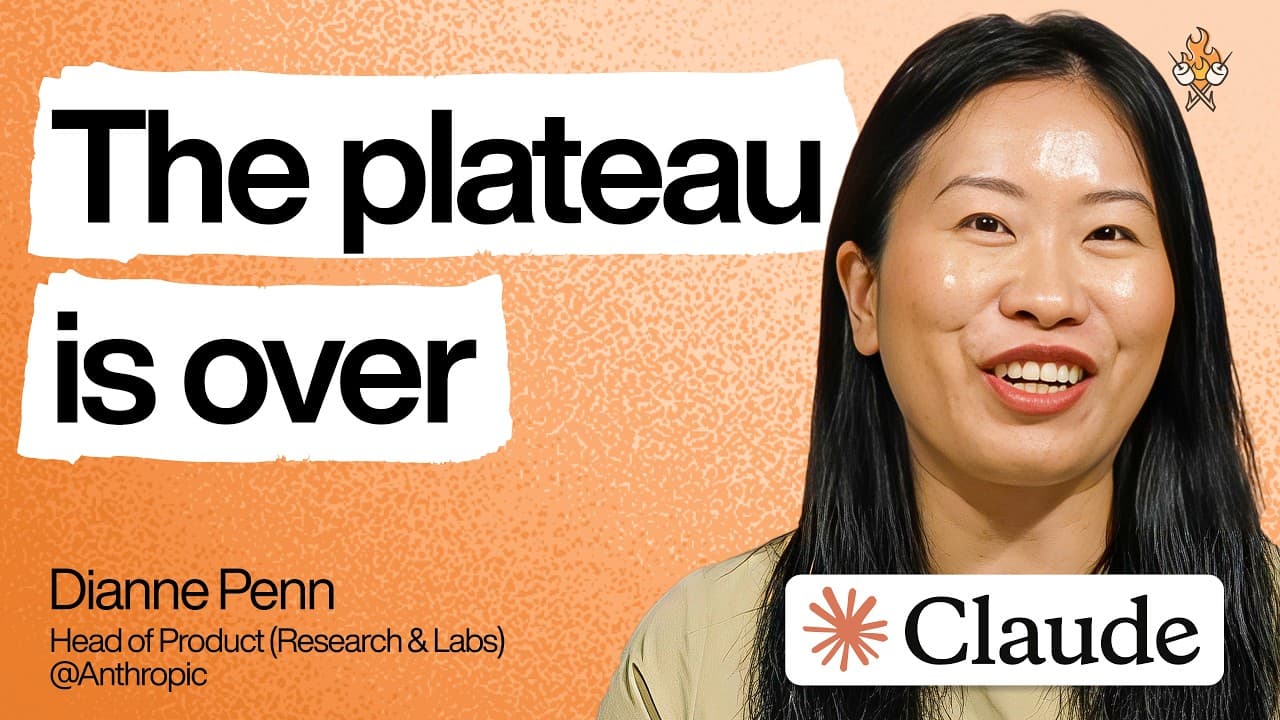
Anthropic improved Claude for coding by recognizing that users wanted models to write long-form code, then aligning model training, evaluations, and product design around that behavior. Its broader product approach combines close research collaboration, rapid experimentation, ambitious use of model capabilities, and continuous user feedback, with evaluations increasingly serving the role once played by traditional product requirements.
Transcript
In 2023 when I started, nobody said anthropic and claude and coding in the same sentence. >> I want to go back to the beginning of anthropic. I remember dealing, man, these guys have no chance. OpenAI is so far ahead. >> At the time, I saw people were starting to use these models not just for code autocomplete, but actually writing long form code a... Read More
Key Insights
- Anthropic's early product organization consisted of five engineers in 2023, including one engineer responsible for the entire API business. Despite its small size and uncertain market identity, the company already had a strong mission-driven culture and operated with the energy and bottom-up initiative of a startup.
- Golden Gate Claude was a public experiment based on interpretability research that identified features within model layers. By increasing a feature associated with the Golden Gate Bridge, researchers made Claude repeatedly connect unrelated answers to the landmark, turning technical research into an accessible and intentionally quirky experience.
- Golden Gate Claude was assembled within about 24 hours through collaboration among engineering, product, design, and research teams. It reached roughly 2,000 people, but its significance came from showing that Anthropic could rapidly translate research into distinctive user experiences and begin defining an authentic product identity.
- Claude Opus 3 was a major organizational inflection point that rallied inference, research, fine-tuning, pre-training, and product contributors around creating a frontier model. The intensive work built trust between product and research leaders, some of whom later led reinforcement learning, character, and alignment efforts.
- Claude's coding focus began when Anthropic noticed people using language models to write long-form code rather than only completing short code fragments. That observed behavior suggested a valuable training opportunity and helped coding become more central to Claude's identity, even though Anthropic was not associated with coding in 2023.
- Claude Code and a strong model reinforce each other because capability alone does not guarantee adoption. The discussion argues that Opus 4.5 benefited from Claude Code's product experience, while Claude Code's adoption was accelerated by the model's capabilities, illustrating the importance of coordinating model and product development.
- Evaluations are becoming a substitute for traditional product requirements in AI development. Dianne Penn's team uses the phrase "evals are the new PRDs" because defining valuable behavior, collecting the right user feedback, and measuring model performance increasingly shape what teams train and build.
- Human judgment remains essential because teams must decide what valuable behavior looks like, identify useful feedback, and distinguish good ideas from better ones. Product builders are encouraged to use models extensively, pay close attention to token consumption, and anticipate how future versions such as Claude 8 could change user behavior.
Install to Summarize YouTube Videos and Get Transcripts
Explore YouTube Video Summarizer or Get YouTube Transcript Extractor
Questions & Answers
Q: How did Anthropic identify coding as a major use case for Claude?
Anthropic noticed that people were beginning to use language models for more than code autocomplete. Users were asking them to write long-form code, which revealed an opportunity to train Claude Opus 3 specifically toward stronger coding performance. This observation helped move coding from one possible use case to an important part of Claude's product direction and identity.
Q: What were Anthropic's product team and culture like in 2023?
Anthropic had only five product engineers when Dianne Penn joined in 2023, and one engineer covered the entire API business. The organization was still exploring how its technology could benefit users and society, but its mission, values, startup energy, and bottom-up culture were already strong. Engineers, designers, product managers, and researchers frequently collaborated across formal role boundaries.
Q: What was Golden Gate Claude and why did Anthropic create it?
Golden Gate Claude was a temporary public experience derived from Anthropic's interpretability research. Researchers had identified internal model features linked to themes such as bullet-point writing, people and places, and the Golden Gate Bridge. Increasing the bridge-related feature caused Claude to mention the landmark in unrelated responses, allowing the company to present technical research through a memorable user experience.
Q: Why was Golden Gate Claude an important product milestone?
Golden Gate Claude showed that Anthropic could turn new research into a public product experience in about 24 hours. Engineering, product, design, and research teams worked together, often through bottom-up contributions. Although the experience reached only about 2,000 people, it helped the company see that its products could be distinctive, experimental, and authentic to its research culture.
Q: Why was Claude Opus 3 an inflection point for Anthropic?
Claude Opus 3 gave Anthropic a shared goal of building and presenting a frontier model while the company still had fewer than 200 people. Teams across inference, research, fine-tuning, pre-training, and product contributed over many months. The difficult process also created lasting trust among collaborators who later took leadership roles in reinforcement learning, character, and alignment work.
Q: How do Claude Code and Claude models support each other's adoption?
The discussion presents the model and product experience as mutually reinforcing. A capable model such as Opus 4.5 becomes more useful when users can access it through a strong product such as Claude Code. At the same time, Claude Code gains faster adoption when the underlying model performs well, so neither model quality nor interface design alone explains the product's momentum.
Q: What does "evals are the new PRDs" mean for AI product teams?
The phrase means evaluations increasingly perform a role traditionally associated with product requirements documents. An AI product team must determine which model behaviors create user value, gather the right feedback, and construct evaluations that test those behaviors. Those measurements then guide both model improvement and product decisions, creating a tighter connection among research, user needs, and development priorities.
Q: How should product teams prepare for more capable AI models?
Product teams should use current models deeply, examine how tokens are consumed, and ask what users will do when later models become substantially more capable. Dianne Penn describes asking her team what would change if Claude 8 arrived and what that implies for work being built today. The approach combines ambitious experimentation with forward-looking product judgment and attention to user behavior.
Summary & Key Takeaways
-
Anthropic began with five product engineers in 2023 and was still searching for a distinctive identity. Its early culture emphasized the company mission, strong values, bottom-up initiative, and close collaboration among research, engineering, product, and design while exploring how Claude could create practical value for users and society.
-
Golden Gate Claude became an early demonstration of Anthropic's product character. After interpretability researchers identified a model feature associated with the Golden Gate Bridge, teams quickly created a public experience that amplified it. Although it reached only about 2,000 people, the experiment proved research could become an unusual, accessible product experience.
-
Claude's coding direction emerged when users moved beyond autocomplete and began asking models to write long-form code. Anthropic treated this behavior as a training and product opportunity. The discussion connects that decision with eval-driven development, products such as Claude Code, ambitious model use, careful attention to token consumption, and preparation for future capabilities.
Read in Other Languages (beta)
Share This Summary 📚
Summarize YouTube Videos and Get Video Transcripts with 1-Click
Try YouTube Summary with ChatGPT & Claude or YouTube Transcript Generator
Explore More Summaries from Lenny's Podcast 📚

Summarize YouTube Videos and Get Video Transcripts with 1-Click
Try YouTube Summary with ChatGPT & Claude or YouTube Transcript Generator