Can diet improve memory? BBC News Review
TL;DR
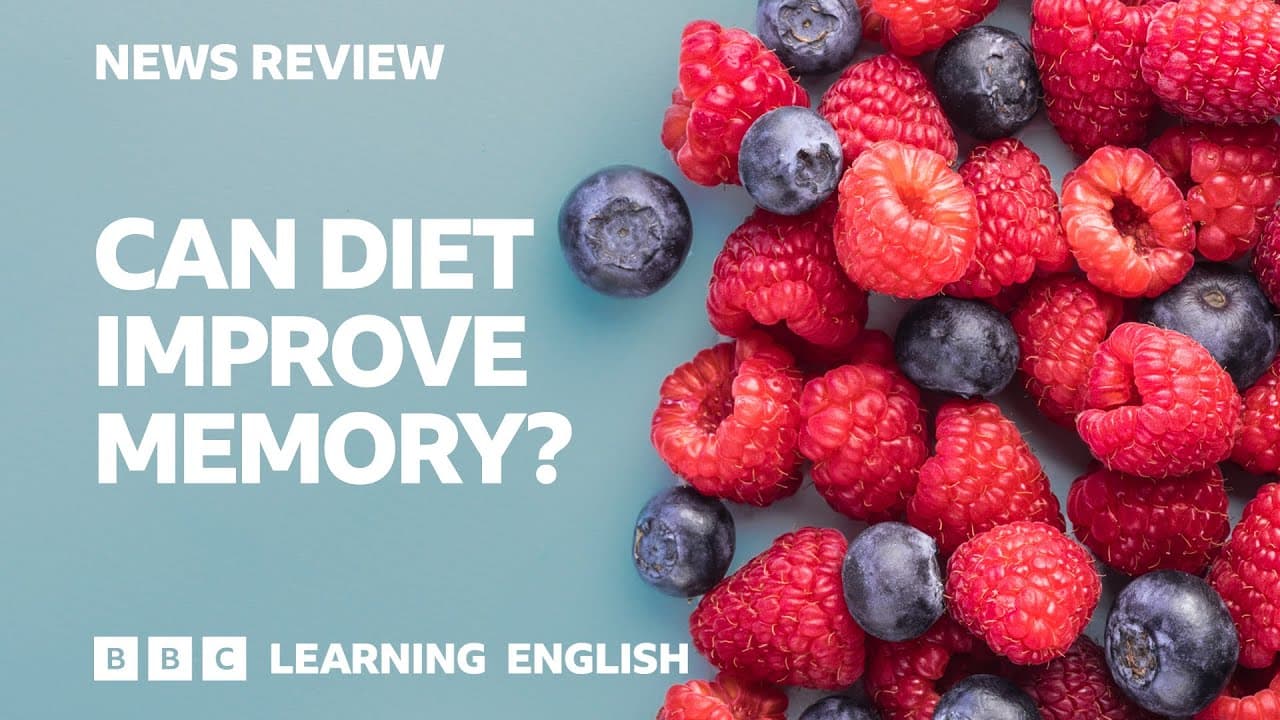
Flavanol-rich diets may enhance memory in aging individuals.
Transcript
Could apples, berries and cacao improve our memory as we get older? This is News Review from BBC Learning English. I'm Neil. And I'm Beth. Make sure you watch to the end to learn vocabulary to talk about this story. Don't forget to subscribe to our channel, 'like' this video and try the quiz on our website. Now, the story. What you eat could improv... Read More
Key Insights
- Research in the US suggests that a diet rich in flavanols, found in foods like tea, berries, apples, and cacao, may help improve memory as people age.
- The study highlights the potential benefits of dark chocolate consumption for memory retention, though some scientists call for more research to confirm these findings.
- The expression 'keep something at bay' means to prevent something harmful from happening, exemplified by preventing memory loss through dietary choices.
- The phrase 'stave off' is used to describe preventing negative occurrences, such as using orange juice to stave off colds, similar to preventing memory loss with flavanol-rich diets.
- The word 'drive' in this context refers to causing or pushing something in a specific direction, such as a low flavanol diet driving memory loss.
- Flavanols are naturally occurring compounds in certain foods that may have protective effects on the brain, though their exact mechanisms require further investigation.
- The expressions 'keep something at bay' and 'stave off' are often used in health contexts, indicating the prevention of various health issues.
- The video suggests that lifestyle choices, including diet and exercise, can significantly influence brain health and memory preservation.
Install to Summarize YouTube Videos and Get Transcripts
Explore YouTube Video Summarizer or Get YouTube Transcript Extractor
Questions & Answers
Q: What is the main finding of the research discussed in the video?
The main finding of the research discussed in the video is that a diet rich in flavanols, which are compounds found in foods like tea, berries, apples, and cacao, may help improve memory as individuals age. This suggests that consuming such foods could potentially prevent memory loss.
Q: What are some examples of foods that contain flavanols?
Examples of foods that contain flavanols include tea, berries, apples, and cacao. These foods are highlighted in the video as potentially beneficial for memory improvement due to their flavanol content. Cacao, in particular, is notable as it is the seed from which chocolate is made.
Q: How is the term 'keep something at bay' explained in the video?
The term 'keep something at bay' is explained as a way to prevent something harmful from happening. In the context of the video, it refers to preventing memory loss by maintaining a diet rich in flavanols. The expression can also apply to other health issues, such as keeping infections at bay by hand washing.
Q: What does the expression 'stave off' mean, and how is it used?
The expression 'stave off' means to prevent something bad from happening. In the video, it is used to describe how certain dietary choices, like drinking orange juice, can stave off colds. Similarly, flavanol-rich diets are suggested to stave off memory loss, emphasizing the preventative aspect of the expression.
Q: How does the video explain the use of the word 'drive'?
In the video, 'drive' is explained as forcing something in a certain direction. It is used in the context of a low flavanol diet driving memory loss, meaning that such a diet may lead to or cause memory decline. This usage highlights the causative nature of the word.
Q: What are the broader implications of the research findings discussed?
The broader implications of the research findings suggest that lifestyle choices, particularly diet, can significantly influence brain health and memory preservation. The video emphasizes the potential for flavanol-rich diets to prevent memory loss, indicating that dietary interventions could be a viable strategy for maintaining cognitive function in aging populations.
Q: Why do some scientists call for more research on the topic?
Some scientists call for more research on the topic because, while initial findings suggest benefits of flavanol-rich diets for memory improvement, the evidence is not yet conclusive. Further studies are needed to better understand the mechanisms involved and to confirm the potential memory-enhancing effects of these dietary compounds.
Q: How does the video integrate language learning with the health topic?
The video integrates language learning with the health topic by introducing vocabulary related to preventing negative outcomes, such as 'keep something at bay,' 'stave off,' and 'drive.' These terms are explained in the context of the research findings, providing viewers with both language skills and health knowledge.
Summary & Key Takeaways
-
The video discusses research suggesting that diets high in flavanols may help improve memory as people age. These compounds are found in foods like tea, berries, apples, and cacao. While some scientists support the idea of dark chocolate aiding memory, others call for more research.
-
Key vocabulary from the discussion includes 'keep something at bay,' 'stave off,' and 'drive,' all related to preventing or causing specific outcomes. These terms are often used in health contexts, emphasizing the potential of dietary choices to prevent memory loss.
-
The video also highlights the broader implications of lifestyle choices on brain health. It suggests that both diet and exercise can play a significant role in maintaining cognitive function and preventing age-related memory decline.
Read in Other Languages (beta)
Share This Summary 📚
Summarize YouTube Videos and Get Video Transcripts with 1-Click
Try YouTube Summary with ChatGPT & Claude or YouTube Transcript Generator
Explore More Summaries from BBC Learning English 📚






Summarize YouTube Videos and Get Video Transcripts with 1-Click
Try YouTube Summary with ChatGPT & Claude or YouTube Transcript Generator