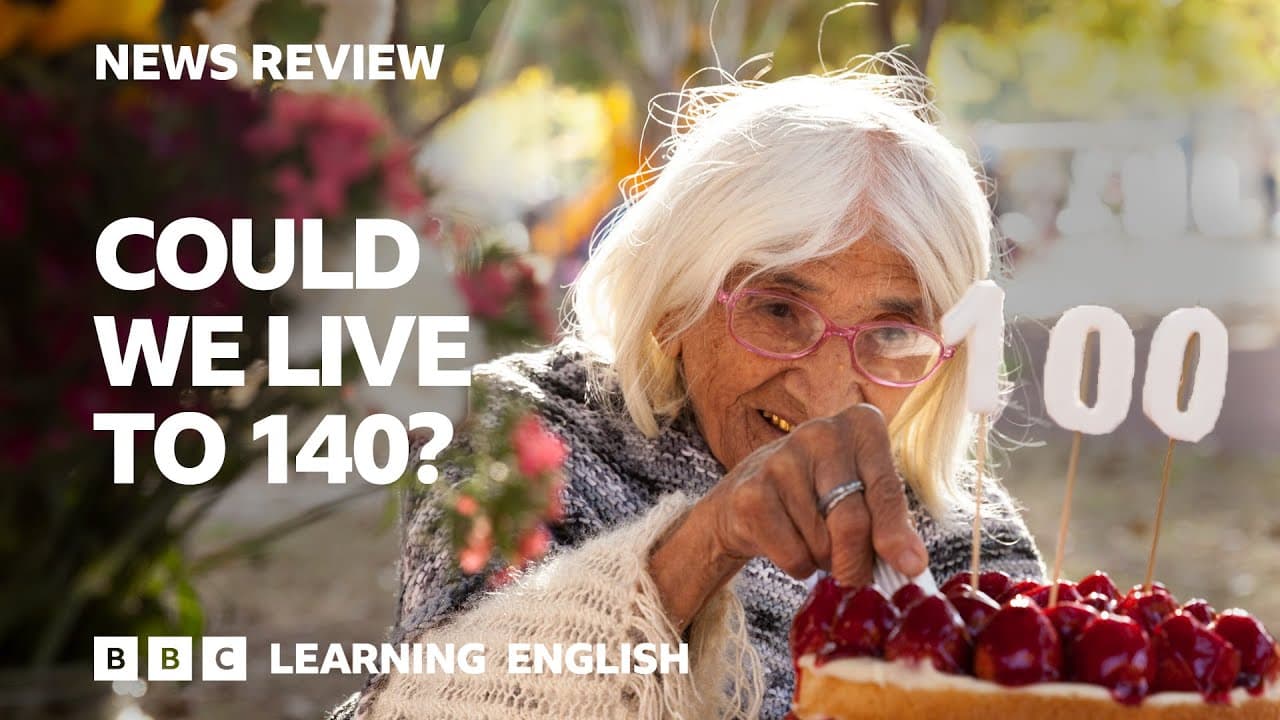
Can Humans Actually Live to 140 Years Old?
TL;DR
New research suggests that advancements in medicine and public health could enable humans to live up to 140 years. However, there are concerns about the societal impacts of an aging population, as well as environmental strains associated with increased life expectancy.
Transcript
Will you live to 140? Scientists think you might. This is News Review from BBC Learning English, I'm Beth. And I'm Phil. Make sure you watch to the end to learn the vocabulary you need to talk about this story. And remember subscribe to our channel, like this video and try the quiz on our website. Now, the story. Humans alive today could live to 14... Read More
Key Insights
- A study by the University of Georgia indicates that modern medicine, improved public health, and a safer world are contributing to increased human life expectancy.
- Humans born after 1940 have a 50/50 chance of living up to 125 years, highlighting significant advancements in healthcare and lifestyle.
- The term 'golden oldies' refers to individuals who are old yet remain active and respected, illustrating a positive view of aging.
- There is concern about the implications of an aging population, including the strain it may place on resources and societal structures.
- The metaphor 'groans' is used to describe the burden on the planet if people live longer, suggesting environmental and resource challenges.
- The concept of living to 140 years raises questions about quality of life and the societal adjustments needed to accommodate longer lifespans.
- The discussion includes vocabulary like '50/50', 'golden oldies', and 'groans', which are used to convey specific aspects of the aging debate.
- The potential for humans to live longer lives is seen as both an opportunity and a challenge, requiring careful consideration of future implications.
Install to Summarize YouTube Videos and Get Transcripts
Explore YouTube Video Summarizer or Get YouTube Transcript Extractor
Questions & Answers
Q: What is the main finding of the University of Georgia's study?
The University of Georgia's study suggests that humans may live up to 140 years due to advancements in modern medicine, better public health, and a safer world. This increased life expectancy is attributed to improvements in healthcare and lifestyle, which have contributed to longer, healthier lives.
Q: What does the term 'golden oldies' refer to in the context of the video?
In the context of the video, 'golden oldies' refers to individuals who are old yet continue to be active, healthy, and respected. This term is used to describe a positive perspective on aging, where older individuals maintain a good quality of life and contribute meaningfully to society.
Q: What are the concerns related to an aging population?
Concerns related to an aging population include the potential strain on resources, healthcare systems, and societal structures. As people live longer, there may be increased demand for medical care, pensions, and support services, which could challenge existing systems and require significant adjustments.
Q: How is the term 'groans' used metaphorically in the video?
The term 'groans' is used metaphorically to describe the burden on the planet if people live longer. It suggests that the increased population and resource consumption could lead to environmental challenges, likening the planet's strain to a groaning sound when under pressure.
Q: What does a 50/50 chance imply in the context of the study?
A 50/50 chance implies that there is an equal probability of an event occurring or not occurring. In the context of the study, it means that humans born after 1940 have a 50% chance of living up to 125 years, highlighting the uncertainty and variability in life expectancy outcomes.
Q: What societal adjustments might be necessary for longer human lifespans?
Societal adjustments for longer human lifespans may include reforms in healthcare, retirement policies, and social support systems. As people live longer, there will be a need to accommodate extended working lives, provide adequate healthcare, and ensure sustainable resource management to support an aging population.
Q: How does the video suggest people view the potential for living to 140 years?
The video suggests that people view the potential for living to 140 years as both an opportunity and a challenge. While longer lifespans offer the chance for extended personal and professional achievements, they also raise concerns about quality of life, resource allocation, and the need for societal changes.
Q: What role does modern medicine play in increasing life expectancy?
Modern medicine plays a crucial role in increasing life expectancy by providing advanced treatments, preventive care, and improved management of chronic conditions. These medical advancements contribute to healthier, longer lives by reducing mortality rates and enhancing overall well-being, thereby supporting the possibility of living to 140 years.
Summary & Key Takeaways
-
A new study from the University of Georgia suggests that modern advancements in medicine and public health may enable humans to live up to 140 years. However, concerns about an aging population and its impact on society persist.
-
The concept of 'golden oldies' highlights the potential for older individuals to remain active and respected, while the term 'groans' metaphorically describes the environmental strain of increased life expectancy.
-
The discussion includes vocabulary to describe the aging phenomenon, emphasizing both the opportunities and challenges of a longer human lifespan, and the need for societal adaptation.
Read in Other Languages (beta)
Share This Summary 📚
Summarize YouTube Videos and Get Video Transcripts with 1-Click
Try YouTube Summary with ChatGPT & Claude or YouTube Transcript Generator
Explore More Summaries from BBC Learning English 📚

Summarize YouTube Videos and Get Video Transcripts with 1-Click
Try YouTube Summary with ChatGPT & Claude or YouTube Transcript Generator