How to Pronounce 'Would You' in Fluent English
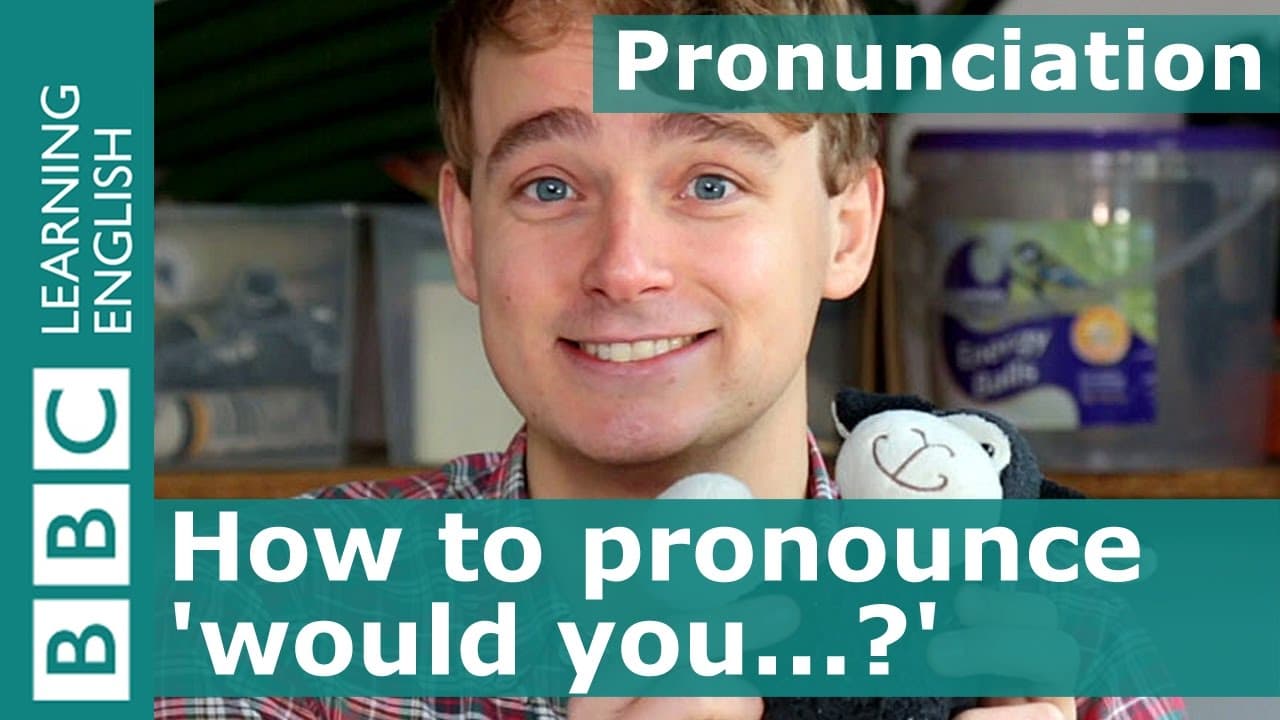
TL;DR
In fluent English, 'would you' often merges into 'would ya' due to assimilation, where the /d/ sound connects with the /j/ sound to form a /ʤ/. For natural pronunciation, practice phrases like 'I'm sad you decided to quit' and 'Could you get here by midnight?' to master this linking of sounds.
Transcript
Hi. I'm Tim and this is my Pronunciation workshop. Here I'm gonna show you how English is really spoken. Come on. Let's go inside. How do you ask for help? And what is the connection between this... and this? Well, this is a piece of what? And what is the female version of this animal called? Put them together and what do you get? Well, here's how ... Read More
Key Insights
- In fluent English, when a word ending in /d/ is followed by a word beginning with /j/, the sounds merge into a /ʤ/ sound, demonstrating assimilation.
- The word 'you' often changes its pronunciation in casual speech, with the /uː/ sound becoming a schwa, resulting in 'would you' sounding like 'would ya'.
- The pronunciation workshop emphasizes understanding real spoken English and how native speakers often link words together.
- Tim uses the example of how Londoners ask for help to illustrate the pronunciation change from 'would you' to 'would ya'.
- Assimilation is a common feature in English pronunciation, where adjacent sounds influence each other to become more alike.
- The video includes examples such as 'I'm sad you decided to quit' to practice the assimilation of /d/ and /j/ sounds.
- Listeners are encouraged to repeat phrases to practice the pronunciation changes discussed in the workshop.
- Tim's workshop is part of a series aimed at helping learners improve their English pronunciation by understanding native speech patterns.
Install to Summarize YouTube Videos and Get Transcripts
Explore YouTube Video Summarizer or Get YouTube Transcript Extractor
Questions & Answers
Q: What is the main focus of Tim's pronunciation workshop?
The main focus of Tim's pronunciation workshop is to teach learners about the assimilation process in English pronunciation, specifically how the /d/ sound at the end of one word merges with the /j/ sound at the beginning of the next word, resulting in a /ʤ/ sound. This is exemplified through the phrase 'would you', which often sounds like 'would ya' in fluent speech.
Q: How does the pronunciation of 'you' change in fluent speech?
In fluent speech, the pronunciation of 'you' often changes from the /uː/ sound to a schwa sound, especially when it follows a /d/ sound. This results in phrases like 'would you' being pronounced as 'would ya'. This change is part of the assimilation process where adjacent sounds influence each other to become more alike.
Q: What examples are provided to illustrate the pronunciation change?
The workshop provides several examples to illustrate the pronunciation change, including phrases like 'I'm sad you decided to quit', 'Could you get here by midnight?', 'Should you see him, can you give him a message?', and 'I don't think the gold you bought was real'. These examples help learners practice the assimilation of /d/ and /j/ sounds.
Q: Why is understanding assimilation important for English learners?
Understanding assimilation is important for English learners because it helps them recognize and produce the natural flow of spoken English. Assimilation involves the merging of adjacent sounds, making speech sound more fluid and connected. Mastering this aspect of pronunciation aids in better comprehension and communication with native speakers.
Q: What humorous element does Tim use in the workshop?
Tim uses humor in the workshop by playing with the words 'wood' and 'ewe', which sound like 'would you'. This wordplay helps engage the audience and make the learning process more enjoyable. Additionally, Tim's light-hearted demeanor and jokes about giving a guy a break add a fun element to the pronunciation lesson.
Q: How does the workshop encourage active participation?
The workshop encourages active participation by prompting listeners to repeat phrases after hearing them. This practice helps reinforce the pronunciation changes discussed, allowing learners to actively engage with the material and improve their spoken English skills through repetition and imitation of native-like speech patterns.
Q: What resources are suggested for further learning?
Tim suggests visiting the BBC Learning English website for further learning about pronunciation. The website offers additional resources and episodes that delve deeper into English pronunciation and speech patterns, providing learners with more opportunities to practice and enhance their understanding of real spoken English.
Q: What is the educational goal of Tim's pronunciation workshop series?
The educational goal of Tim's pronunciation workshop series is to help English learners improve their pronunciation by understanding how English is really spoken by native speakers. The series aims to teach learners about common speech phenomena like assimilation, linking, and sound changes, enabling them to communicate more effectively and naturally in English.
Summary & Key Takeaways
-
Tim's pronunciation workshop focuses on the assimilation phenomenon where the /d/ sound at the end of one word merges with the /j/ sound at the beginning of the next, forming a /ʤ/ sound. This is demonstrated with the phrase 'would you', which often sounds like 'would ya' in fluent speech.
-
The workshop provides examples of how this pronunciation change occurs in everyday phrases, encouraging listeners to practice by repeating sentences such as 'I'm sad you decided to quit' and 'Could you get here by midnight?' to master the assimilation process.
-
Tim uses humor and common phrases to make the learning process engaging, emphasizing that understanding real spoken English involves recognizing how native speakers naturally link words together, altering their pronunciation in the process.
Read in Other Languages (beta)
Share This Summary 📚
Summarize YouTube Videos and Get Video Transcripts with 1-Click
Try YouTube Summary with ChatGPT & Claude or YouTube Transcript Generator
Explore More Summaries from BBC Learning English 📚

Summarize YouTube Videos and Get Video Transcripts with 1-Click
Try YouTube Summary with ChatGPT & Claude or YouTube Transcript Generator