What Does It Mean to Be 'Salty'?
TL;DR
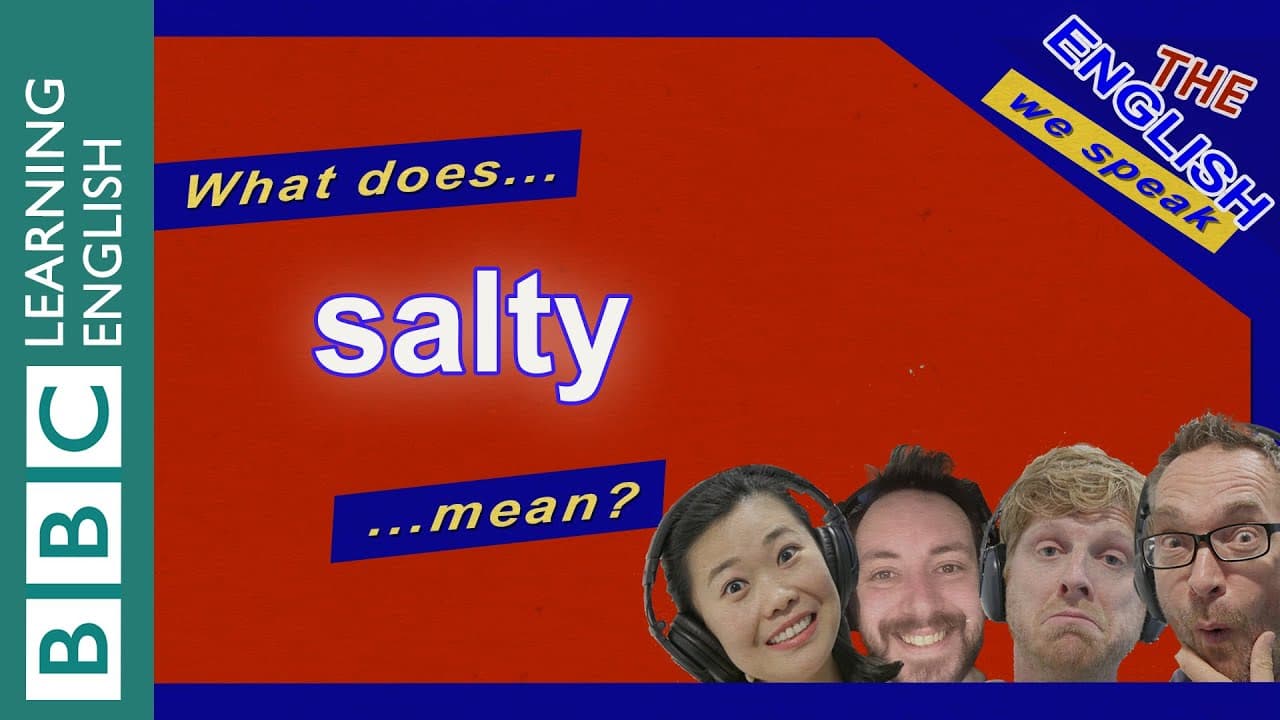
Being 'salty' refers to a person who is upset over trivial matters, often in a humorous or exaggerated way. For example, someone might feel 'salty' when they miss out on their favorite snacks or lose a board game. The term captures minor frustrations that may seem disproportionate to the actual events.
Transcript
Hello and welcome to The English We Speak with me, Feifei... ...and me, Roy. We may sound a little different - that's because we are not able to record in our normal studios during the coronavirus outbreak. In this programme, we have a word that is used to say when someone is upset over something minor or trivial. Speaking of which, you got really ... Read More
Key Insights
- The term 'salty' is used to describe someone who is upset over something minor or trivial, such as missing out on a favorite sweet.
- In the context of the episode, Roy becomes 'salty' when he cannot find his favorite 'unicorn truffles' in the vending machine.
- Feifei explains that being 'salty' is not related to sweating or physical saltiness, but rather emotional upset over inconsequential matters.
- Examples in the episode illustrate various situations where people might become 'salty', such as losing a board game or being the target of a practical joke.
- The humorous interaction between Feifei and Roy demonstrates the playful nature of using 'salty' to describe minor frustrations.
- Feifei's prank on Rob, which involved unplugging his computer, led him to become 'salty', showcasing the term's use in everyday situations.
- The episode emphasizes that while it is normal to feel 'salty' at times, it is often over things that are not worth the emotional energy.
- Listeners are encouraged to reflect on their own experiences of feeling 'salty' and consider the light-hearted nature of the term.
Install to Summarize YouTube Videos and Get Transcripts
Explore YouTube Video Summarizer or Get YouTube Transcript Extractor
Questions & Answers
Q: What does the term 'salty' mean in the context of the episode?
In the episode, the term 'salty' is used to describe someone who becomes upset or annoyed over something minor or trivial. It is not related to physical saltiness but rather to emotional reactions to inconsequential events. For example, Roy is described as 'salty' when he cannot find his favorite sweets.
Q: How does Roy demonstrate being 'salty' in the episode?
Roy demonstrates being 'salty' when he becomes upset after discovering that the vending machine does not have his favorite 'unicorn truffles'. His reaction to this minor inconvenience is exaggerated, highlighting the use of 'salty' to describe feelings of unnecessary annoyance over trivial matters.
Q: What examples are given to illustrate the use of 'salty'?
The episode provides several examples to illustrate the use of 'salty'. One example is a person becoming 'salty' after losing a board game, while another example involves someone feeling 'salty' because nobody wanted to join them for lunch. These scenarios show how 'salty' describes reactions to minor disappointments.
Q: How does Feifei use humor to explain 'salty'?
Feifei uses humor to explain 'salty' by engaging in playful banter with Roy. She teases him about his reaction to missing out on sweets and plays a practical joke on Rob, leading him to become 'salty'. This light-hearted approach helps convey the term's meaning in a relatable way.
Q: What prank does Feifei play on Rob, and how does he react?
Feifei plays a prank on Rob by unplugging his computer, preventing him from turning it on. When he discovers the joke, Rob becomes 'salty', demonstrating the term's application in everyday situations where minor annoyances can lead to exaggerated reactions.
Q: How does the episode encourage listeners to use 'salty'?
The episode encourages listeners to use 'salty' by providing relatable examples and scenarios. By showing how 'salty' can describe minor frustrations in a humorous way, listeners are invited to incorporate the term into their own conversations to express light-hearted annoyance.
Q: What is the significance of 'unicorn truffles' in the episode?
'Unicorn truffles' serve as a humorous example of a trivial item that can lead to someone feeling 'salty'. Roy's exaggerated reaction to not finding these sweets in the vending machine highlights the concept of being upset over minor issues, which is central to understanding the term 'salty'.
Q: How does the episode reflect on personal experiences of feeling 'salty'?
The episode reflects on personal experiences of feeling 'salty' by encouraging listeners to think about their own reactions to trivial annoyances. Through examples and humor, it suggests that while feeling 'salty' is common, it's often over things that are not worth getting upset about, promoting a more light-hearted perspective.
Summary & Key Takeaways
-
In this episode of The English We Speak, Feifei and Roy explore the use of the word 'salty' to describe someone who becomes upset over trivial matters. Through humorous examples and playful interactions, they highlight how 'salty' can be used in everyday conversations.
-
The discussion focuses on how seemingly inconsequential events, like missing out on a favorite sweet or being the butt of a practical joke, can lead to someone being labeled as 'salty'. The term is portrayed as a light-hearted way to describe minor frustrations.
-
Listeners are provided with examples and scenarios to help them understand and use the term 'salty' in their own conversations. The episode encourages a reflection on personal experiences of feeling 'salty' and emphasizes the humorous aspect of the term.
Read in Other Languages (beta)
Share This Summary 📚
Summarize YouTube Videos and Get Video Transcripts with 1-Click
Try YouTube Summary with ChatGPT & Claude or YouTube Transcript Generator
Explore More Summaries from BBC Learning English 📚

Summarize YouTube Videos and Get Video Transcripts with 1-Click
Try YouTube Summary with ChatGPT & Claude or YouTube Transcript Generator