How to do live vibe coding with music visuals?
TL;DR
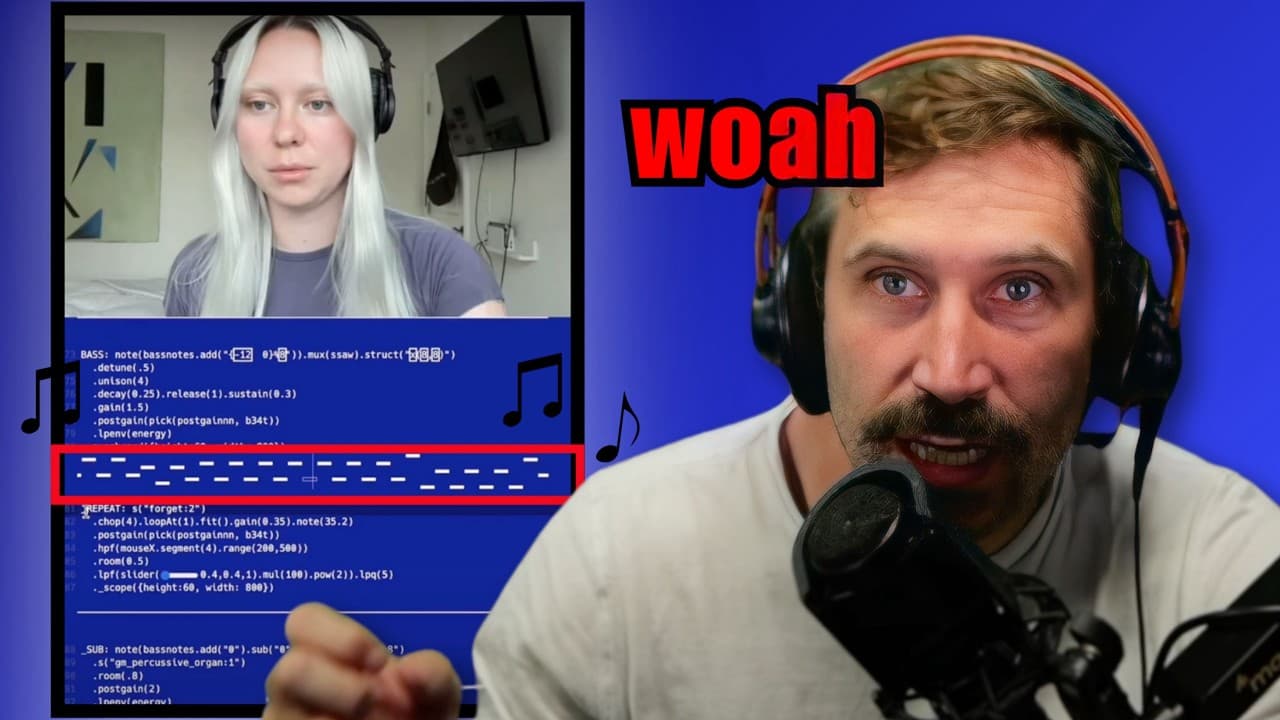
The video demonstrates live coding for music and visuals using looped drum, bass, and synth elements, often reacting to mouse movements and vocal samples. It references tools like Sonic Pi and Strudel, discusses live performance setup, and imagines future ideas such as AI-assisted creation and Neoim plugins for live coding aesthetics.
Transcript
Someone tagged me on this and I just had to see what this was. It looks like this is some sort of Sonic Pie thing cuz it looks like I see a bunch of music or sound coming out there cuz I see like loop at, fit, gain, and some more drums. All of my code files are structured pretty similarly. I have pretty much the same components in all of them. Ther... Read More
Key Insights
- Live coding for music relies on looping drum, bass, and synth patterns for real time performance.
- Visuals and audio are often tied together with interactive controls like sliders and mouse input.
- Samples can be loaded locally or hosted on platforms like GitHub for reuse across projects.
- Live environments frequently use JavaScript based audio processing with filters and side chaining.
- Performance hinges on understanding how different modules interact, such as kick drums affecting other instruments.
- The speaker compares different tools, mentioning Sonic Pi and Strudel as influential in live coding culture.
- Artist workflow includes experimenting with samples, effects, and live sequencing to build buildups and transitions.
- Curiosity drives exploration of AI assisted music generation and plugin development for live coding ecosystems.
Install to Summarize YouTube Videos and Get Transcripts
Explore YouTube Video Summarizer or Get YouTube Transcript Extractor
Questions & Answers
Q: How can I start doing live vibe coding with music visuals
To start, learn the basics of looping drum, bass, and synth patterns and how to trigger them in real time. Experiment with vocal samples and basic effects like filters and sliders to control dynamics. Use a simple live coding environment and gradually add more instruments while testing interactions with the cursor or keyboard.
Q: What tools are mentioned for live coding in the video
The video mentions Sonic Pi and Strudel as environments for live coding music. It also references JavaScript based audio processing with elements like kick drum control and side chaining to influence other instruments. The speaker notes integration with visuals and live performance workflows, plus potential AI assistance.
Q: How does the creator describe the feel of live coding performances
The creator emphasizes the magic and excitement of performing live with code, describing it as a vibe coding experience. They highlight the immediacy of hearing changes in real time, the visual feedback from performance dashboards, and the sense of discovery when experimenting with new sequences and effects during a live session.
Q: What challenges or puzzles are touched on in the video
The video hints at synchronization challenges between visuals and audio, noting that onlookers may see one thing while the audio responds differently due to timing or edits. It also mentions figuring out how to trigger buildups, manage multiple loops, and align live changes with on stage visuals.
Q: Why does the speaker compare different programming environments
The comparison stems from seeking the best combination of live responsiveness, ease of use, and visual integration. By evaluating Sonic Pi, Strudel, and JavaScript based setups, the speaker investigates how each handles timing, sample loading, and real time control to enhance the live coding experience.
Q: What future ideas are suggested in relation to AI and live coding
The speaker entertains the idea of using AI to generate musical ideas or assist in producing live coded performances. They imagine AI spitting out live code or aiding in creating new environments and plugins, which could automate or augment the process of generating sound and visuals in real time.
Q: How important are samples in the described workflow
Samples play a central role as they define the texture and mood of the performance. They can be loaded locally or hosted remotely, enabling reuse across projects. The ability to manipulate samples with live controls, such as sliders, contributes to the dynamic and expressive capacity of the show.
Q: What personal motivation does the speaker express about learning this like the audience
The speaker shares a strong personal enthusiasm for live coding and music, describing a desire to dive deeper into the tools and concepts. They compare the experience to other intensive learning paths, like chess coaching or deep practice, and express a wish to pursue this creative direction more fully.
Summary & Key Takeaways
-
This summary outlines how the creator observes live coding workflows, including looping drums, bass, and synths, and uses vocal samples and interactive effects to drive live performances. It acknowledges reading code structures across projects and the importance of real-time control during performances.
-
The video compares different live coding environments and emphasizes curiosity about tools like Sonic Pi, Strudel, and JavaScript-based audio with interactive visuals, while imagining enhancements such as AI-assisted generation and color-themed aesthetics like rose pine.
-
The content showcases a passion for modular live setups, mentions GitHub as a place to store samples, and highlights the appeal of performing with live code to create dynamic, reactive music and visuals.
Read in Other Languages (beta)
Share This Summary 📚
Summarize YouTube Videos and Get Video Transcripts with 1-Click
Try YouTube Summary with ChatGPT & Claude or YouTube Transcript Generator
Explore More Summaries from The PrimeTime 📚
Summarize YouTube Videos and Get Video Transcripts with 1-Click
Try YouTube Summary with ChatGPT & Claude or YouTube Transcript Generator