How to use John the Ripper for password cracking
TL;DR
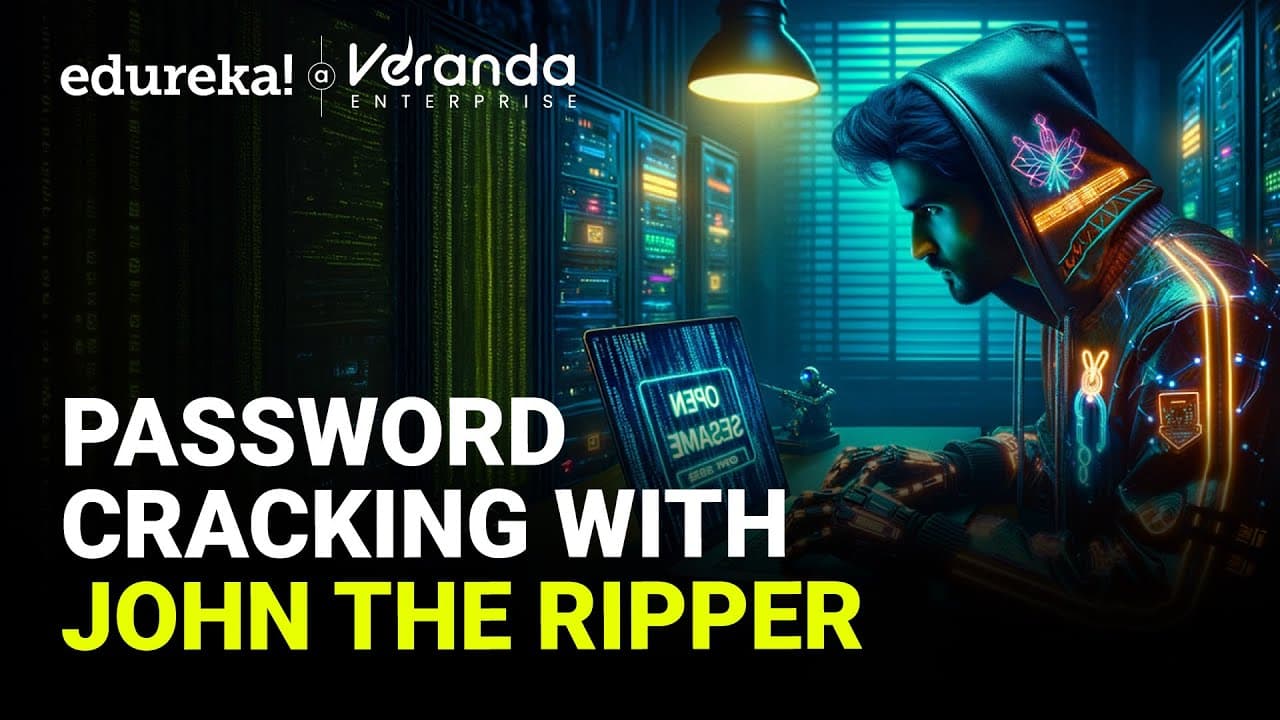
John the Ripper is a versatile password cracking tool used by ethical hackers to test password security. The video covers installation in CLI and GUI modes, explains hashing concepts, and details multiple cracking modes such as single, word list, incremental, and external, plus how to use the Johnny GUI for a friendlier experience.
Transcript
hello everyone welcome to another exciting video on cyber security by urea in today's video we will explore John the reer a powerful tool for cracking passwords and conducting security audits if you have ever wondered how hackers evaluate password strengths or how ethical hackers analyze a system security John the repper is an essential tool for th... Read More
Key Insights
- John the Ripper is an open-source tool used for password security auditing and recovery.
- The tool supports a wide range of hashers and encryption methods across multiple platforms.
- CLI and GUI (Johnny) modes are both demonstrated for different user preferences.
- Modes include single, word list, incremental, and external with customizable rules.
- Rules can be used to tailor cracking attempts to specific password patterns.
- Incremental mode exhaustively checks combinations based on length and character sets.
- Word list mode tests passwords from predefined lists such as rock.txt.
- GUI mode provides a user-friendly interface for beginners and efficient workflow.
Install to Summarize YouTube Videos and Get Transcripts
Explore YouTube Video Summarizer or Get YouTube Transcript Extractor
Questions & Answers
Q: What is John the Ripper used for in cybersecurity?
John the Ripper is an open-source password security auditing and password recovery tool used by security professionals to assess password strength and identify weak passwords. It can crack password hashes from Unix, Windows, encrypted files, and more, enabling auditors to test and improve security policies across diverse environments.
Q: How does hashing relate to password security in this video?
Hashing creates a fixed length string that represents data like passwords. The video explains that hashed passwords are harder to reverse engineer, so cracking hashes helps testers evaluate how secure stored passwords are. Different hash algorithms such as MD5, SHA-256, and bcrypt are discussed to illustrate varying security levels.
Q: What platforms support John the Ripper according to the tutorial?
The tutorial notes that John the Ripper is available for Linux, Windows, and Mac OS, making it versatile for different environments. Cross-platform compatibility is highlighted as a key feature to fit a range of security testing setups, from command line to graphical interfaces.
Q: What cracking modes does John the Ripper offer as shown in the video?
The video covers several modes including single mode, word list mode, incremental mode, and external mode. Single mode uses user related information for guesses, word list mode tests a predefined list of passwords, incremental mode tries all possible combinations, and external mode allows custom rules for targeted testing.
Q: How are rules used in John the Ripper?
Rules modify and extend the base word lists to create more effective guesses. The video explains that you can use default rules or craft custom rules to enhance cracking strategies, enabling testers to exploit common password patterns and variations while maintaining control over the process.
Q: What is Johnny in the context of John the Ripper?
Johnny is a graphical user interface for John the Ripper that makes password cracking more approachable for beginners. The video demonstrates how to install Johnny and launch it to perform cracking tasks within a more user-friendly environment, complementing the CLI workflow.
Q: What kinds of data can John the Ripper crack passwords for, as described?
John the Ripper can crack password hashes from Unix based systems, Windows hashers, encrypted files like ZIP and RAR archives, web applications, SSH keys, PDFs, Office documents, and even network captures. This breadth makes it a comprehensive tool for testing password security across many formats.
Q: Why is incremental mode described as powerful and time consuming?
Incremental mode is powerful because it systematically tries every possible combination of characters starting from the shortest length, making it effective when no word list is available. However, the number of possibilities grows quickly with length, so the process can be extremely time consuming depending on password length and complexity.
Summary & Key Takeaways
-
John the Ripper is described as an open-source password security auditing and recovery tool used across Linux, Windows, and Mac OS.
-
The video emphasizes its ability to crack various hash types and encrypted files to assess password strength.
-
The tutorial shows how to install and operate John the Ripper in both CLI and GUI modes, including rule-based modifications and different cracking strategies.
Read in Other Languages (beta)
Share This Summary 📚
Summarize YouTube Videos and Get Video Transcripts with 1-Click
Try YouTube Summary with ChatGPT & Claude or YouTube Transcript Generator
Explore More Summaries from edureka! 📚




Summarize YouTube Videos and Get Video Transcripts with 1-Click
Try YouTube Summary with ChatGPT & Claude or YouTube Transcript Generator