Fitbit Air Review: Impressive With an Old Sensor
TL;DR
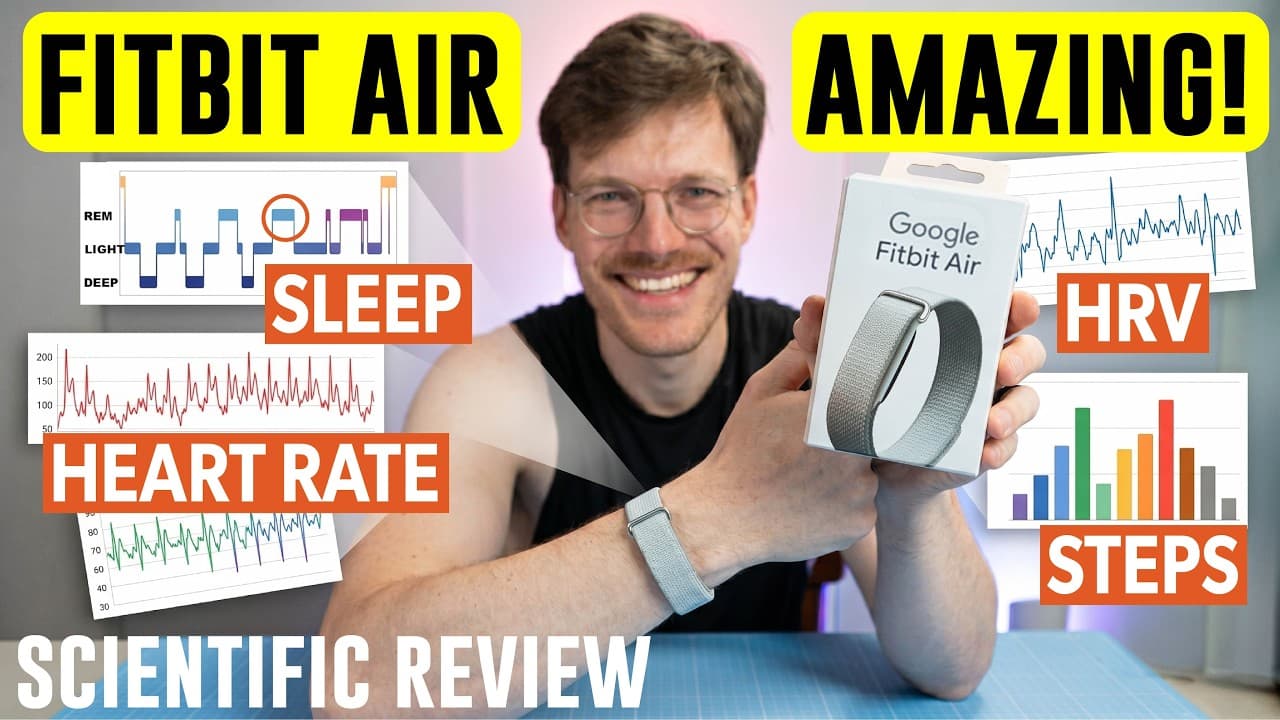
The $99 Fitbit Air delivers heart rate updates every 1 or 2 seconds during detected exercise and counted 5,000 manually tracked steps with only about 1% overcounting. Core metrics are free, while Gemini-powered coaching requires Google Health Premium, and initial Apple Health synchronization imports data into Google Health without writing it back.
Transcript
The $99 Fitbit Air has the same heart rate sensor set as the Fitbit Inspire 3 and the Fitbit Charge 5 and 6, some of which were released close to half a decade ago. So, can that old sensor compete with the latest generation of wearables from other companies like Apple, Garmin, and Whoop. Now, of course, we'll test it in detail, and not to spoil any... Read More
Key Insights
- The Fitbit Air costs $99 and uses the same heart rate sensor set found in the Fitbit Inspire 3 and Fitbit Charge 5 and 6. Despite the sensor's age, the reviewer was impressed by Google's results and suggested that signal processing and AI may contribute to its performance.
- Heart rate measurement operates in two activity-dependent modes. When the Fitbit Air determines that exercise has started, it increases measurement quality and provides heart rate updates every 1 or 2 seconds, with no stated change caused by battery level or power mode.
- Automatic exercise logging begins only after 10 or 15 minutes, depending on the activity type. This threshold does not delay higher-quality heart rate measurements, because the tracker can increase measurement frequency as soon as it believes exercise has started.
- Automatic workout detection correctly identified all tested bike rides and runs without manual activation. Weightlifting sessions were not detected, which aligns with Google's explanation that supported automatic activities focus on biking, spinning, running, walking, and other high-heart-rate activities.
- Core Fitbit Air metrics are available without a premium subscription. Google Health Premium is required for Gemini-powered insights, coaching, and the Ask Coach feature, separating access to underlying measurements from access to AI-based interpretation and guidance.
- Premium coaching does not retroactively analyze earlier workouts or sleep records when a user subscribes. Google's stated behavior is that Coach insights and messages apply only to new and future activities after premium activation, although previously collected underlying data remains available.
- Apple Health integration is initially one-directional. Google Health can import permitted Apple Health data, including up to three months of history at launch, but it cannot initially write data back. Google said export support and broader historical synchronization would be added later.
- Step counting showed a small and consistent overcount in a manually verified 5,000-step test. The Fitbit Air recorded approximately 9 to 10 extra steps per 1,000, producing an error near 1%, while possible phone-data duplication or the counting algorithm remained plausible explanations.
Install to Summarize YouTube Videos and Get Transcripts
Explore YouTube Video Summarizer or Get YouTube Transcript Extractor
Questions & Answers
Q: How accurate is Fitbit Air step counting?
The Fitbit Air slightly overcounted in a manually verified test covering 5,000 steps. Across five segments of 1,000 steps, it recorded 12, 10, 3, 15, and 13 extra steps. That works out to roughly 9 to 10 additional steps per 1,000, or about 1% overcounting, which the reviewer considered minor.
Q: How often does Fitbit Air measure heart rate during exercise?
The Fitbit Air provides heart rate updates every 1 or 2 seconds when it believes the wearer is exercising. Google describes two heart rate measurement modes that change according to activity level. The higher-quality mode can begin immediately after exercise appears to start, and its sampling rate does not change with battery level or power mode.
Q: Does Fitbit Air automatically detect workouts?
Automatic detection worked for all of the reviewer's tested cardio sessions, including multiple runs and bike rides, without requiring manual workout activation. It did not detect weightlifting sessions. Google said supported automatic activity types include biking, spinning, running, walking, and other activities associated with a high heart rate, so detection depends on exercise type.
Q: Why does Fitbit Air wait before logging an exercise?
The Fitbit Air requires 10 or 15 minutes of activity before automatically logging a workout, with the exact threshold depending on the activity type. That delay applies only to automatic recognition and logging. It does not mean the device waits before increasing heart rate measurement quality, which can happen as soon as exercise is suspected.
Q: What Fitbit Air features are free without a subscription?
Google says all core Fitbit Air metrics are available for free, so access to the basic recorded health and activity data does not require Google Health Premium. The paid plan covers Gemini-powered insights, coaching, and the Ask Coach feature. If premium expires, the underlying data remains viewable in the app and available for export.
Q: Does Google Health Premium analyze old Fitbit data?
Google Health Premium does not apply its coaching features retroactively to activities recorded before enrollment. According to Google, Coach insights and messages cover only new and future activities after the subscription begins. Previously collected data can still be retained, viewed, and exported, but it will not suddenly receive historical coaching analysis after premium activation.
Q: Can Fitbit Air data sync with Apple Health?
At launch, Google Health can read or import Apple Health data when the user grants the required permissions, but writing data back to Apple Health is not supported. Google Health can initially import up to three months of Apple Health history. Google said export support and complete historical synchronization were planned for later.
Q: How does Google Health handle data from multiple devices?
Google Health creates a reconciled stream instead of simply stacking overlapping records from multiple devices. It selects a higher-priority source for a unified view, such as using Pixel Watch steps while that watch is worn and switching to Fitbit Air afterward. Individual sources remain inspectable, although duplicate workout or meal sessions may still appear at launch because timestamps are difficult to reconcile.
Summary & Key Takeaways
-
The Fitbit Air uses the same heart rate sensor set as the Inspire 3 and Charge 5 and 6, but Google appears to improve its performance through signal processing and AI. Heart rate measurement changes with activity level, providing updates every 1 or 2 seconds when exercise is recognized, regardless of battery level or power mode.
-
Automatic activity detection successfully recognized every tested bike ride and run without manual activation, but it did not recognize weightlifting sessions. Supported automatic activities include biking, spinning, running, walking, and other high-heart-rate activities. Logging requires 10 or 15 minutes depending on activity type, although enhanced heart rate measurement begins sooner.
-
A manual 5,000-step test found that the Fitbit Air consistently overcounted by a small amount, averaging roughly 9 to 10 additional steps per 1,000 steps. The resulting error was about 1%. Possible explanations include the step-counting algorithm or imperfect timestamp reconciliation between the tracker and connected phone.
Read in Other Languages (beta)
Share This Summary 📚
Summarize YouTube Videos and Get Video Transcripts with 1-Click
Try YouTube Summary with ChatGPT & Claude or YouTube Transcript Generator
Explore More Summaries from The Quantified Scientist 📚



Summarize YouTube Videos and Get Video Transcripts with 1-Click
Try YouTube Summary with ChatGPT & Claude or YouTube Transcript Generator