How Crosby Uses AI to Automate Legal Contract Negotiation
TL;DR
Crosby is an AI-first law firm that automates contract negotiation by structuring itself as an actual law firm rather than a software vendor, seating lawyers next to AI engineers to create tight feedback loops. It replaced billable hours with per-document pricing and targets contract turnaround times under an hour, measuring success by SLA and the number of human touch points removed.
Transcript
I think lawyers are quite good at learning, but in a law firm structure, as much time goes into apprenticeship. It's a teaching hospital. You don't actually spend that much time getting really good at teaching because you just do it through reps and reps and reps and reps. And so actually explaining things um is something that like I think is going... Read More
Key Insights
- Crosby is an AI-first law firm focused entirely on contracts, built on the theory that human negotiations to agree on terms can be automated agentically to close contracts faster, since contracts underlie most business transactions like leases and offer letters.
- Building a law firm instead of legal software matters because a traditional law firm partnership cannot invest in speculative technology: partners cannot sell equity and only partners can take recourse loans, so the structure blocks the fast iteration needed to innovate.
- The core feedback loop comes from lawyers and engineers sitting side by side, with desks physically staggered lawyer-engineer-lawyer-engineer, producing telemetry and user research that goes beyond benchmarks or evals traditional software teams rely on.
- Legal services are a credence good, meaning clients only learn the quality after consuming it and need an expert to judge it, so structuring as a law firm keeps a lawyer in the loop as a safety and quality guarantee around the AI.
- Crosby eliminated the billable hour in favor of billing by the document, an early decision meant to grab attention and align incentives, since billing by the hour penalizes efficiency and misaligns the firm with client value.
- Predicting from time zero how long a piece of contract work will take, including how many times it goes back and forth, is a key innovation that lets Crosby price per document while still doing the work properly and aligning with client value.
- The operational business is instrumented by measuring turnaround time against SLAs and counting human touch points per contract, then automating the highest-value touch points first to convert product velocity into lagging customer outcomes.
- Explaining and teaching a task well is becoming a prized skill for lawyers and domain experts, because making an AI perform work you have done and disliked is described as a magical experience the team witnesses on a weekly basis.
Install to Summarize YouTube Videos and Get Transcripts
Explore YouTube Video Summarizer or Get YouTube Transcript Extractor
Questions & Answers
Q: What is Crosby and what does it do?
Crosby is an AI-first law firm that focuses entirely on contracts. Its founding theory is that human negotiations, meaning getting people to agree on terms, can be automated, and the best way to do that is with a contract. Because contracts are everywhere, underlying leases, offer letters, and most business transactions, Crosby builds an in-house law firm, studies how lawyers work, and replaces as much of that work agentically as possible to get contracts closed faster.
Q: Why did Crosby build a law firm instead of legal software?
The founders chose a law firm because the traditional partnership structure blocks technology investment: partners cannot sell equity, and only law firm partners can take recourse loans, so speculative technology building does not work financially. By restructuring, Crosby can achieve quick iteration cycles. It also keeps an expert lawyer in the loop, which matters because legal services are a credence good whose quality clients can only judge with expert help, so the firm structure provides safety parameters around the AI.
Q: How do lawyers and AI engineers actually work together at Crosby?
Crosby physically staggers desks lawyer-engineer-lawyer-engineer in its office to create feedback cycles and incentivize collaboration. Having domain experts sit side by side with engineers creates a feedback loop that is more than an eval: the lawyers actually use the product, experience it, and do user research to identify critical workflows and the biggest gaps. This lets the team judge specifics like whether a red line is exactly correct or whether a word choice fits, from start to finish.
Q: Why did Crosby eliminate the billable hour?
Crosby made an early, almost intuitive decision to have no billable hour, instead billing by the document. They saw it as an interesting wedge to get attention and a way to align incentives inside the company, so they did not think twice about it. Billing by the hour misaligns incentives because making work more efficient does not help revenue. Per-document pricing aligns the firm with the value delivered to clients rather than time spent.
Q: How does Crosby price contract work if it does not bill by the hour?
Crosby bills by the document, which requires predicting from time zero how long a piece of work will take, including how many times a contract will go back and forth, whether it needs to be looked at five, three, or two times. The founders say this predictive ability is something they could not have guessed a year ago. Accurate prediction lets them price the work while still doing it properly and aligning the price with the value given to clients.
Q: What metrics does Crosby use to run its operation?
Because it is an operationally heavy business, Crosby instruments the full contract lifecycle. It measures SLAs through turnaround time and counts how many human touch points are involved in each contract from start to finish. By understanding how long each touch point takes and which are highest value, the team automates those first. It then converts these leading input metrics into lagging indicators like meeting SLAs, delivering on time, and reducing human touch points.
Q: Why have previous attempts at combining legal services and software struggled?
The founders note this has rarely been tried and is extremely daring. In law, only two or three companies, including Atrium and earlier Clear Spire, attempted it meaningfully, and several things did not pan out. Key challenges were achieving tight coordination between lawyers and engineers, and the fact that only recently can large chunks of the qualitative, thoughtful work lawyers do each day actually be delegated to machines, which is hard to overstate in complexity and novelty.
Q: Why is explaining and teaching becoming a valuable skill for lawyers?
The founders argue lawyers are good at learning, but in a law firm's apprenticeship model, which they compare to a teaching hospital, people get good through repetition rather than deliberately learning to teach. Explaining things clearly is becoming a prized skill for lawyers and other domain experts because it is what lets you make an AI perform a task you have done. Watching an AI take over work you disliked doing is described as a magical experience the team sees weekly.
Summary & Key Takeaways
-
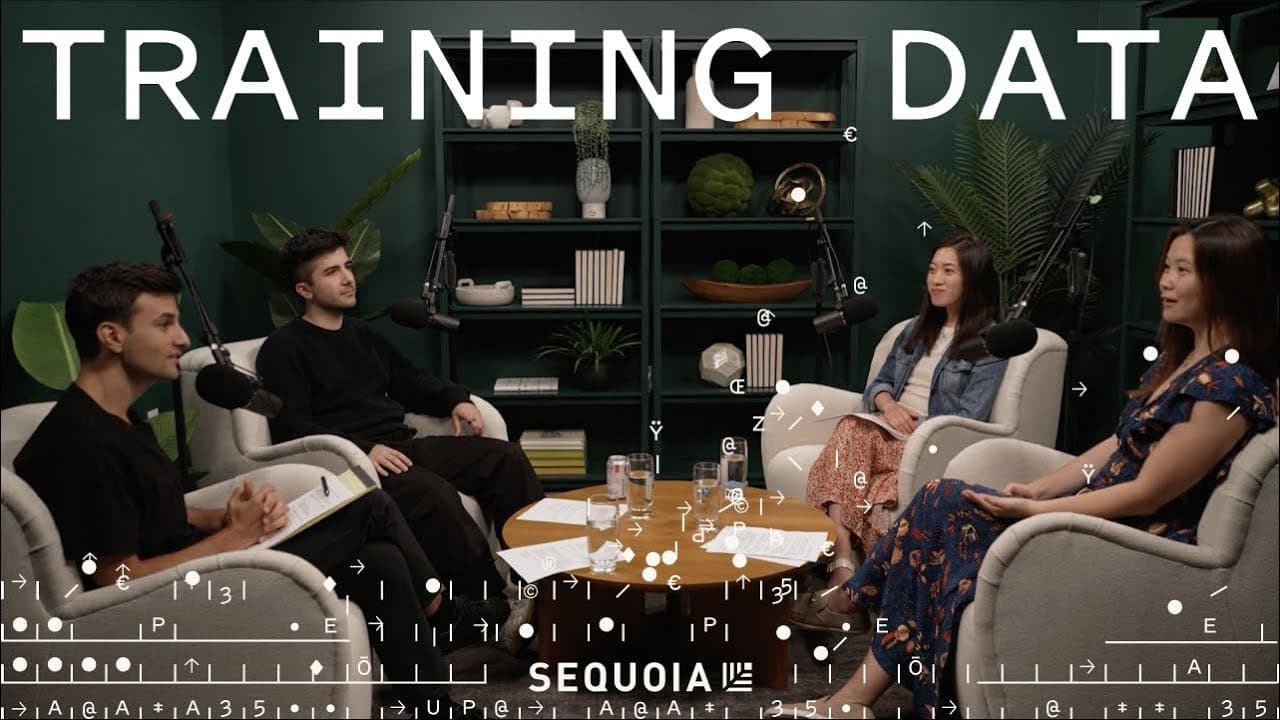
Crosby, founded by Ryan Daniels and John Sarihan and featured in a Sequoia episode hosted by Josephine Chen, is an AI-first law firm focused entirely on contracts. Its thesis is that human negotiations can be automated agentically, and the best vehicle to do that is running an actual in-house law firm rather than selling legal software.
-
The law firm structure enables faster innovation because traditional partnerships cannot fund speculative technology, while a corporate structure can. Domain experts sit beside engineers, with desks staggered to force collaboration, generating real usage feedback rather than just evals. Prior attempts like Atrium and Clear Spire tried combining software and services but did not fully pan out.
-
Crosby replaced billable hours with per-document pricing to align incentives and predict work up front, including how many negotiation rounds a contract needs. It instruments the operation via SLAs, turnaround time, and human touch points, automating the highest-value ones. Clients like Cursor come because they trust the firm's high-quality, fast reviews.
Read in Other Languages (beta)
Share This Summary 📚
Summarize YouTube Videos and Get Video Transcripts with 1-Click
Try YouTube Summary with ChatGPT & Claude or YouTube Transcript Generator
Explore More Summaries from Sequoia Capital 📚

Summarize YouTube Videos and Get Video Transcripts with 1-Click
Try YouTube Summary with ChatGPT & Claude or YouTube Transcript Generator