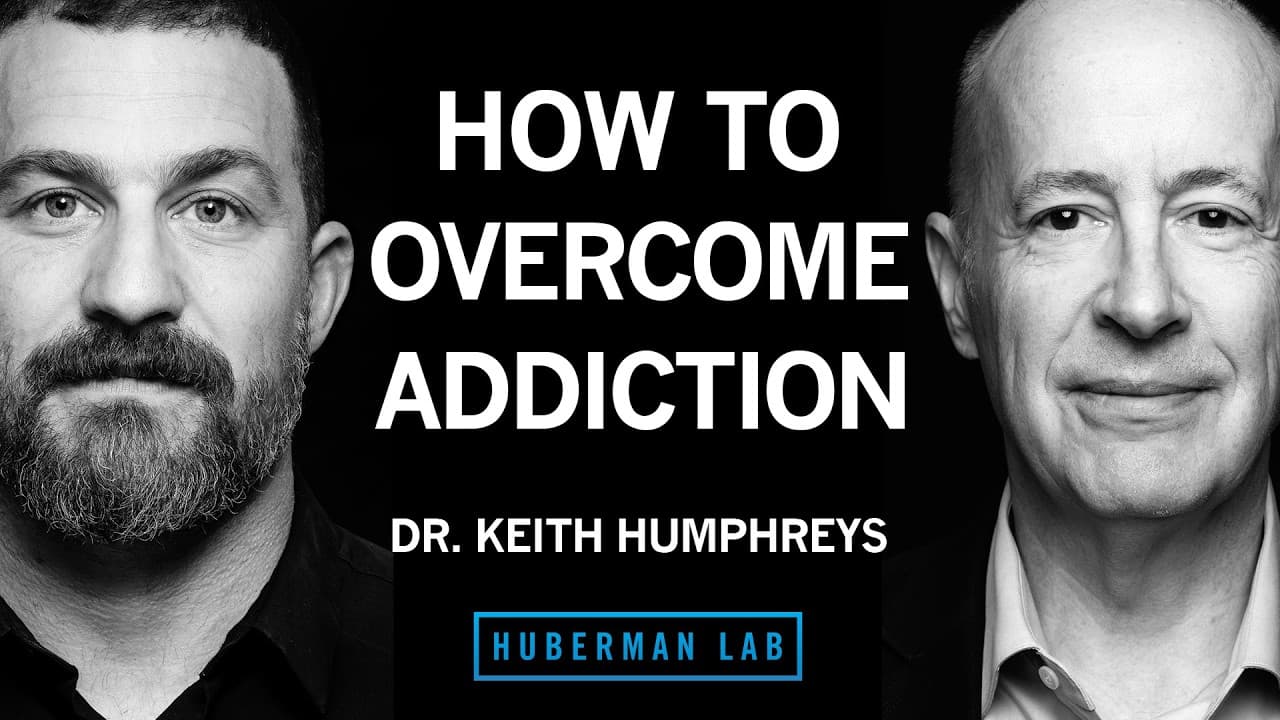
How to Overcome Substance or Behavioral Addiction | Dr. Keith Humphreys
TL;DR
Overcoming addiction starts with identifying your own reasons for changing and spending time with people pursuing the same goal. Dr. Keith Humphreys explains that groups such as AA can provide both support and accountability, while addiction itself means persisting in a harmful behavior to the point of destruction. Read on for practical guidance and a clearer framework for evaluating addictive substances and behaviors.
Transcript
Someone says I want to quit smoking. A good clinician will say why why would you want to do that? So say so tell me why would you want what do you want to get out of this because it's work. I mean I'm happy to work with you but you know what is it? What are your what are your motives? And and sort of helping them build up you know in their own mind... Read More
Key Insights
- Addiction is not just frequent use but the persistence of harmful behavior.
- Genetic predisposition plays a significant role in addiction susceptibility.
- Social support and accountability are crucial in making behavior changes.
- Alcohol's health benefits are outweighed by increased cancer risks.
- Cannabis today is much stronger than in the past, affecting its impact.
- Industries often exploit addiction for profit, influencing policies.
- Psychedelics show promise in addiction treatment but require more research.
- Effective addiction recovery involves understanding the broader context of addictive behaviors.
Install to Summarize YouTube Videos and Get Transcripts
Explore YouTube Video Summarizer or Get YouTube Transcript Extractor
Questions & Answers
Q: How can you overcome substance or behavioral addiction?
Start by clarifying what you personally want to gain from changing, because recovery requires work and the motivation must be yours. Spend time with people making the same change; a group can provide support and hold you accountable when you do not follow through.
Q: How does Dr. Keith Humphreys define addiction?
Addiction is not simply doing something frequently or behaving compulsively. It is persisting in a behavior that is harmful, even to the point of destruction, when a person would ordinarily be expected to stop.
Q: Why should addiction treatment explore a person’s motivation?
A clinician helping someone quit smoking should ask why the person wants to stop and what they hope to gain. This helps the person strengthen their own reasons for undertaking the difficult work of behavior change.
Q: How does social support help with addiction recovery?
Being around people pursuing the same change provides encouragement from others on the same journey. It also reduces isolation and creates a community centered on the desired behavior change.
Q: Why is accountability useful when changing an addictive behavior?
Accountability makes it harder to quietly abandon a commitment. Dr. Humphreys illustrates this with a jogging group whose members notice when someone misses a scheduled run and ask whether that person intends to remain involved.
Q: What type of group can help someone stop drinking?
Dr. Humphreys suggests visiting an AA meeting or one of the other available fellowships. Such groups bring together people pursuing the same goal and offer both support and accountability.
Q: What health risks should people consider when evaluating alcohol?
Any possible heart-health benefits from a certain amount of alcohol are greatly offset by increased cancer and other risks. Dr. Humphreys uses this comparison to show how people can assess a substance by weighing its claimed benefits against its broader harms.
Q: Which addictions does Dr. Keith Humphreys discuss?
The discussion covers alcohol, cannabis, opioids, gambling, pornography, stimulants, and other addictive substances and behaviors. It also examines how science, commercial marketing, lobbying, legal policy, and addiction-for-profit businesses shape the environment in which people make decisions.
Summary & Key Takeaways
-
Addiction is characterized by the persistent pursuit of harmful behaviors, often influenced by genetic predispositions. Engaging with supportive social networks can aid in recovery by providing accountability and encouragement. Industries frequently exploit addictive behaviors for profit, complicating public health efforts.
-
Alcohol consumption, while sometimes perceived as beneficial, poses significant health risks, particularly cancer, negating any potential cardiac benefits. Current cannabis products are much stronger than those from previous decades, leading to increased health concerns.
-
Emerging treatments, such as psychedelics, offer potential in addressing addiction, but require further scientific validation. Comprehensive understanding of addiction must consider the interplay of genetic, social, and commercial factors.
Read in Other Languages (beta)
Share This Summary 📚
Summarize YouTube Videos and Get Video Transcripts with 1-Click
Try YouTube Summary with ChatGPT & Claude or YouTube Transcript Generator
Explore More Summaries from Andrew Huberman 📚



Summarize YouTube Videos and Get Video Transcripts with 1-Click
Try YouTube Summary with ChatGPT & Claude or YouTube Transcript Generator