How to Master Storytelling Techniques for Better Content
TL;DR
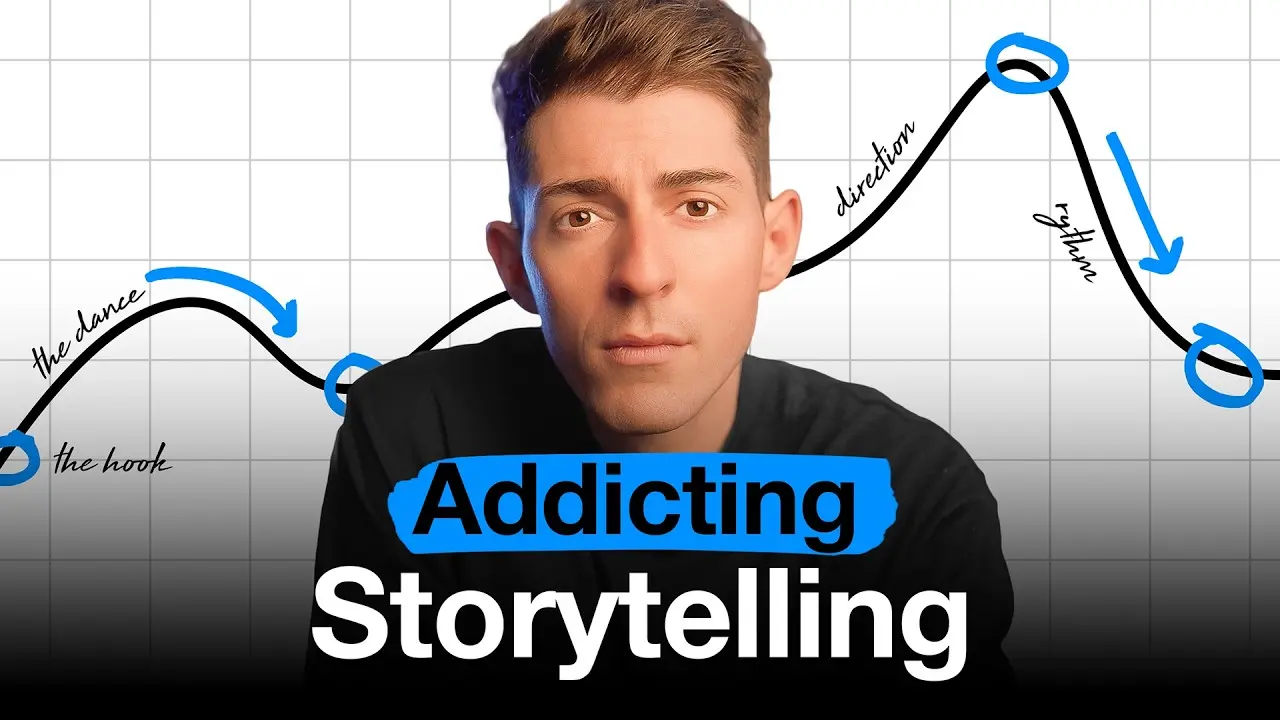
To master storytelling for content creation, focus on six techniques: balance context and conflict to engage viewers, vary sentence lengths for rhythm, adopt a conversational tone, start with the end in mind, use unique story lenses, and implement punchy visual hooks. These strategies will enhance audience engagement and improve the overall quality of your content.
Transcript
today we're talking about storytelling if you want your content to perform better you need to learn how to tell better stories so in this video I'm going to walk through my six favorite storytelling techniques that will massively improve your content after watching this I guarantee you will think differently about the way you write ... Read More
Key Insights
- The 'dance' of storytelling involves a balance between context and conflict, keeping the audience engaged by creating and resolving tension.
- Using the words 'but' and 'therefore' instead of 'and then' helps create a dynamic, engaging narrative structure.
- Rhythm in storytelling is crucial; varying sentence lengths can prevent monotony and keep the audience interested.
- Conversational tone in content makes the audience feel like they're part of the story, breaking down barriers and increasing engagement.
- Starting with the end in mind can help structure a story effectively, ensuring a compelling narrative arc.
- Story lenses offer unique perspectives on common topics, helping content stand out in a crowded field.
- The hook is critical to capture attention; using visual hooks can be more effective than audio-only hooks.
- Practical examples from successful creators highlight the application of these techniques in real-world content.
Install to Summarize YouTube Videos and Get Transcripts
Explore YouTube Video Summarizer or Get YouTube Transcript Extractor
Questions & Answers
Q: What is the 'dance' in storytelling?
The 'dance' in storytelling refers to the interplay between context and conflict. It involves providing enough background to engage the audience while introducing conflicts to maintain tension and interest. This technique helps create open loops in the audience's mind, which are then resolved as the story progresses, keeping them engaged throughout.
Q: How can rhythm improve storytelling?
Rhythm in storytelling is achieved by varying sentence lengths, which prevents monotony and keeps the audience engaged. By mixing short, medium, and long sentences, the narrative flows more naturally and maintains the audience's interest. This technique is akin to creating music with words, making the storytelling experience more dynamic and enjoyable.
Q: Why is tone important in storytelling?
Tone is crucial in storytelling because it makes the audience feel like they are part of the conversation. A conversational tone breaks down barriers and creates a sense of intimacy, making the audience more receptive to the message. Successful creators use tone to engage viewers, making them feel as if they are in the same room, participating in the dialogue.
Q: What is a story lens?
A story lens is a unique angle or perspective applied to a common topic, helping content stand out. It acts like a prism, altering the way the story is perceived and making it distinct from similar content. By finding a unique story lens, creators can differentiate their content and engage audiences with fresh, innovative viewpoints.
Q: How should one approach writing a story with direction in mind?
Writing a story with direction involves starting with the end in mind. By determining the desired conclusion, creators can work backwards to structure the narrative effectively. This approach ensures a coherent and compelling story arc, guiding the audience toward the intended message or takeaway, much like constructing a puzzle with the final image in mind.
Q: What are the key elements of an effective hook?
An effective hook should be punchy and indicative of the plot, immediately grabbing the viewer's attention. Visual hooks, which combine engaging visuals with the narrative, are particularly powerful as they capture the audience's attention faster than audio alone. The hook sets the tone for the rest of the content, making it crucial for retaining viewers.
Q: How can creators improve their storytelling tone?
Creators can improve their storytelling tone by practicing conversational delivery, imagining speaking to a close friend. This approach helps break down the barrier between the creator and the audience, fostering a more intimate and engaging experience. Over time, with consistent practice, creators can develop a natural, conversational tone that resonates with viewers.
Q: What is the role of visual hooks in storytelling?
Visual hooks play a significant role in storytelling by capturing the audience's attention more effectively than audio alone. They provide immediate context and engagement, allowing viewers to quickly grasp the content's theme. By complementing the narrative with relevant visuals, creators can enhance retention and interest, ensuring the audience remains engaged from the start.
Summary & Key Takeaways
-
The video discusses six storytelling techniques to improve content creation, emphasizing context, conflict, rhythm, tone, direction, and hooks.
-
Techniques are inspired by successful creators and storytellers, providing practical examples for each method to enhance engagement.
-
The video promotes a free community offering resources and tutorials for content creators to refine their storytelling skills.
Read in Other Languages (beta)
Share This Summary 📚
Summarize YouTube Videos and Get Video Transcripts with 1-Click
Try YouTube Summary with ChatGPT & Claude or YouTube Transcript Generator
Explore More Summaries from Kallaway 📚



Summarize YouTube Videos and Get Video Transcripts with 1-Click
Try YouTube Summary with ChatGPT & Claude or YouTube Transcript Generator