How to Build Recurring Revenue in Boring Businesses
TL;DR
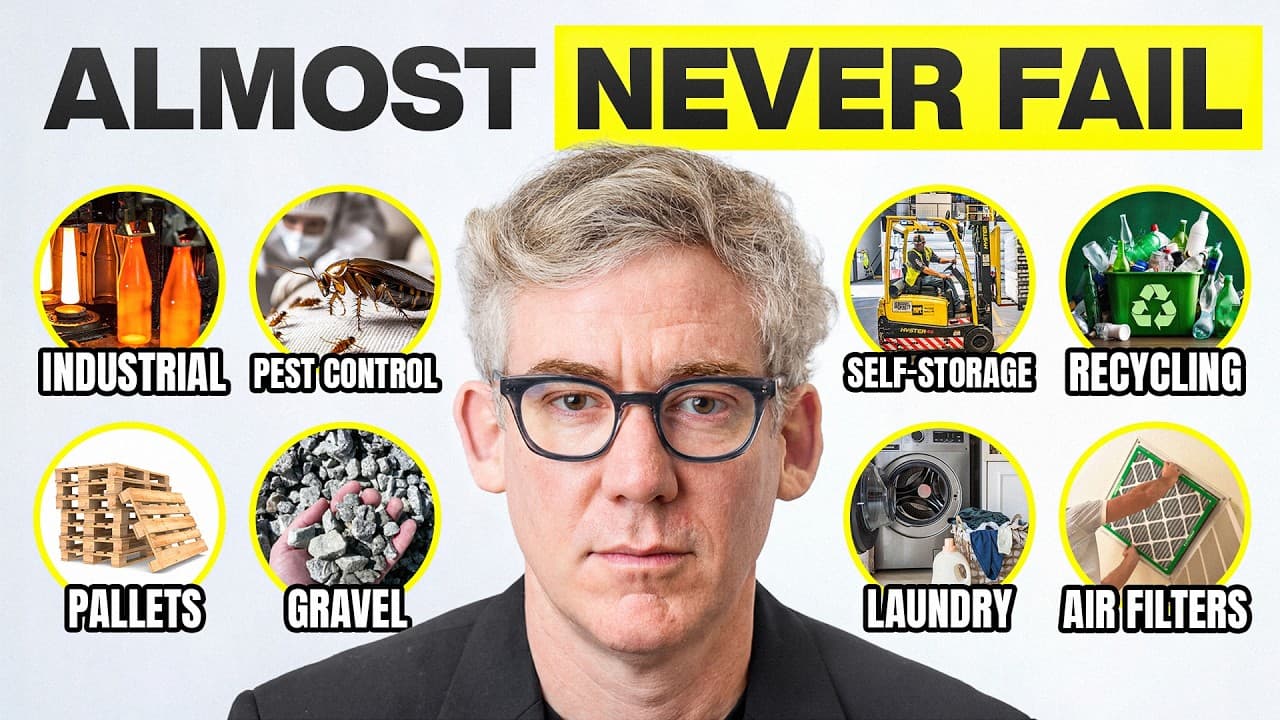
The strongest boring businesses turn necessary, recurring services into predictable revenue by concentrating customers in a small area and pairing sales ability with reliable skilled labor. Painting offers an accessible starting point, while cleaning, pool care, pest control, filtration, septic pumping, grease removal, and fire protection gain durability from subscriptions, compliance rules, urgent needs, or specialized equipment.
Transcript
I run an air filter manufacturing company that makes $23 million a month. And I'm actively coaching, investing in, and starting boring businesses. Nobody will tell you about these businesses, but they're so profitable that it will change your life once you understand them. Starting at 15 to 25% margins, this might be the lowest margin business on m... Read More
Key Insights
- Residential painting is the easiest entry point on the list because most states have no licensing barrier, homeowners consistently need the service, and small projects teach project management. A sales-focused operator can recruit experienced crews and retain margins of 15–25%.
- Commercial cleaning is best treated as a contract business rather than simply a labor service. Medical offices, dental practices, and industrial buildings need dependable cleaning, while an operator can win contracts, pay crews per job or visit, and convert strong crews into full-time roles later.
- Drone-assisted window cleaning creates an advantage by reducing the time and human liability associated with workers hanging from ropes. The recommended sequence is to prove demand and win larger-building contracts before purchasing a $20,000 drone, so customer demand justifies the investment.
- Pool maintenance is a route-density business built around weekly service, monthly payments, and chemical subscriptions. Starting in one neighborhood with older pools, homeowners associations, and mid-to-higher-income homes concentrates demand, limits fuel costs, and avoids expanding the service territory too early.
- Pest control is subscription billing supported by monthly or quarterly service plans. The difficult early stage is acquiring the first five to ten customers in the same neighborhood, after which local route density and customers' desire to prevent infestations can support durable recurring revenue.
- Whole-home water filtration is a subscription service disguised as a home upgrade. The initial installation can be priced competitively, while annual filter replacements generate continuing revenue. The suggested entry path is partnering with one manufacturer, becoming certified, and following its installation specifications.
- Septic pumping is profitable partly because homeowners urgently need unpleasant work performed and have few alternatives during an overflow. The business requires specialty equipment and training, so working for an established operator before starting independently can provide practical experience with operations and financing.
- Compliance-driven services can produce sticky recurring revenue because customers must meet legal or insurance-related requirements. Grease-trap cleaning serves restaurants, while fire-system checks and backflow testing serve commercial buildings. Operators compete through permits, certification, code knowledge, local relationships, and reliable execution.
Install to Summarize YouTube Videos and Get Transcripts
Explore YouTube Video Summarizer or Get YouTube Transcript Extractor
Questions & Answers
Q: How can someone start a residential painting business without painting experience?
A new operator can focus on sales, customer acquisition, scheduling, and project management instead of performing every painting task. The suggested method is to drive through good neighborhoods during the week, approach working painting crews, and identify skilled laborers who do not know how to sell. Once two or three trustworthy crews are available, the operator can win small jobs, build a reputation, and later add drywall repair, deck staining, fence painting, or pressure washing.
Q: How does a commercial cleaning business create recurring revenue?
Commercial cleaning creates recurring revenue by securing contracts with buildings that need service repeatedly, especially medical offices, dental practices, and industrial facilities. The operator brings in contracts and manages customer relationships, while cleaning crews supply the labor and can initially be paid per visit or job. After monthly revenue becomes predictable, the strongest crews can move into full-time roles, reducing the risk of expanding payroll before sufficient cash flow exists.
Q: When should a window cleaning company buy a cleaning drone?
A window cleaning company should first prove that it can generate demand, win contracts, and build customer relationships. The $20,000 drone should be purchased only after customers begin requesting work on larger buildings and the demand makes the investment clear. In the example, drone technology replaces workers on ropes, reduces liability, and can turn a five-day project into a two-day job while preserving the ability to charge for the valuable outcome.
Q: Why is route density important for pool maintenance businesses?
Route density keeps customers close together, which limits fuel use and travel time while allowing more weekly service visits in a concentrated area. The recommended approach is to start in one neighborhood and target locations with older pools, homeowners associations, and mid-to-higher-income homes. Customers pay monthly, and recurring chemical subscriptions add revenue. Expanding across too much territory early can weaken the efficiency that makes the model attractive.
Q: How can a pest control company build a stable customer base?
A pest control company can sign customers to monthly or quarterly plans and focus its initial sales effort within one neighborhood. The first five to ten customers may require significant effort, but a concentrated customer base creates local roots and more efficient service routes. The source presents pest control as a durable subscription model because customers want to avoid pest problems and are unlikely to cancel once reliable prevention is in place.
Q: How can someone enter the whole-home water filtration business?
The suggested entry path is to partner with one water filtration manufacturer, obtain its certification, and install its system according to the manufacturer's specifications. The initial installation can be priced competitively to acquire the customer. A $5,000 whole-house system then creates an opportunity for annual filter replacements, turning a one-time home upgrade into a continuing service relationship with stated margins of 30–40%.
Q: What is the safest way to prepare for starting a septic pumping business?
A prospective owner can work for an established septic operator for one or two years to learn the equipment, inspections, emergency response, and operating process before starting independently. The business requires specialized trucks, pumping equipment, and training. Equipment may be financed through equipment lenders, manufacturer financing, or SBA-backed loans, while a short-term lease can provide another way to begin without immediately purchasing all necessary equipment.
Q: Why are grease-trap cleaning and fire protection attractive businesses?
Both businesses benefit from compliance requirements that make the service necessary rather than optional. Restaurants must clean grease traps to remain open, and an operator can be paid to remove waste oil and then sell that material to fuel companies. Commercial buildings require annual backflow testing and fire-system checks. These models rely on permits, certifications, code knowledge, and recurring service relationships with property managers, warehouse owners, restaurant operators, and commercial landlords.
Summary & Key Takeaways
-
Residential painting and commercial cleaning can be started by finding skilled workers who lack sales ability, then winning customers and managing contracts. Painting offers an accessible entry point with 15–25% margins, while specialized commercial cleaning can produce recurring revenue and 20–30% margins from medical offices, dental practices, and industrial buildings.
-
Route density and subscriptions make pool maintenance and pest control attractive local businesses. Operators should begin with five to ten customers in one neighborhood rather than covering a large territory. Weekly pool service, chemical subscriptions, and monthly or quarterly pest plans create repeat payments while reducing travel time and supporting low customer churn.
-
Water filtration, septic service, grease removal, and fire protection combine specialized work with persistent demand. Filtration creates annual replacement revenue, septic emergencies command substantial fees, grease collectors can earn from removal and resale, and fire inspections benefit from legal mandates. Certification, compliance knowledge, financing, and focused local selling support entry.
Read in Other Languages (beta)
Share This Summary 📚
Summarize YouTube Videos and Get Video Transcripts with 1-Click
Try YouTube Summary with ChatGPT & Claude or YouTube Transcript Generator
Explore More Summaries from David Heacock 📚




Summarize YouTube Videos and Get Video Transcripts with 1-Click
Try YouTube Summary with ChatGPT & Claude or YouTube Transcript Generator