Which Boring Businesses Are Worth Buying?
TL;DR
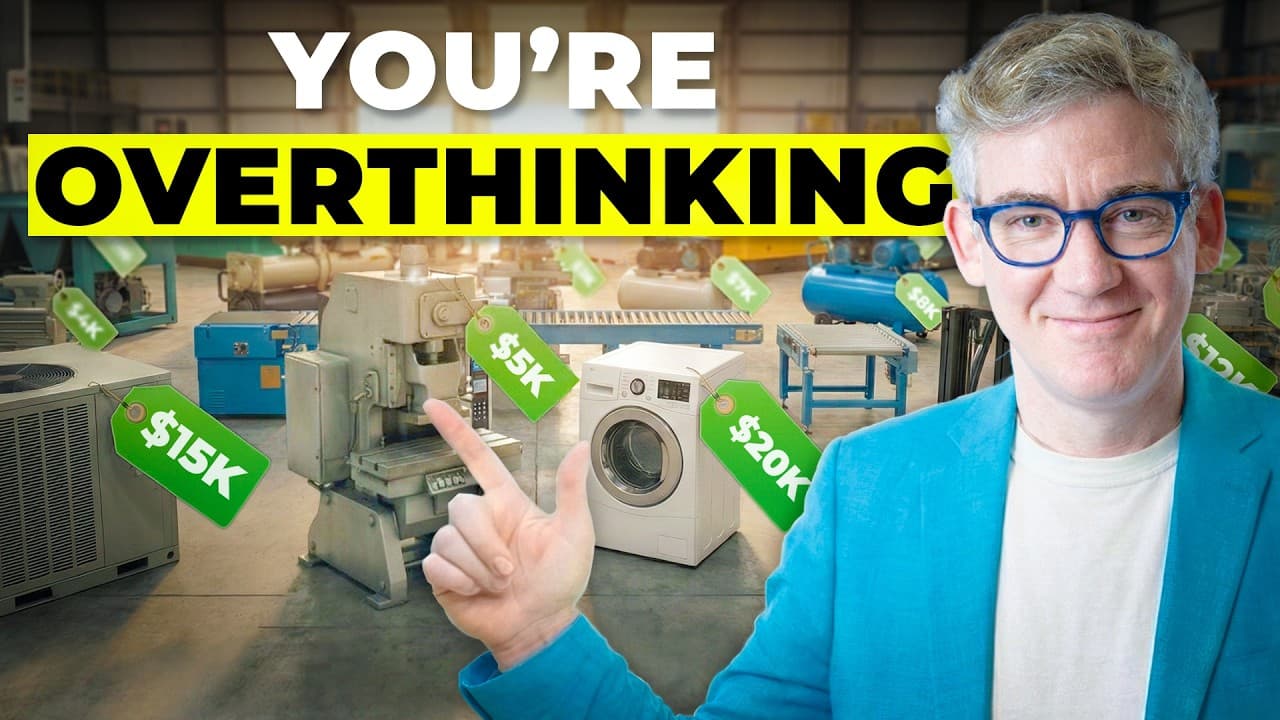
Buy businesses with defensible customer relationships, recurring demand, reliable cash flow, limited reinvestment needs, and pricing power. Pallet recycling, commercial refrigeration, and bookkeeping practices improved with AI rank among the stronger opportunities, while e-commerce brands, agencies, and ordinary landscaping companies carry serious risks from weak protection, customer churn, competition, or dependence on prior owners.
Transcript
Most businesses that look easy to buy will destroy your bank account. I'm David. I run a boring air filter company that makes $23 million a month. And every day, I buy or [music] invest in boring businesses to build my empire. These are my favorite businesses to buy or start. Throughout this video, I'll also share some of the most dangerous busines... Read More
Key Insights
- A defensible business is protected by factors such as sticky customers, recurring needs, operational systems, local density, compliance requirements, or urgent service demand. Existing revenue alone does not make an acquisition safe when customers, suppliers, advertising channels, or essential expertise can disappear quickly.
- E-commerce brands are rated F because revenue can decline after temporary demand fades, while inventory, manufacturing, overseas suppliers, advertising costs, and algorithm changes create substantial risk. Many such businesses are primarily marketing operations with little protection against competitors or shifts in customer acquisition economics.
- Creative agencies are rated F because they often depend on one or two large clients, sell time and relationships, and lack sustainable competitive protection. Clients can switch providers easily, competitors can recreate the service, and valuable knowledge may leave when the previous owner exits.
- Franchises are rated C because outcomes depend heavily on brand power, territory protection, fees, franchisor control, and operator preparation. The same franchise could be A tier after years of direct experience and training, or F minus tier when purchased without operational knowledge.
- Landscaping companies are rated F for ordinary buyers because customers can switch quickly, sellers may compete despite non-compete agreements, and attractive operators with density and systems draw private equity interest. The speaker recommends avoiding them unless the buyer possesses insider knowledge.
- Laundromats are rated C because machine repairs and replacement costs can be understated or hidden, turning supposed passive income into a hands-on job. Good cash flow must be calculated after the reinvestment required to maintain and grow the operation.
- Pallet recycling is rated B+ because it offers sticky business customers within a local, fragmented market that attracts less attention than consumer businesses. The operation can be difficult, however, so buyers need relevant knowledge and must understand collection, repair, recycling, and resale processes.
- Commercial refrigeration is rated B+ because restaurants and stores cannot tolerate cooler downtime, creating urgent demand and pricing power for trusted providers. Attractive targets should have long-term customer relationships and capable maintenance managers, although the service remains difficult to operate without experience.
Install to Summarize YouTube Videos and Get Transcripts
Explore YouTube Video Summarizer or Get YouTube Transcript Extractor
Questions & Answers
Q: What should buyers look for in a boring business?
Buyers should look for protection from competition, stable customer relationships, recurring demand, dependable cash flow, and limited reinvestment requirements. Useful advantages can include local customer density, established systems, compliance-driven service needs, or urgent problems that customers must solve immediately. A business should remain valuable after the seller leaves, rather than depending on that person's relationships, knowledge, or labor.
Q: Why are e-commerce brands risky businesses to buy?
E-commerce brands can appear attractive because they already have revenue and customers, but those results may not be durable. Risks include excess inventory, manufacturing complications, dependence on overseas suppliers, changing advertising algorithms, and rising cost per click. Demand can also fall after a temporary surge, as happened with air purifiers after the COVID-era increase described in the transcript. The verdict is F tier.
Q: Why are creative agencies considered jobs in disguise?
Creative agencies often sell the founder's time, expertise, and personal relationships rather than a protected business system. Their recurring revenue may depend on one or two large clients that can leave for another provider. A competitor may recreate the service with a laptop and LinkedIn, while important knowledge can walk away with the seller. For these reasons, agencies receive an F-tier verdict.
Q: When can buying a franchise be a good decision?
A franchise can work when the buyer deeply understands its operations, economics, financing, location requirements, customer base, margins, and training system. The Domino's example involves an operator who spent about three years working with an experienced family member and completing training before buying. That preparation reduced operational uncertainty. Without similar experience, fees, weak territory protection, and franchisor restrictions can make a franchise a poor investment.
Q: Why are landscaping companies difficult acquisitions?
Landscaping customers can switch providers quickly, making recurring revenue less secure than it initially appears. A seller may also offer competing services after the sale, and a non-compete agreement may be difficult to enforce in practice. Strong landscaping companies with customer density, systems, and a real competitive edge can attract private equity buyers, leaving ordinary buyers with expensive opportunities or weaker businesses. The verdict is F tier.
Q: Are laundromats really passive-income businesses?
Laundromats can work, but they are often more labor-intensive and capital-intensive than the passive-income pitch suggests. Machines break and require costly repair or replacement, and those expenses may be missing or hidden in the profit and loss statement. Some owners preserve returns by performing handyman work themselves, which makes the investment resemble a job. The transcript assigns laundromats a C-tier verdict.
Q: Why can pallet recycling be a good business?
Pallet recycling serves business customers in a market that is local, fragmented, and less glamorous than typical consumer opportunities. Those features can support sticky customer relationships and reduce pressure from large competitors. Operators collect pallets and resell them to businesses that need them, creating a practical recurring service. The business receives a B+ rating, although it is operationally tricky and requires relevant knowledge.
Q: Why does commercial refrigeration have pricing power?
Commercial refrigeration providers solve urgent problems for restaurants and stores that cannot afford extended cooler downtime. A restaurant can lose thousands per hour when refrigeration fails, so the trusted provider receiving the call can charge a premium for rapid service. Attractive businesses should have long-term customer relationships and skilled maintenance managers. The sector also benefits from recurring needs and a compliance component, earning a B+ verdict.
Summary & Key Takeaways
-
The central acquisition principle is to seek protection from competitors through sticky customer relationships, recurring demand, local density, operational systems, compliance requirements, or urgent service needs. Revenue alone is insufficient because a business can look profitable while depending on unstable advertising, concentrated clients, hidden reinvestment, or knowledge that leaves with the seller.
-
E-commerce brands and agencies receive F ratings because their apparent traction may conceal weak foundations. Online brands face inventory, manufacturing, overseas supplier, advertising, and algorithm risks. Agencies can depend heavily on one or two clients, while their services are easy to copy and their valuable knowledge and relationships may leave with the previous owner.
-
Pallet recycling and commercial refrigeration both receive B+ ratings because they serve recurring business needs and can develop durable customer relationships. Bookkeeping practices also present an opportunity when an operator deeply understands the industry and applies AI to improve efficiency, following a consolidation approach already being used by a private equity firm.
Read in Other Languages (beta)
Share This Summary 📚
Summarize YouTube Videos and Get Video Transcripts with 1-Click
Try YouTube Summary with ChatGPT & Claude or YouTube Transcript Generator
Explore More Summaries from David Heacock 📚



Summarize YouTube Videos and Get Video Transcripts with 1-Click
Try YouTube Summary with ChatGPT & Claude or YouTube Transcript Generator