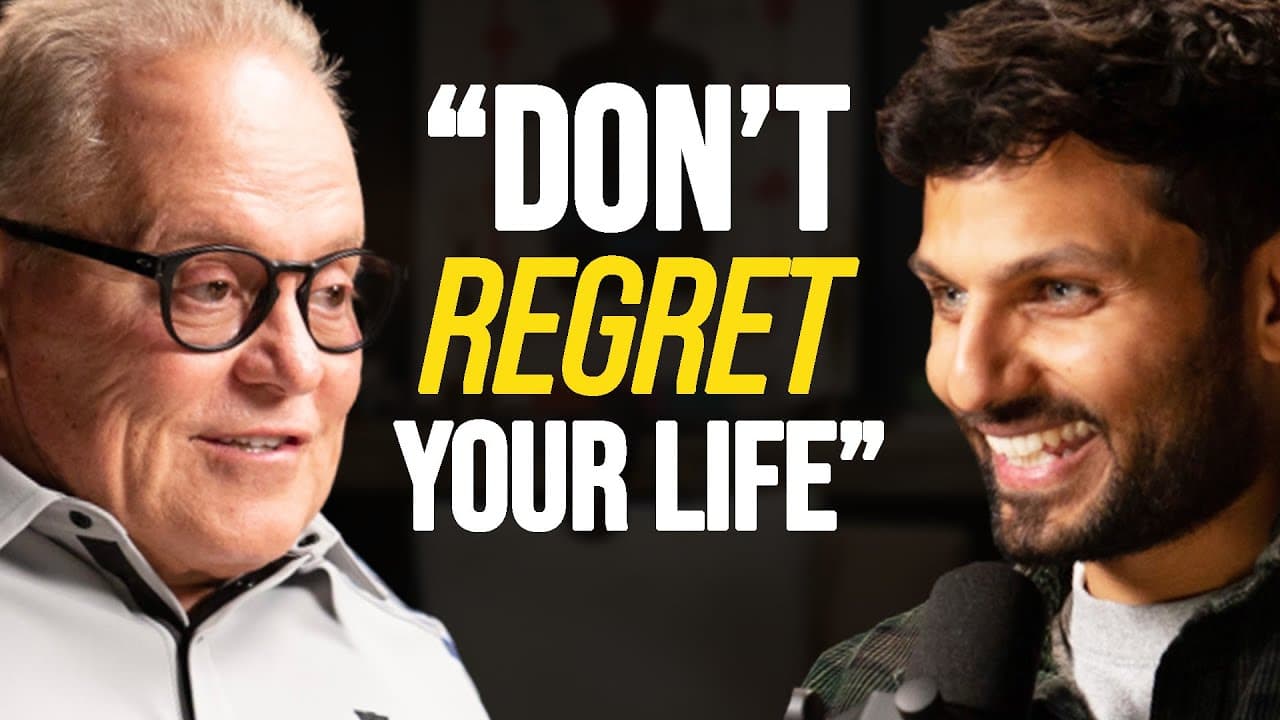
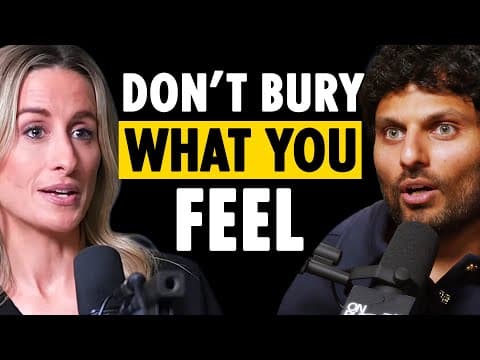
Billionaire Bob Parsons ON: How To Live A MEANINGFUL LIFE Before You Die | Jay Shetty
TL;DR
Bob Parsons manages fear by taking life one day at a time and putting a size on the worst thing that could happen. Once it is measured, the worst case is often not so bad. He learned this as a Marine in Vietnam. He used it to build Parsons Technology from a $40,000 investment into a $64 million sale. He says worry belongs to tomorrow, regret to yesterday, and happiness is here now.
Transcript
worry belongs to tomorrow regret belongs to yesterday happiness is here right now I learned during the war how to think I learned to quantify the worst thing and quite often the worst thing it's not so bad the best-selling author and host the number one Health and Wellness podcast on purpose with Jay Shetty Bob I want to dive straight in to your jo... Read More
Key Insights
- Quantifying the worst case is Bob Parsons's main mental tool. When he sits down and measures the worst outcome, it is often not so bad. Left vague, it feels like a big dark room full of bad things, and that feeling can be debilitating.
- Taking life one day at a time works because a single day is something a person can act on. A worry about a year from now cannot be dealt with until that year arrives, and by then it is just another single day.
- Worry belongs to tomorrow, regret belongs to yesterday, and happiness is here and now. Parsons uses this to explain why most anxiety comes from imagined futures or past events rather than from the present moment.
- Parsons's war trauma stayed with him for 49 years. He avoided places and groups, never felt he belonged, had a quick temper, was called intensely driven, and dealt with his pain alone, as many veterans do.
- The Marine Corps indirectly opened his education. The University of Baltimore admitted veterans without regard to high school grades or entrance exams. On the GI Bill he earned a Bachelor of Science in accountancy, graduated magna cum laude, and passed the CPA exam on his first attempt.
- Parsons taught himself to program from a BASIC book he bought at the Stanford bookstore during a 12-hour layover in 1975. He then learned Pascal, C, and C++, and wrote all the code for his first company, Parsons Technology.
- Founding Parsons Technology took extreme effort. Parsons worked stretches of about 60 hours straight until he began to hallucinate, then slept eight hours and started again. He put $40,000 into the company and sold it for $64 million.
- Successful founders combine organization with action, and they know their business deeply. Parsons took this from history: McClellan organized the Union Army but would not fight, Grant attacked regardless, and Rockefeller won by keeping exceptional records.
Install to Summarize YouTube Videos and Get Transcripts
Explore YouTube Video Summarizer or Get YouTube Transcript Extractor
Questions & Answers
Q: How does Bob Parsons deal with fear and worst-case scenarios?
Bob Parsons quantifies the worst thing that could happen. He learned this during the Vietnam War. When he sits down and measures the worst outcome, it is often not so bad. If it stays vague, like a big dark room full of bad things, it looks much worse than it is and becomes debilitating. He says this mindset carried him through the euphoric highs and Armageddon-like lows of startups.
Q: What happened to Bob Parsons in the Vietnam War?
Bob Parsons enlisted in the Marine Corps in 1968, during the height of the Vietnam War, after two high school friends asked him to come with them to a recruiter. He lasted one month. While on the point team during a night patrol through a village, the point man stepped over a tripwire and Parsons hit it. The blast put shrapnel in both his legs and his left elbow, and he was medically evacuated on a stretcher.
Q: Why does taking life one day at a time reduce anxiety?
Parsons explains that a single day is something you can actually act on, while a worry about a year from now cannot be addressed until that year arrives, and at that point it becomes one day at a time again. Jay Shetty adds that much anxiety and stress comes from what might happen in 12 months or what happened 12 months ago. He sums it up this way: worry belongs to tomorrow, regret belongs to yesterday, and happiness is here and now.
Q: How did war trauma affect Bob Parsons after he returned home?
Parsons kept his symptoms to himself, as many veterans do, and they got worse over 49 years. He did not want to go places or be with groups and never felt he belonged, because images of what happened in the war never left him. He had a quick temper and was described as one of the most intense people others had met. When he broke down crying, he was always alone. His parents, both compulsive gamblers in East Baltimore, did not notice.
Q: How did Bob Parsons get a college education after the Marines?
After a year as a laborer at Bethlehem Steel, Parsons enrolled at the University of Baltimore. It had a special program for veterans that ignored high school grades and did not require entrance exams. He attended on the GI Bill and chose accounting almost by chance, since it was the first major listed. He graduated with a Bachelor of Science in accountancy magna cum laude, passed the CPA exam on his first try, and credits the Marine Corps for making it possible.
Q: How did Bob Parsons learn to code and start his first business?
In 1975, while working for Commercial Credit Leasing Corp, Parsons had a 12-hour wait before a flight from Redwood City. He went to the Stanford campus bookstore and bought a book on BASIC programming. He read it during the layover and the flight and wrote his first programs. His employer had a terminal that ran BASIC, and he practiced on it. He then taught himself Pascal, C, and C++, and founded Parsons Technology, writing all of its code himself.
Q: How much did Bob Parsons invest in Parsons Technology and what did he sell it for?
Parsons put $40,000 into Parsons Technology and sold it for $64 million. Getting it started took extreme effort. He would work about 60 hours straight, from Monday morning through Wednesday evening. By then he would begin hallucinating, hearing things or seeing movement he knew was not real. He would then sleep eight hours, shower, work out briefly, and do it again.
Q: What business lessons did Bob Parsons learn from history?
Parsons studied the Civil War. General McClellan trained and organized the Union Army but could not move it into battle, so Lincoln replaced him with Grant, who simply went after the enemy. Parsons concludes that the right approach mixes the two. From John D. Rockefeller he learned that the person who knows the most about their business, through exceptional record keeping, often wins. Jay Shetty notes that history lets you be mentored by people you have never met.
Summary
In this video, Bob Parsons, founder of GoDaddy, shares his journey from serving in the Marine Corps to building successful businesses. He discusses the importance of thinking one day at a time and learning to quantify the worst thing that could happen in order to overcome challenges. He also talks about his experience with PTSD and how psychedelics and SGB block therapy have helped him and others find healing and joy. Bob emphasizes the need to believe in oneself, have fun, and love what you do in order to succeed in business and live a fulfilling life.
Questions & Answers
Q: Can you talk about your time as a marine and how it shaped your way of thinking?
When Bob enlisted in the Marine Corps, he did so because two friends asked him to join them. During his time in the Marine Corps, he was injured in Vietnam, which taught him to think one day at a time and to quantify the worst thing that could happen. This mindset has helped him overcome challenges in business and in life.
Q: How did you cope with the trauma and stress of war when you came back home?
Bob's parents didn't pay much attention to him, and he didn't talk about his symptoms of PTSD. He experienced depression and felt like he didn't belong in groups. He also had a quick temper and intense emotions. However, he found solace in his work and education, which allowed him to overcome his struggles.
Q: Can you share the story of how you started your first business, Parsons Technology, and eventually sold it for $64 million?
After returning from war, Bob attended college and studied accounting. He started a bookkeeping business, which eventually led to the creation of Parsons Technology. He taught himself programming languages and wrote the code for the business. Through hard work and determination, he achieved success and eventually sold the company for a significant sum.
Q: How did you navigate the challenges of reintegrating into society after the war?
Bob advises doing something that you love and find fun when starting a business. He believes that starting a business solely for money is not the path to success. Additionally, he emphasizes the importance of energizing and inspiring your employees, as well as focusing on a higher purpose and making a difference.
Q: How did you maintain a positive mindset and belief in yourself throughout your journey?
Bob believes in the power of self-belief and doing what you love. He encourages having fun and finding joy in your work. He also credits his experiences with psychedelics and SGB block therapy for helping to free him from self-doubt and negative patterns of thinking.
Q: What are some mindsets or approaches you believe can lead to happier and healthier lives?
Bob stresses the importance of believing in oneself and finding joy in what you do. He believes that self-doubt often stems from past discouragement and trauma, and encourages exploring therapy options like psychedelics and SGB blocks. Bob also believes in the power of loving your neighbor and fostering empathy and kindness towards others.
Q: Can you explain what SGB block therapy is and how it can help with PTSD?
SGB block therapy involves injecting a numbing agent near the stellate ganglion nerves in the neck. This temporarily shuts down the amygdala, which plays a role in fight or flight responses. The therapy helps reset the amygdala and alleviate the symptoms of PTSD. The effects may last for six months to a few years, and the therapy can be repeated if needed.
Q: What is something you used to value but don't value anymore?
Bob used to place a high value on money but now sees its limitations and the importance of other aspects of life.
Q: What is something you're currently working on or trying to learn?
Bob is actively involved in advocating for the legalization of psychedelics for therapeutic use. He sees great potential in their ability to heal people, including veterans with PTSD.
Q: If you could create one law that everyone in the world had to follow, what would it be?
Bob would create a law that promotes loving one's neighbor as a means to foster compassion and peace in the world.
Takeaways
Bob Parsons' journey from serving in the Marine Corps to building successful businesses is a testament to the power of resilience and belief in oneself. He emphasizes the importance of thinking one day at a time and quantifying the worst thing that could happen to overcome challenges. Bob highlights the benefits of therapy with psychedelics and SGB blocks to heal from trauma and find joy. He also encourages finding passion and purpose in what you do, having fun, and believing in yourself. Additionally, Bob advocates for loving one's neighbor as a way to create a better world.
Summary & Key Takeaways
-
Bob Parsons enlisted in the Marine Corps in 1968, at the height of the Vietnam War, after two friends asked him to go with them to a recruiter. One month in, he triggered a tripwire on night patrol, took shrapnel in both legs and his left elbow, and was evacuated on a stretcher.
-
From the war he learned to think one day at a time and to quantify the worst possible outcome. He used this approach through three businesses he built from scratch. He says that once a fear is measured it shrinks, and that his ability to dissociate and not worry has given him joy.
-
Back home he worked a year at Bethlehem Steel, then studied accounting on the GI Bill and passed the CPA exam. A layover in 1975 led him to teach himself programming. He founded Parsons Technology, worked 60-hour stretches, and turned $40,000 into a $64 million sale.
Read in Other Languages (beta)
Share This Summary 📚
Summarize YouTube Videos and Get Video Transcripts with 1-Click
Try YouTube Summary with ChatGPT & Claude or YouTube Transcript Generator
Explore More Summaries from Inspiring Entrepreneurs 📚


Summarize YouTube Videos and Get Video Transcripts with 1-Click
Try YouTube Summary with ChatGPT & Claude or YouTube Transcript Generator