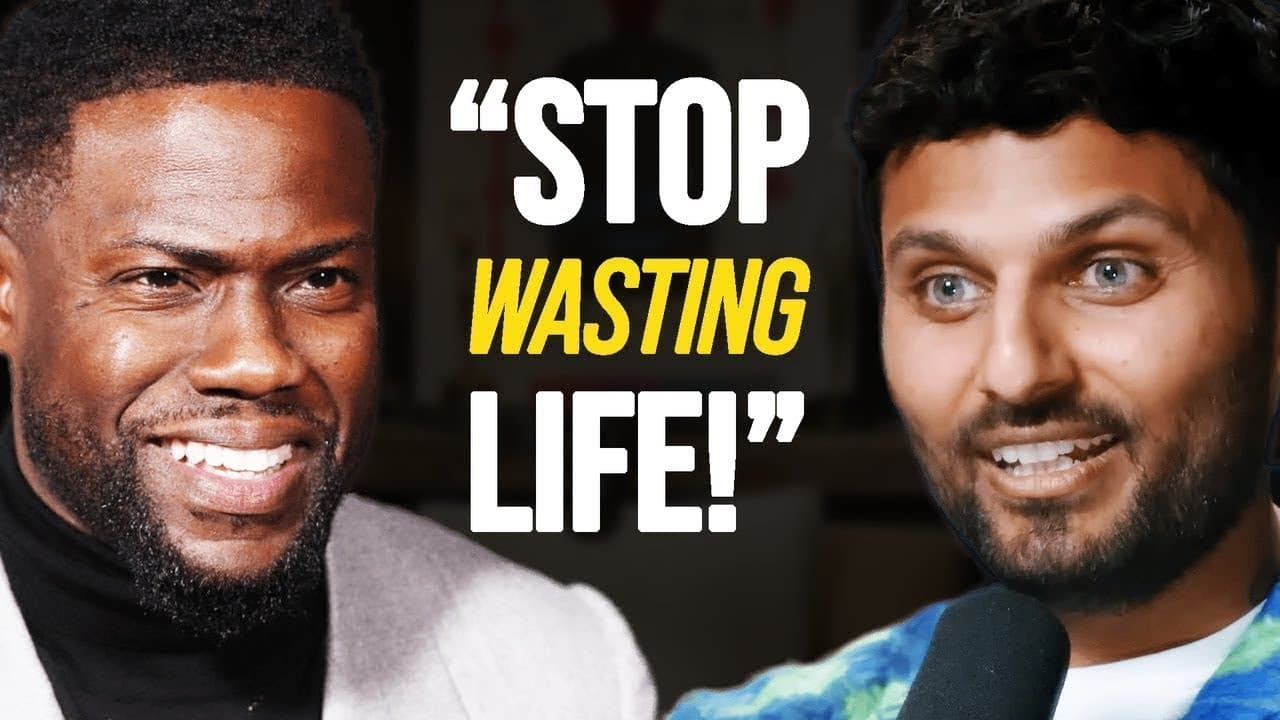
KEVIN HART ON: The SECRET To Success & Happiness NOBODY TALKS ABOUT (Do This In 2023) | Jay Shetty
TL;DR
Fame is the biggest drug, and handling it starts with asking whether you know and accept yourself. Kevin Hart names his flaws as 'monsters,' inner personalities like ego and endless want. Success comes not from erasing them but from controlling them, embracing growth, and being proud of who you see in the mirror.
Transcript
the biggest drug it's not cocaine it's not heroin it's Fame anything you want everything you want it's a thing and if you can't handle this thing the consequences attached are severe do you know you and are you okay with you if you are not it'll break the best-selling author and host the number one Health and Wellness podcast on purpose with Jay Sh... Read More
Key Insights
- Fame is described as the biggest drug, more dangerous than cocaine or heroin, because if you cannot handle it, the consequences attached are severe. The foundational question is whether you know yourself and are okay with who you are.
- Monsters are the different levels and personalities inside a person, the bad versions of yourself. Even bad versions carry good qualities, so the goal is not to erase them but to understand and manage them.
- Ego is a monster that feeds on the gap between who you think you are versus what you actually are. Making money can enhance a false world of thought about how you should look and what you must have.
- Winning creates the illusion that everything is perfect and the road ahead will be easy. It is only in that position of expecting perfection that the true problems and flaws start to present themselves.
- Taming monsters means getting them to a point where you can control them. They still exist and can rear their heads, but you can tell them to sit down when their behavior is not necessary or needed.
- There is no consequence to always improving or growing. Kevin embraces correction in a time when people almost frown upon growth, which is how he moved his monsters into a place he could control.
- The mirror reflects only you, not the trophies, wins, or money. Real success is having the courage to look at that reflection, check yourself, point out your flaws, and be proud of what you see.
- Complacency was Kevin's most formative childhood memory, being a subpar student who felt he got over by cheating on effort. He realized that slowly cheating yourself over years is the real, hugest loss.
Install to Summarize YouTube Videos and Get Transcripts
Explore YouTube Video Summarizer or Get YouTube Transcript Extractor
Questions & Answers
Q: What is the biggest drug according to Kevin Hart?
According to Kevin Hart, the biggest drug is not cocaine or heroin, it is fame. He describes it as a thing that can give you anything and everything you want, but if you cannot handle it, the consequences attached are severe. The foundational challenge of fame is whether you truly know yourself and are okay with who you are, because if you are not, fame will break you.
Q: What does Kevin Hart mean by 'monsters'?
Kevin Hart uses monsters to describe the different levels and personalities inside himself, specifically the bad versions of who he is. He clarifies that just because these versions are bad does not mean they lack good qualities. Examples include ego and the world of expectations and needs. Naming them as monsters lets him talk about his flaws in an accessible way and work to control them rather than pretend they do not exist.
Q: How does ego work as a monster?
Ego works as a monster by feeding on the gap between who you think you are versus what you actually are. Kevin Hart explains that when you start making money, you can convince yourself of what you should have, how you should look, and how you are supposed to be. That is a monster you are feeding, because you are buying into and enhancing a false world of thought that you created yourself rather than living in reality.
Q: How can you tame your inner monsters?
You tame monsters not by erasing them but by understanding their different levels and getting them to a point where you can control them. Kevin Hart says the monsters are still there and can rear their heads, but he can tell them to sit down when their behavior is not necessary or needed. He can sense when one is trying to take him back to a place of old, and he chooses to embrace growth and correction instead of returning there.
Q: Why does Kevin Hart talk about looking in the mirror?
Kevin Hart uses the mirror as an analogy for honest self-assessment. The reflection does not show trophies, wins, or money, it just shows you. He had to reach a place where he could look in the mirror and be proud of what he saw, okay with checking himself and pointing out his flaws. Jay Shetty highlights that having the courage to look at yourself that way, stripped of achievements, is where real growth begins.
Q: What childhood memory shaped Kevin Hart's drive?
Kevin Hart's most formative childhood memory is one of complacency. As a kid he did not embrace challenge, was okay being a subpar to low average student, and was okay not giving his all. As a young teen he took pride in being sneaky and one-upping people, like lying that he did homework. He later realized that slowly cheating yourself over years, thinking you got over, is actually cheating nobody but yourself.
Q: How did Kevin Hart's mother influence his work ethic?
Kevin Hart credits his mother with embedding lessons he only appreciated later in life. She made sure he had what he needed and enrolled him in extracurricular activities like swim, football, basketball, track, and baseball to provide opportunity and teach hard work. She repeatedly told him you do not start things you will not finish, you do not quit, apply your all, and you are not cheating anybody but yourself, lessons that eventually all hit him at once.
Q: Why does Kevin Hart see complacency as his biggest loss?
Kevin Hart considers complacency his biggest potential loss because not being aware of it would mean falsely believing he had given his full effort. He says thinking you took full advantage, really applied yourself, or gave a hundred percent when you did not would be the real loss. Recognizing that he was once a slacker who wanted to look like he was doing the work now fuels the genuine hard work and full effort he puts into everything today.
Summary
In this video, Kevin Hart discusses his journey to success, the importance of self-reflection, and the impact of his father's mistakes on his own life. He emphasizes the power of embracing flaws, the significance of team effort, and the value of learning from failure. Kevin also shares his mindset of constant growth and his determination to create a better future for his children and the next generation.
Questions & Answers
Q: What does Kevin Hart consider to be the biggest "drug"?
According to Kevin, the biggest "drug" is fame, as it can offer everything a person wants but also comes with severe consequences if one cannot handle it.
Q: What is Kevin Hart's background and what has he achieved?
Kevin Hart is a successful actor, author, entrepreneur, and chairman of heartbeat, a global multimedia platform company. He has opened 11 films at number one at the box office and has grossed over $4.23 billion in global revenue. He is also a New York Times best-selling author and has been recognized for his audiobooks.
Q: What impact did Kevin Hart's father have on his life?
Kevin's father made mistakes such as drug use and being in and out of jail, which profoundly affected Kevin's perception of what not being present does to relationships. The experience taught Kevin the importance of being present and involved in the lives of loved ones.
Q: How did Kevin Hart reconcile with his father before his passing?
Kevin expressed gratitude for his father and chose to focus on supporting him in his efforts to turn his life around rather than dwelling on past mistakes. By cultivating a positive relationship and being an engaged father and grandfather, Kevin's father's impact on his life became apparent.
Q: How did Kevin Hart overcome complacency in his life?
Kevin reflected on his complacency as a child and realized that being complacent and not trying his best were holding him back. He recognized the importance of fully applying oneself and not cheating oneself out of personal growth and success. This realization drove him to strive for constant improvement.
Q: What shifted Kevin Hart's perspective on success and the pursuit of multiple endeavors?
Kevin learned to embrace the idea that he didn't have to limit himself to one thing. He realized that creativity and groundbreaking opportunities come from ideas, and he recognized the potential to succeed in various fields by exploring multiple interests and trying new things.
Q: How does Kevin Hart view failure and the importance of trying new things?
Kevin sees failure as a consequence of not trying, and he believes that not trying is the ultimate failure. He emphasizes the value of trying new things, learning from failure, and viewing failure as a stepping stone to growth and improvement.
Q: What is the mindset that Kevin Hart is trying to pass on to the next generation, including his children?
Kevin wants the next generation to understand the importance of teamwork and inclusiveness. He believes that success is a result of collective effort rather than individual accomplishments. He aims to inspire and motivate others to pursue their goals while supporting, embracing, and lifting each other up along the way.
Q: How has Kevin Hart learned to embrace and support others in his industry instead of feeling at odds with them?
Kevin acknowledges the initial frustration of feeling overlooked or comparing himself to others in the industry. However, he realized the importance of finding calm and confidence in his own work and being prepared for opportunities. This shift in mindset allowed him to embrace collaboration and appreciate the successes of others without malicious intent.
Q: What is Kevin Hart's ultimate goal?
Kevin's ultimate goal is not the achievement of specific milestones or accomplishments. Instead, he aims to create a better future for his children and the next generation. He wants to break barriers and inspire others to believe that they can succeed, creating a sense of normalcy for future generations in terms of opportunities, success, and generational wealth.
Takeaways
Kevin Hart's journey to success is rooted in self-reflection, embracing flaws, and constantly striving for growth. He emphasizes the importance of teamwork and inclusiveness, recognizing that success is not achieved alone. Kevin believes in the power of learning from failure, trying new things, and supporting others in their endeavors. His goal is not personal accolades but rather creating a better future and inspiring the next generation.
Summary & Key Takeaways
-
Kevin Hart, Hollywood's box office powerhouse who opened 11 films at number one and grossed over 4.23 billion dollars globally, joins Jay Shetty to discuss his audiobook Monsters and How to Tame Them and the inner work behind his success.
-
Hart defines monsters as the bad versions and levels within himself, like ego and the world of want. Success and money can feed these monsters, making you buy into a false idea of who you should be and what you must have.
-
Taming monsters is not erasing them but controlling them, embracing growth and correction, and looking in the mirror proud of yourself. Hart traces this to childhood complacency, realizing that cheating on effort only cheats yourself.
Read in Other Languages (beta)
Share This Summary 📚
Summarize YouTube Videos and Get Video Transcripts with 1-Click
Try YouTube Summary with ChatGPT & Claude or YouTube Transcript Generator
Explore More Summaries from Celebrities 📚


Summarize YouTube Videos and Get Video Transcripts with 1-Click
Try YouTube Summary with ChatGPT & Claude or YouTube Transcript Generator