How Many Died in Iran's Protest Crackdown?
TL;DR
Evidence emerging during Iran’s internet shutdown indicates that the protest crackdown may have killed thousands, although the precise toll remains unverified and fiercely disputed. Footage from a Tehran forensic center, partial hospital records, threatened executions, mass arrests, and sustained gunfire support fears of a large-scale massacre, while Donald Trump has promised unspecified help and considered sanctions, tariffs, and military options.
Transcript
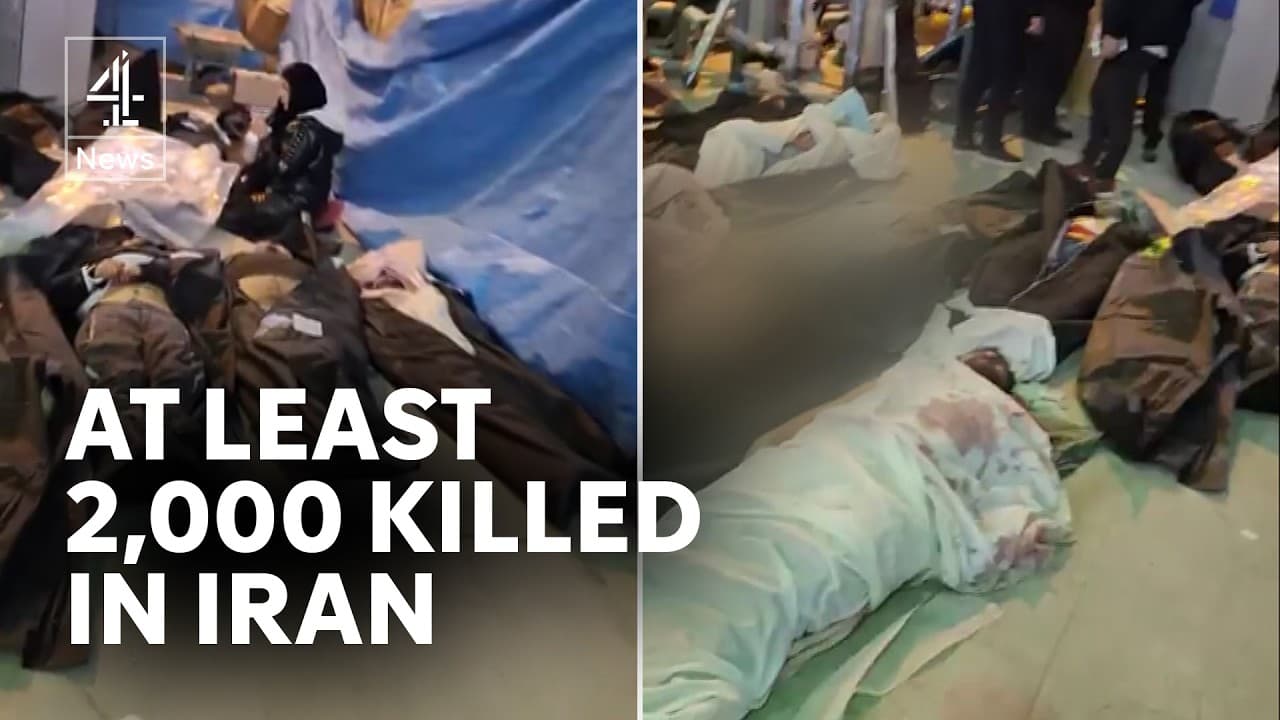
This is the Karazac Medical Forensic Center in southern Thran. We understand that this footage was filmed on Saturday. Huge anti-regime street protests had taken place the evening before. >> The person filming on their phone is pretending to be on a call. We are disguising his voice. These are the necessary logistics in the aftermath of a massacre.... Read More
Key Insights
- The reported death toll remains uncertain because Iran’s internet shutdown and limited access to hospitals, forensic centers, and provinces prevent comprehensive verification. An official reportedly told Reuters that 2,000 people had died, while human rights organizations expected the eventual figure to be substantially higher.
- Footage from the Kahrizak Medical Forensic Center reportedly shows that its morgue sections and warehouse were full, forcing bodies to be placed outside. Families were shown arriving with identification, identifying relatives, and completing registration procedures after medics checked documents and performed quick autopsies.
- The estimate of approximately 2,000 bodies at one forensic site came from the person secretly filming there, rather than from a published official count. The report presents this footage as evidence of the crackdown’s scale while acknowledging the difficulty of independently establishing a precise nationwide total.
- The confirmed figure of 648 deaths was described by human rights monitor Mahmood Amiry-Moghaddam as a major underestimate. He said the available information covered only 14 of 31 provinces, seven of Tehran’s 100 hospitals, and some bodies that families had taken to hospitals.
- The crackdown involved more than reported deaths because thousands of people were also said to have been arrested. Erfan Soltani was identified as one detainee facing execution, and his family reportedly expected it to occur the following day, raising concern that outside assistance might arrive too late.
- The Iranian authorities’ position was defended by former nuclear negotiating adviser Mohammad Marandi, who rejected reports of bodies piling up and disputed Reuters reporting. He described participants as violent rioters backed from abroad and claimed that roughly 100 law enforcement officers had been killed.
- Donald Trump’s promise that help was on its way contained no explanation of its form or timing. When questioned, he declined to clarify and said no accurate casualty figure was available, adding that reported numbers varied widely and that more information might emerge within 24 hours.
- The options reportedly under consideration in Washington included sanctions against individuals, a 25 percent tariff on countries doing business with Iran, and possible military action. The report also notes resistance in Congress over presidential authority and warns that limited strikes might not produce regime change.
Install to Summarize YouTube Videos and Get Transcripts
Explore YouTube Video Summarizer or Get YouTube Transcript Extractor
Questions & Answers
Q: How many people were reported killed in Iran’s protests?
The precise number was not established. An official reportedly told Reuters that 2,000 people had been killed, while a person filming inside a Tehran forensic center estimated that approximately 2,000 bodies were present at that site alone. A human rights organization had documented 648 deaths but emphasized that its information covered only part of the country and was a serious underestimate.
Q: What did the forensic center footage show after the protests?
The footage reportedly showed that the morgue sections and warehouse at the Kahrizak Medical Forensic Center were full, with bodies consequently laid on the ground outside. Families arrived with identification documents and identified their relatives themselves. Medics then verified the documents, performed quick autopsies, assigned each family a code, and formally registered each death.
Q: Why was the documented count of 648 deaths considered incomplete?
Human rights monitor Mahmood Amiry-Moghaddam said the figure largely reflected reports from only one or two days. It included information from 14 of Iran’s 31 provinces and just seven of Tehran’s 100 hospitals. It also captured only some bodies brought to hospitals by families, leaving many locations and potential deaths outside the documented total.
Q: What happened to people arrested during the Iranian protests?
Thousands of people were reportedly arrested, and some detainees faced the possibility of execution. The report specifically identified Erfan Soltani and said his family had been told that his execution was due to occur the following day. The threatened executions created urgency around international promises of assistance because any help could arrive after irreversible sentences had already been carried out.
Q: What help did Donald Trump promise Iranian protesters?
Donald Trump told Iranian protesters to continue demonstrating and take institutions, adding that help was on its way. He did not explain what the promise meant when a journalist questioned him. His national security team had met, and reported options included sanctions against individuals, a 25 percent tariff on countries doing business with Iran, and possible military action.
Q: How did Mohammad Marandi respond to allegations of a massacre?
Mohammad Marandi, a former adviser to Iran’s nuclear negotiating team who was described as close to the authorities, rejected allegations that bodies were piling up in the streets and disputed Reuters reporting. He characterized participants as violent, foreign-backed rioters, claimed roughly 100 law enforcement officers had been killed, and said executions would target people convicted of severe violence.
Q: Would Iran retaliate against a United States attack?
Mohammad Marandi said Iran would strike back very hard if the United States attacked. He argued that an attack would be illegal and warned that a war involving Iran could damage or collapse the global economy. His comments came as the report said Washington was considering military options alongside sanctions and trade measures, although broader military action was not preferred at that point.
Q: What risks were identified with possible United States intervention?
The report identified several risks surrounding intervention. A limited or surgical strike might fail to cause regime change, Iran had threatened forceful retaliation, and broader conflict could produce major economic consequences. Some members of Congress also objected that the president lacked authority to intervene without permission, even while acknowledging that Iranian protesters were confronting a brutal crackdown.
Summary & Key Takeaways
-
Footage reportedly filmed after major protests shows bodies filling a forensic center, its warehouse, and the ground outside. Families bring identification, identify relatives, and receive registration codes after document checks and quick autopsies. The person recording estimated that approximately 2,000 bodies were present at that single location.
-
A human rights monitor said its confirmed count of 648 deaths was clearly incomplete because it covered only 14 of Iran’s 31 provinces and seven of Tehran’s 100 hospitals. The report also describes thousands of arrests and says some detainees face execution, including Erfan Soltani, whose execution was reportedly imminent.
-
Donald Trump encouraged Iranians to continue protesting and said help was coming, but declined to define that help. His advisers were considering sanctions against individuals, a 25 percent tariff on countries doing business with Iran, and military options. Iranian government ally Mohammad Marandi warned that Iran would retaliate against any American attack.
Read in Other Languages (beta)
Share This Summary 📚
Summarize YouTube Videos and Get Video Transcripts with 1-Click
Try YouTube Summary with ChatGPT & Claude or YouTube Transcript Generator
Explore More Summaries from Channel 4 News 📚



Summarize YouTube Videos and Get Video Transcripts with 1-Click
Try YouTube Summary with ChatGPT & Claude or YouTube Transcript Generator