How to Balance Ultrarunning, Work, and Family
TL;DR
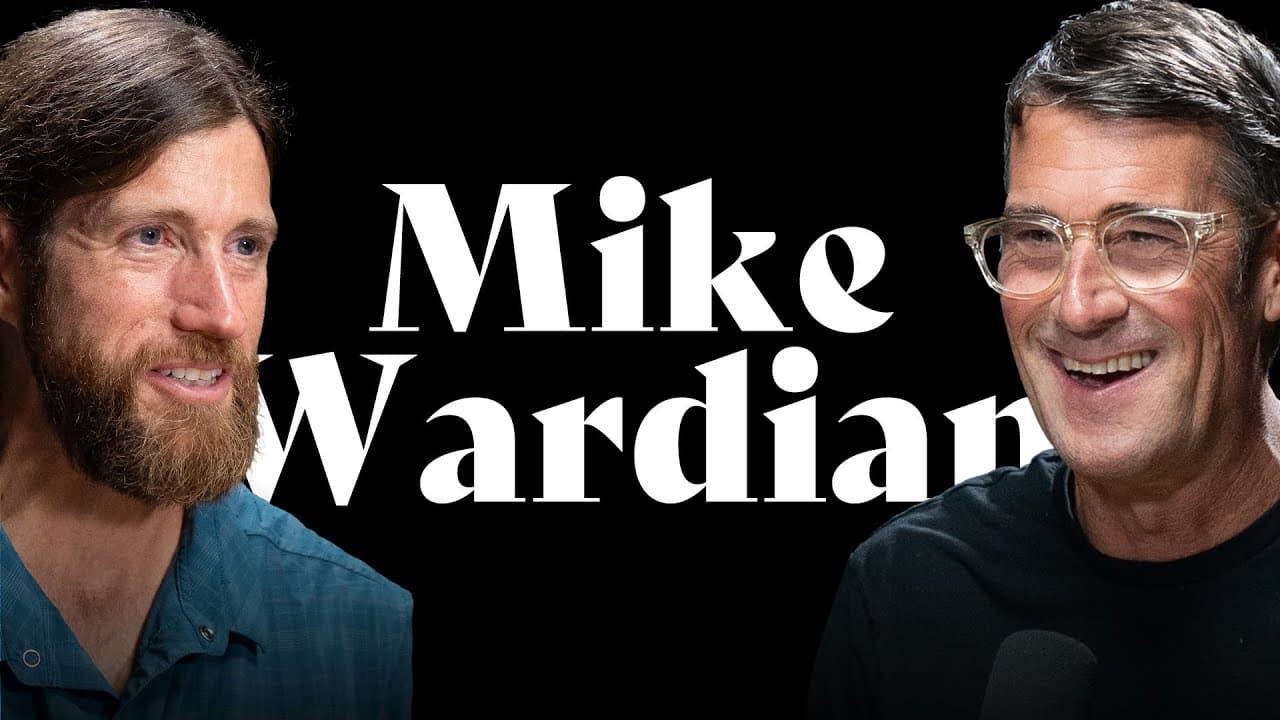
Pursuing ambitious endurance goals alongside work and family requires genuine commitment, early planning, and practical integration of training into daily life. Mike Wardian creates time through habits such as waking early, cycling or running to work, arranging professional coverage, and coordinating major challenges with his wife, while emphasizing steady effort and searching for reasons a goal can work.
Transcript
there's so many people that I see like wait to do something big and then something gets in the way or they don't have the health to do it anymore and like sees the opportunity sees the moment because you never know what's going to happen Runners assemble because on the show today is a 217 marathoner a world record holder a transcon finisher and qua... Read More
Key Insights
- Strong personal desire is the foundation of Wardian's approach to balancing endurance, employment, and family. He believes difficult goals become nearly impossible without genuine commitment, because motivation must be strong enough to support early mornings, logistical compromises, and sustained problem-solving.
- Wardian's mindset is focused on reasons a goal can work. He observes that many people quickly identify obstacles, while he deliberately searches for solutions that allow him to meet obligations and continue pursuing large, audacious dreams.
- Daily transportation is a practical source of training time. Because Wardian already needed to travel to work, he first replaced driving with bicycle commuting and later adopted running as transportation, integrating endurance development into an existing responsibility.
- Family changes do not automatically prevent athletic improvement. Wardian says friends predicted that marriage and children would diminish his running, yet his performance improved, and he sometimes joined group runs while pushing two children in a stroller.
- Major endurance challenges are family decisions. Wardian discusses his goals with his wife, Jennifer, asks when a project would fit, and accounts for commitments such as the children's spring break before establishing the available window for an attempt.
- Professional coverage requires long-range preparation. For his run across America, Wardian worked backward roughly a year from the available dates and hired someone at the company to cover his responsibilities while he was away.
- Endurance projects can still involve active employment. Wardian sometimes completed business deadlines from the road after running about twenty miles, an arrangement he describes as stressful but necessary when pursuing the challenge while meeting professional obligations.
- Athletic achievements can support charitable work. Wardian donated a fifteen-thousand-dollar event award to World Vision and later raised more than one hundred twenty thousand dollars for the organization's clean-water projects during his run across the country.
Install to Summarize YouTube Videos and Get Transcripts
Explore YouTube Video Summarizer or Get YouTube Transcript Extractor
Questions & Answers
Q: How does Mike Wardian balance ultrarunning, work, and family?
Mike Wardian balances these commitments by treating each one as an obligation that must be planned into the same life. He wakes early, turns commuting into cycling or running training, discusses major goals with his wife, works around his children's schedule, and arranges professional coverage. His guiding habit is to search for reasons a goal can work instead of stopping at reasons it cannot.
Q: How can runners find training time while working full time?
Training can be integrated into activities that already consume time. Wardian knew he had to travel to work each day, so he stopped relying only on driving, began commuting by bicycle, and eventually started running to work. He also used early mornings. These choices created training opportunities without removing the need to fulfill his professional responsibilities.
Q: Why does motivation matter for ambitious endurance goals?
Motivation matters because ambitious goals require repeated effort, logistical compromises, and a willingness to solve new problems. Wardian says the biggest factor is that he genuinely wants to pursue the challenge. Without that desire, combining training with family and employment becomes nearly impossible. Strong commitment helps him keep looking for solutions when schedules, deadlines, or other obligations create obstacles.
Q: How should an athlete plan a major challenge with family responsibilities?
A major challenge should be planned through direct family discussion and careful scheduling. Wardian first tells his wife what he wants to pursue and asks when it could work. For his cross-country run, he considered his children's spring break and selected a window beginning after the family returned. The challenge therefore became a coordinated family decision, not an isolated athletic choice.
Q: How did Mike Wardian prepare his job for a run across America?
Wardian identified the period when his professional workload and family schedule allowed the attempt, then worked backward roughly a year. He hired someone at the company to cover his duties during the run. Even with that preparation, he sometimes handled deadlines from the road after running about twenty miles, showing that coverage reduced his workload without eliminating every responsibility.
Q: What kind of work does Mike Wardian do outside running?
Wardian works in a shipping business connected to humanitarian food-aid programs. The company handles shipments from the United States involving additional grain from farmers, with cargo used overseas for feeding programs or monetization. He began at the bottom as a secretary, performed basic errands such as getting sandwiches, advanced through the business, and eventually became one of its owners.
Q: How has parenthood affected Mike Wardian's running?
Wardian says friends predicted that having children would leave him unable to train with them, just as others had predicted marriage would hurt his running. Instead, he found ways to include family life in his routine. He recalls arriving for runs with two children in a stroller and completing ten-mile outings around the monuments, showing how adaptation preserved his participation.
Q: How did Mike Wardian connect endurance running with charity?
Wardian's relationship with World Vision began around the period when he completed seven marathons in seven days on seven continents. The event's fifteen-thousand-dollar award was designated for charity, and he donated it to World Vision. After seeing how the organization used the money, he chose it for his cross-country run, which raised more than one hundred twenty thousand dollars for clean-water projects.
Summary & Key Takeaways
-
Mike Wardian argues that ambitious athletic goals become possible when desire is strong enough to support consistent problem-solving. Rather than treating marriage, children, or employment as automatic barriers, he wakes early, incorporates transportation into training, runs with his children in a stroller, and continually searches for workable solutions.
-
Major endurance projects require coordination rather than individual determination alone. Wardian discusses proposed challenges with his wife, considers his children's calendar, accounts for demanding periods in his shipping business, and arranges professional coverage well in advance. He sometimes continues handling work deadlines from the road during an athletic effort.
-
Wardian connects endurance with service and example. After winning a seven-marathons-in-seven-days-on-seven-continents event, he donated the fifteen-thousand-dollar award to World Vision. His later run across America raised more than one hundred twenty thousand dollars for clean-water projects, while demonstrating that family and professional responsibilities need not end ambitious pursuits.
Read in Other Languages (beta)
Share This Summary 📚
Summarize YouTube Videos and Get Video Transcripts with 1-Click
Try YouTube Summary with ChatGPT & Claude or YouTube Transcript Generator
Explore More Summaries from Rich Roll 📚
Summarize YouTube Videos and Get Video Transcripts with 1-Click
Try YouTube Summary with ChatGPT & Claude or YouTube Transcript Generator