What Led to the Union's Victory in the Civil War?
TL;DR
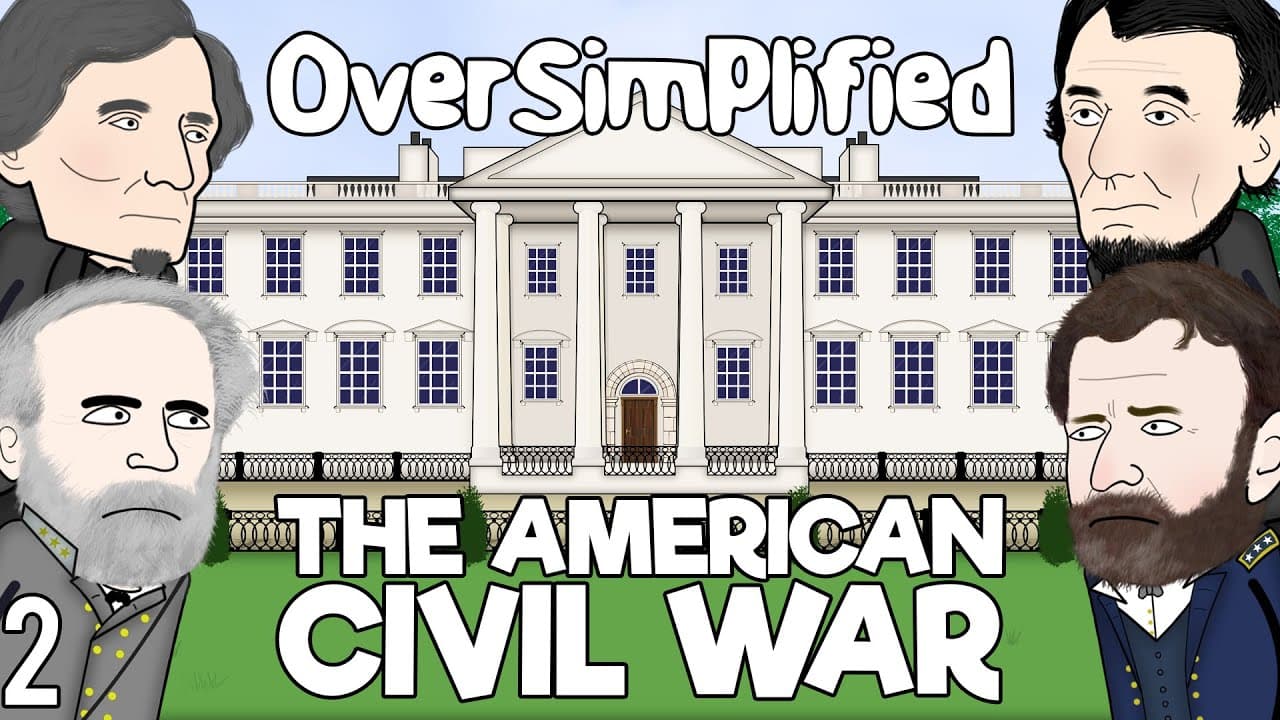
The Union's strategic victories, such as the fall of Vicksburg and the Battle of Gettysburg, were pivotal in turning the tide of the Civil War. General Grant's relentless tactics and Sherman's devastating march crippled the Confederate war effort. Lincoln's leadership and the eventual Union victories ensured the preservation of the United States and the abolition of slavery.
Transcript
- [Narrator] This video was made possible by Honey. Stick around to learn how you can save money when you shop online. (ominous music) As the Union's struggle to take control in the East continued, elsewhere, the war raged on. The Confederates attempted an invasion of Kentucky, hoping the state as a whole would join them, but they were pushed back.... Read More
Key Insights
- The Union's victory at Vicksburg split the Confederacy and was a turning point in the war.
- General Grant's strategy focused on relentless offense, leveraging the Union's numerical advantage.
- Sherman's March to the Sea aimed to destroy the South's will to fight by targeting civilian infrastructure.
- The Battle of Gettysburg was a significant Union victory, halting Lee's invasion of the North.
- Lincoln's leadership and commitment to reunification were crucial in maintaining Northern morale.
- The Emancipation Proclamation and the 13th Amendment were pivotal in ending slavery.
- General Lee's surrender at Appomattox marked the effective end of the Civil War.
- Lincoln's assassination underscored the deep divisions that would challenge post-war reconstruction.
Install to Summarize YouTube Videos and Get Transcripts
Explore YouTube Video Summarizer or Get YouTube Transcript Extractor
Questions & Answers
Q: How did the Union achieve victory in the Civil War?
The Union achieved victory through strategic military victories, such as the fall of Vicksburg and the Battle of Gettysburg, which crippled the Confederacy. General Grant's relentless offensive tactics and Sherman's destructive march further weakened the South. Lincoln's leadership and the Union's numerical and industrial advantages also played crucial roles in the eventual surrender of Confederate forces.
Q: What was the significance of the Battle of Gettysburg?
The Battle of Gettysburg was a turning point in the Civil War, marking a significant Union victory that halted General Lee's invasion of the North. It was the largest battle of the war and resulted in heavy casualties for the Confederates, diminishing their ability to wage offensive operations. This victory boosted Northern morale and was pivotal in maintaining support for the war effort.
Q: How did General Grant's tactics differ from previous Union generals?
General Grant's tactics differed in his willingness to engage in continuous offensive operations, even at the cost of high casualties. Unlike previous generals who were more cautious, Grant understood the Union's numerical superiority and aimed to exhaust Confederate resources through relentless attacks. His strategy of attrition gradually wore down Confederate forces, leading to significant Union victories.
Q: What role did Sherman's March to the Sea play in the Civil War?
Sherman's March to the Sea was a military campaign that aimed to demoralize the South by targeting its civilian infrastructure. By living off the land and destroying railroads, farms, and communication lines, Sherman's forces disrupted the Confederate war effort and weakened Southern morale. This campaign demonstrated the Union's ability to strike deep into Confederate territory and contributed to the eventual collapse of the Confederacy.
Q: How did Lincoln's leadership impact the outcome of the Civil War?
Lincoln's leadership was crucial in maintaining Northern morale and support for the war effort. His commitment to preserving the Union and abolishing slavery provided a clear moral purpose for the conflict. Lincoln's ability to navigate political challenges, such as the passage of the Emancipation Proclamation and the 13th Amendment, ensured that the war's outcome would lead to the end of slavery and the preservation of the United States.
Q: What were the consequences of the Union victory in the Civil War?
The Union victory preserved the United States as a single nation and led to the abolition of slavery through the 13th Amendment. It marked the end of the Confederacy and its secessionist goals. However, the war left deep scars and set the stage for a challenging period of Reconstruction, as the nation grappled with reintegration and addressing the rights of newly freed African Americans.
Q: How did the fall of Vicksburg impact the Civil War?
The fall of Vicksburg was a crucial turning point in the Civil War, as it gave the Union control of the Mississippi River, effectively splitting the Confederacy in two. This victory disrupted Confederate supply lines and weakened their ability to coordinate military efforts across the divided regions. It also bolstered Northern morale and was a significant factor in the Union's overall strategic success.
Q: What challenges did the Union face during the Civil War?
The Union faced numerous challenges, including maintaining public support for the war amidst heavy casualties and political opposition. Military leadership in the Eastern theater struggled to achieve decisive victories until Grant's appointment. Additionally, the Union grappled with issues of conscription and racial tensions as it began enlisting African American soldiers. Despite these challenges, strategic victories and Lincoln's leadership were pivotal in overcoming them.
Summary & Key Takeaways
-
The Union's strategic victories, such as the fall of Vicksburg and the Battle of Gettysburg, marked key turning points in the Civil War. General Grant's relentless offensive strategies, combined with Sherman's destructive march, significantly weakened the Confederate war effort. These military successes, along with Lincoln's leadership, ensured the preservation of the United States and the abolition of slavery.
-
General Grant's appointment as general-in-chief brought a new approach to the Eastern theater, characterized by continuous offensive actions. Despite heavy casualties, Grant's strategy of attrition capitalized on the Union's superior numbers, gradually wearing down Confederate forces. Sherman's March to the Sea further demoralized the South by targeting civilian infrastructure, hastening the Confederacy's collapse.
-
Lincoln's leadership was instrumental in maintaining Northern morale and pushing for the abolition of slavery. The Emancipation Proclamation and the passage of the 13th Amendment were significant achievements in this regard. The eventual surrender of General Lee at Appomattox effectively ended the Civil War, but Lincoln's assassination soon after highlighted the challenges that lay ahead in the nation's reconstruction.
Read in Other Languages (beta)
Share This Summary 📚
Summarize YouTube Videos and Get Video Transcripts with 1-Click
Try YouTube Summary with ChatGPT & Claude or YouTube Transcript Generator
Explore More Summaries from OverSimplified 📚


Summarize YouTube Videos and Get Video Transcripts with 1-Click
Try YouTube Summary with ChatGPT & Claude or YouTube Transcript Generator