What Is Reinforcement Learning and How to Get Started?
TL;DR
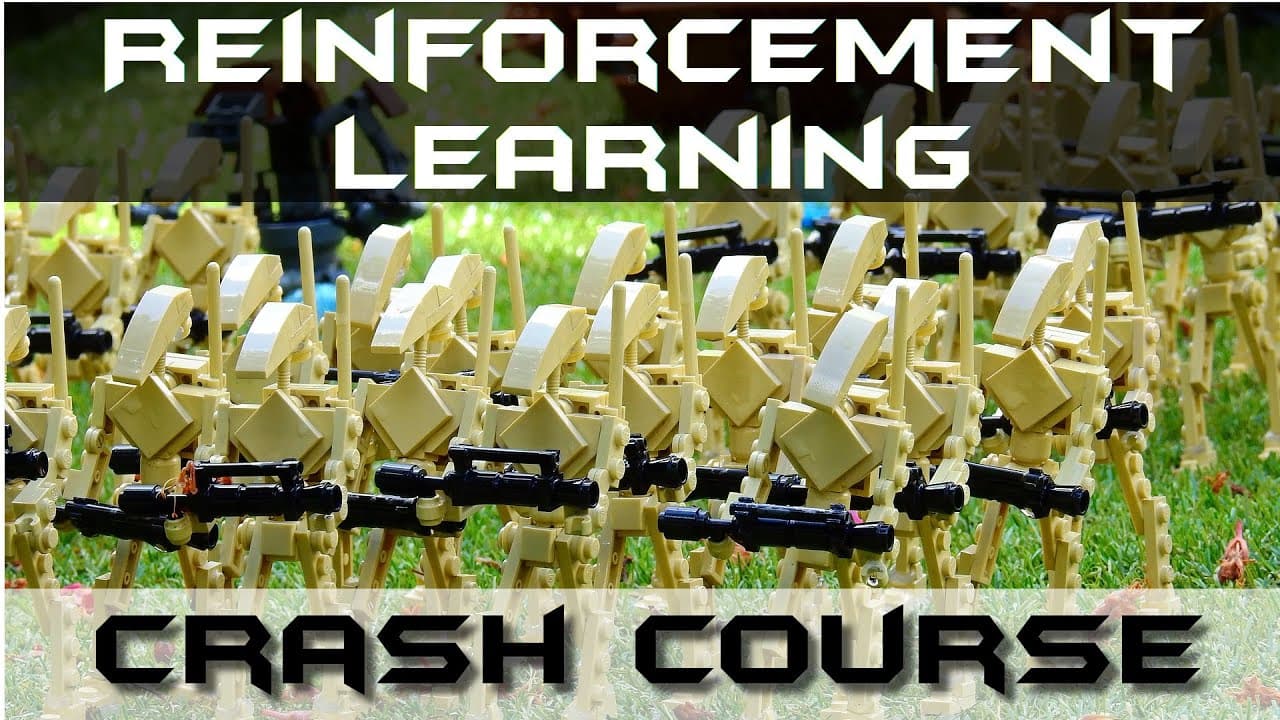
Reinforcement learning is a type of machine learning focused on how agents should take actions in an environment to maximize cumulative rewards. To get started, you need basic Python skills and a familiarity with libraries like TensorFlow and PyTorch. Key concepts covered include implementing Q-learning, deep Q-networks, epsilon-greedy action selection, and how to create custom environments.
Transcript
welcome to the reinforcement learning jumpstart series I'm your host Phil Taber if you don't know me I'm a physicist and former semiconductor engineer turned machine learning practitioner in this series of tutorials you're gonna learn everything you need to know to get started with reinforcement learning you don't need any prior exposure all you re... Read More
Key Insights
- 📔 The series covers all the necessary libraries and concepts to get started with reinforcement learning.
- 😒 Traditional Q-learning uses a table to store state-action pairs, while deep Q-learning uses neural networks for approximating these values.
- ⚖️ Epsilon-greedy action selection is a common strategy used in reinforcement learning to balance exploration and exploitation.
Install to Summarize YouTube Videos and Get Transcripts
Explore YouTube Video Summarizer or Get YouTube Transcript Extractor
Questions & Answers
Q: What are the main libraries needed for implementing reinforcement learning in Python?
The main libraries needed for implementing reinforcement learning in Python are OpenAI Gym (including the Atari extension and Box2D extension), TensorFlow, and PyTorch.
Q: What is the difference between traditional Q-learning and deep Q-learning?
Traditional Q-learning works by keeping a table of state and action pairs, whereas deep Q-learning uses deep neural networks to approximate the values of state-action pairs, making it more suitable for environments with a large number of states or continuous state spaces.
Q: How is epsilon-greedy action selection used in reinforcement learning?
Epsilon-greedy action selection is a strategy used to balance between exploration and exploitation in reinforcement learning. The agent selects a random action with a probability of epsilon and selects the action with the highest known expected rewards with a probability of 1-epsilon.
Q: What is target network replacement in deep Q-learning?
In deep Q-learning, the target network is used to calculate the target values for training the neural network. Target network replacement involves periodically updating the weights of the target network with the weights from the evaluation network to improve the accuracy of the target values.
Summary & Key Takeaways
-
The series covers everything you need to know to get started with reinforcement learning, starting from basic familiarity with Python.
-
The tutorials focus on implementing Q-learning and deep Q-networks using Python libraries such as TensorFlow and PyTorch.
-
The host explains concepts such as epsilon-greedy action selection and target network replacement.
Read in Other Languages (beta)
Share This Summary 📚
Summarize YouTube Videos and Get Video Transcripts with 1-Click
Try YouTube Summary with ChatGPT & Claude or YouTube Transcript Generator
Explore More Summaries from Machine Learning with Phil 📚



Summarize YouTube Videos and Get Video Transcripts with 1-Click
Try YouTube Summary with ChatGPT & Claude or YouTube Transcript Generator