How Will Google Search Adapt to the AI Era?
TL;DR
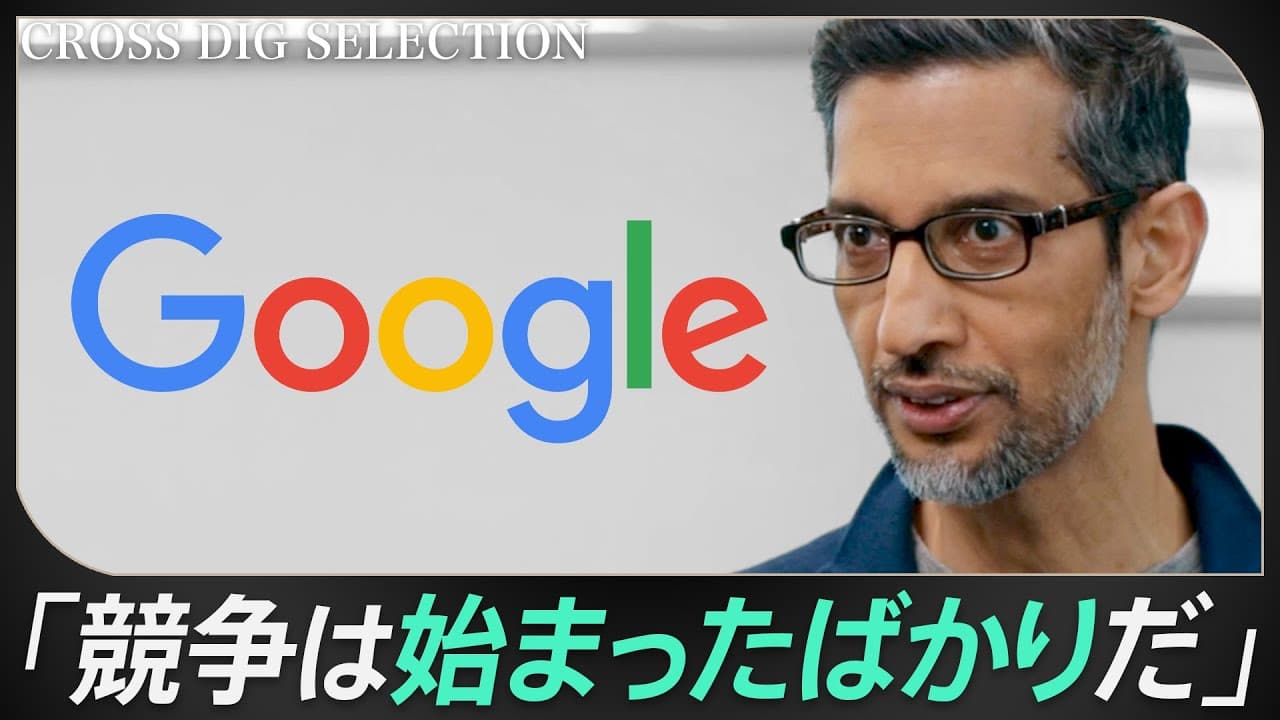
Google plans to combine generative AI answers with links to diverse sources, giving users quick responses when appropriate and paths for deeper exploration. Sundar Pichai argues that search will remain valuable by distinguishing objective, reliable information from growing volumes of synthetic content, while preserving user choice and adapting advertising to AI-generated overviews.
Transcript
We are in the plex. This is the center of Google. Gosh, it's hard to remember life before Google. It changed literally everything. How we live, how we work, how we communicate, how we get literally anywhere on a Google colored bike. Google has been the front door of the Internet for over two decades, and now there are so many doors. Google may not ... Read More
Key Insights
- Google’s AI strategy is a long-term company priority. Pichai says he directed Google to become AI-first in 2016, and he characterizes the current surge of excitement as an early phase of a broader period of innovation rather than an isolated competitive reaction.
- Google Search is designed to combine answers with source links. Pichai says users may want immediate information for a simple question, but they often continue exploring, so links to a wide variety of sources will remain an important part of the search experience.
- Search quality will increasingly depend on filtering synthetic content. Pichai expects AI to cause an explosion of new material and argues that identifying what is objective and real will help define successful search products during the next decade.
- Google’s advertising model is being tested within AI-generated search experiences. Pichai says people still want choices in commercial contexts, and Google’s experiments with ads in AI overviews indicate that this underlying user need may continue as search formats change.
- Google already used transformer technology before generative AI became central to public competition. Pichai says transformers produced large improvements in search quality, were incorporated across Google products, and now provide a foundation for further work involving Gemini and generative AI.
- Gemini’s historically inaccurate image outputs resulted from diversity-related behavior being applied in inappropriate contexts. Pichai calls that application a bug, accepts responsibility, and says Google must meet a high standard because its products serve users across many countries and contexts.
- Pichai’s leadership approach is based on recognizing patterns and separating signal from noise. After years as CEO, he believes prior experience helps him identify familiar situations, ignore much of the surrounding noise, and focus attention on the relatively few matters that truly require it.
- Pichai’s optimism about technology is rooted in tangible childhood experiences. A telephone that took five years to arrive, the family’s first television, and a bicycle with gears each demonstrated how a single technological improvement could significantly change communication, entertainment, or everyday effort.
Install to Summarize YouTube Videos and Get Transcripts
Explore YouTube Video Summarizer or Get YouTube Transcript Extractor
Questions & Answers
Q: How will Google Search change in the AI era?
Google Search will increasingly use generative AI to provide direct answers while continuing to link users to a wide variety of sources. Pichai says these functions address different needs: some questions call for a quick response, while others lead users to investigate a subject more deeply. Google considers serving both patterns a defining feature of search rather than replacing links entirely with chatbot responses.
Q: Will Google remove links from AI-generated search results?
Google does not plan to make links disappear from search. Pichai says links will remain an important part of the product because users frequently want to explore beyond an initial answer and compare information from multiple sources. Generative AI extends Google’s existing practice of sometimes presenting answers directly, but it is intended to coexist with the broader web rather than eliminate access to it.
Q: How does Google plan to handle AI-generated misinformation?
Google plans to focus search on determining what is objective and real as synthetic content becomes more common. Pichai notes that people already turn to Google to check whether something encountered elsewhere actually happened. He describes this as both a major challenge and an opportunity, while acknowledging that progress will be ongoing rather than suggesting the problem has already been solved.
Q: Why does Sundar Pichai believe search quality will remain important?
Pichai believes search quality will become more important because transitions in technology produce large amounts of new content, and AI is expected to accelerate that expansion. A successful search product must sort through the resulting material and help users find reliable information. He argues that doing this well is difficult and will sit at the heart of search’s continued usefulness.
Q: How could AI-generated answers affect Google’s advertising business?
Google is experimenting with advertisements in AI overviews rather than assuming that direct answers will end commercial search. Pichai says users continue to want choices, especially when their questions involve products or other commercial decisions. According to the data he references from Google’s experiments, the company believes this underlying preference can persist even as AI changes how answers and links are presented.
Q: What caused Gemini to generate historically inaccurate images?
Pichai says Google tried to make image generation useful for a global audience asking generic questions about people such as teachers, doctors, or nurses. The failure occurred when that behavior was also applied to contexts where it was historically inappropriate, producing inaccurate depictions. He identifies this overapplication as a bug, accepts that the output was unacceptable, and says Google is responsible for correcting it.
Q: What is Sundar Pichai’s approach to leadership at Google?
Pichai’s leadership approach emphasizes pattern recognition, careful prioritization, and separating meaningful signals from surrounding noise. He says experience as CEO creates a sense of familiarity when similar situations arise, allowing him to respond more effectively. Because leading Google brings an enormous volume of information and decisions, he focuses on the limited number of issues that genuinely deserve sustained attention.
Q: Why is Sundar Pichai optimistic about technology?
Pichai connects his optimism to growing up in a middle-class family in Chennai and seeing individual technologies transform ordinary life. His family waited five years for a rotary telephone, and its arrival changed how they communicated. Their first television opened access to sports, while a bicycle with gears made difficult travel easier. These experiences showed him that technology can produce concrete, personal improvements.
Summary & Key Takeaways
-
Sundar Pichai describes Google’s AI strategy as a long-term effort that began before the current industry frenzy. Google has already incorporated transformer technology into search and is expanding generative AI through Gemini, while Pichai views the present moment as an early stage in a larger period of innovation.
-
Google’s proposed search experience combines direct AI-generated answers with links to multiple sources. Pichai says users sometimes need a quick factual response, but often want to investigate further. Maintaining both modes is central to Google’s attempt to preserve the distinctive value of search while its interface evolves.
-
Pichai connects his leadership style and technological optimism to his upbringing in a middle-class family in Chennai. Waiting five years for a rotary telephone and later experiencing television and a geared bicycle showed him how technology could materially change daily life. As CEO, he prioritizes patterns, relevant signals, and long-term perspective.
Read in Other Languages (beta)
Share This Summary 📚
Summarize YouTube Videos and Get Video Transcripts with 1-Click
Try YouTube Summary with ChatGPT & Claude or YouTube Transcript Generator
Explore More Summaries from TBS CROSS DIG with Bloomberg 📚





Summarize YouTube Videos and Get Video Transcripts with 1-Click
Try YouTube Summary with ChatGPT & Claude or YouTube Transcript Generator