How to Start Your Own Business in 6 Steps
TL;DR
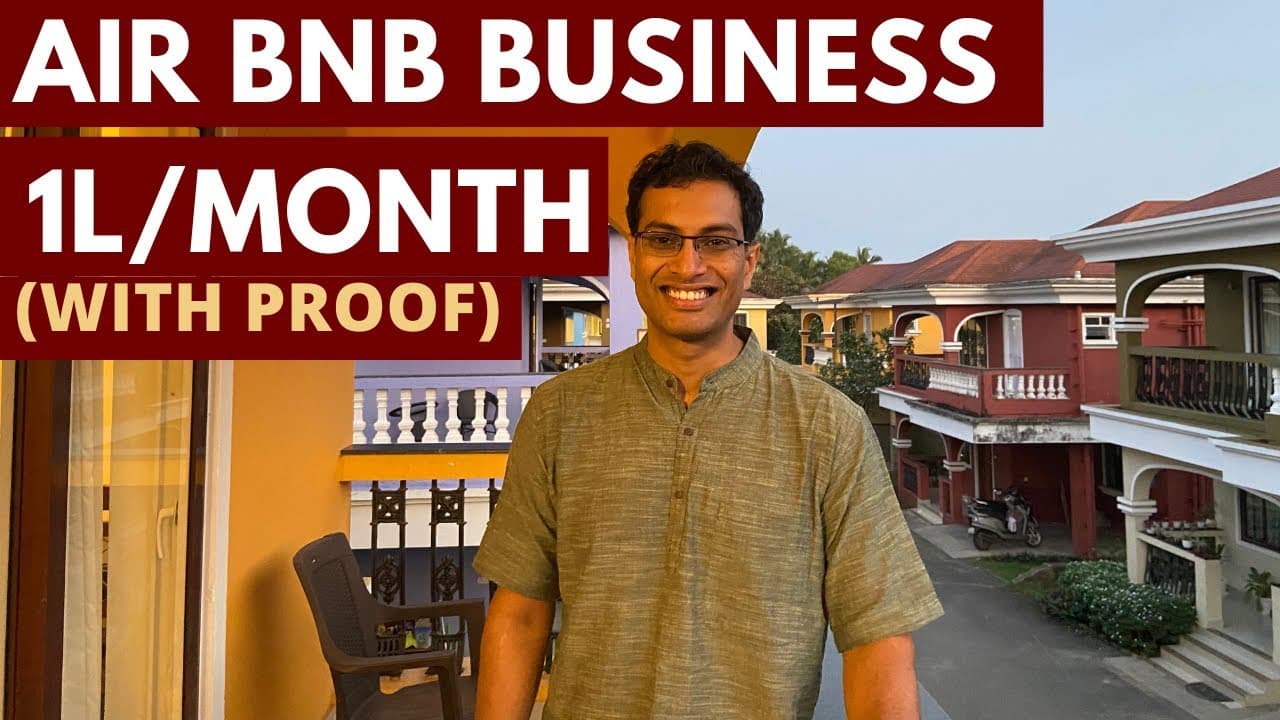
You can start a successful business by following six key steps: generate and refine ideas, conduct ROI analysis, perform due diligence, create a minimum viable product, focus on distribution, and scale your operations. This video uses the speaker's experience of launching a holiday rentals business in Goa to illustrate each step in detail.
Transcript
hi everyone welcome to today's video so many of you know me from YouTube but even before getting on YouTube I was teaching at top business schools for example I used to do special classes at ISB Stanford Berkeley Trinity College Dublin so there was a venture that I used to run which was called as cases over coffee and given the fact that I'd work w... Read More
Key Insights
- 😥 Ideation is an essential starting point, generating a variety of ideas for your business.
- 💡 Narrowing down ideas through a SWOT analysis helps identify opportunities and align with your capabilities.
- 👨💼 ROI analysis assesses the financial viability of your business idea.
- ❓ Due diligence ensures compliance with regulations and identifies potential challenges.
- 👻 Building an MVP allows for testing and refinement before scaling up.
- 🉐 Distribution and testimonials are crucial for reaching customers and gaining their trust.
- 📺 Scaling can be done gradually or rapidly, depending on your vision and resources.
Install to Summarize YouTube Videos and Get Transcripts
Explore YouTube Video Summarizer or Get YouTube Transcript Extractor
Questions & Answers
Q: What is the first step in starting a business?
The first step is ideation, where you generate a series of ideas for your business. This can be done through brainstorming with others or attending networking events to gather more ideas.
Q: How do you narrow down your ideas?
To narrow down your ideas, you can use a SWOT framework to understand your strengths and weaknesses. By evaluating your own capabilities, you can choose ideas that align with your strengths and have a higher chance of success.
Q: What is the importance of ROI analysis?
ROI analysis helps determine the potential return on investment for your business. By calculating the expected returns and considering the investment costs, you can assess the viability of your business idea before proceeding further.
Q: Why is due diligence necessary in starting a business?
Due diligence involves researching and understanding the legal and regulatory requirements, as well as potential challenges, associated with your business idea. This step ensures that you have considered all necessary factors before moving forward.
Q: How can you build a minimum viable product (MVP)?
An MVP is the initial version of your product that allows you to test its viability in the market. It should be functional and meet the basic needs of your target audience. By focusing on an MVP, you can gather feedback and make improvements before scaling up.
Q: What is the difference between zero to one and one to N scaling?
Zero to one scaling refers to the stage where you establish proof of concept and bring your business to a sustainable level. One to N scaling, on the other hand, involves rapid expansion and growth, often requiring external investment and increased resources.
Key Insights:
- Ideation is an essential starting point, generating a variety of ideas for your business.
- Narrowing down ideas through a SWOT analysis helps identify opportunities and align with your capabilities.
- ROI analysis assesses the financial viability of your business idea.
- Due diligence ensures compliance with regulations and identifies potential challenges.
- Building an MVP allows for testing and refinement before scaling up.
- Distribution and testimonials are crucial for reaching customers and gaining their trust.
- Scaling can be done gradually or rapidly, depending on your vision and resources.
- External investment may not always be necessary for successful business growth.
Summary & Key Takeaways
-
The speaker has a background in teaching business at top schools and shares their expertise on how to build a business.
-
They use their own holiday rentals business as a case study to provide practical insights.
-
The video is divided into six steps: ideation, narrowing down ideas, ROI analysis, due diligence, building the product, and scaling up.
Read in Other Languages (beta)
Share This Summary 📚
Summarize YouTube Videos and Get Video Transcripts with 1-Click
Try YouTube Summary with ChatGPT & Claude or YouTube Transcript Generator
Explore More Summaries from Akshat Shrivastava 📚






Summarize YouTube Videos and Get Video Transcripts with 1-Click
Try YouTube Summary with ChatGPT & Claude or YouTube Transcript Generator