What opportunities would Syed Balkhi pursue in 2024
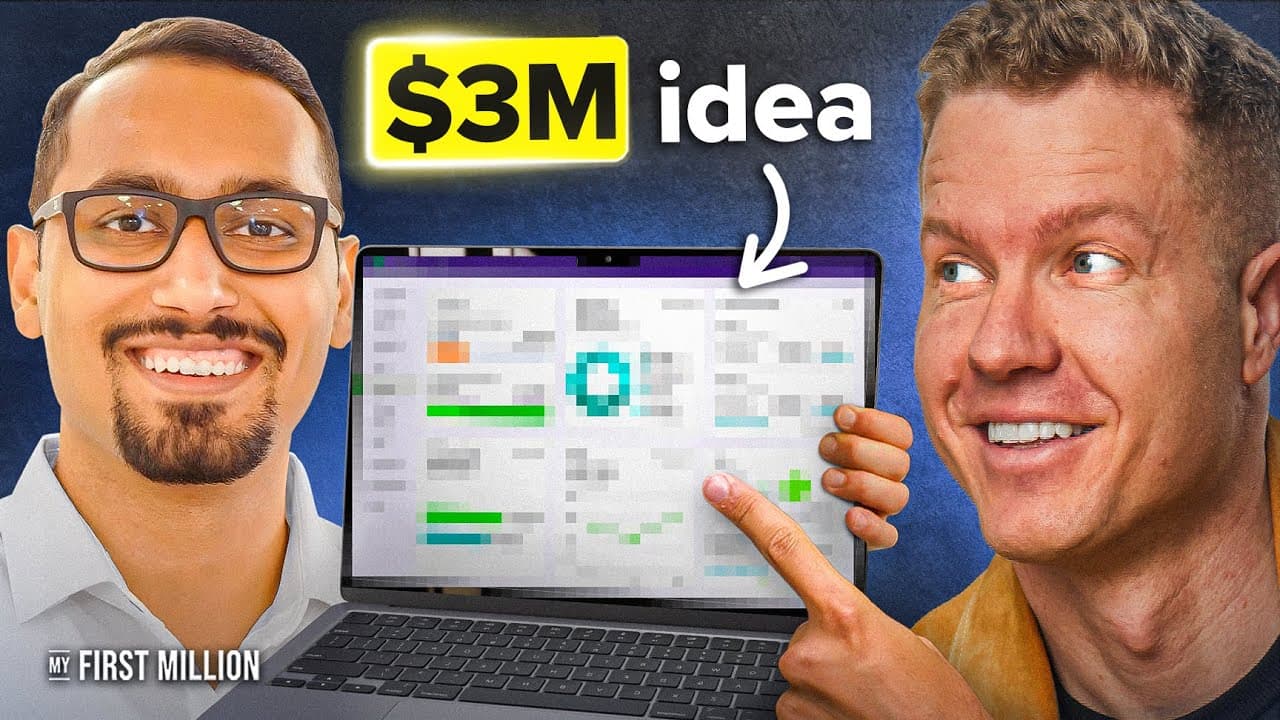
TL;DR
Syed would chase offshore productized services with reseller and white label models, focusing on high TAM markets like bookkeeping and WordPress maintenance. He favors practical, repeatable bets over moonshot ideas, leveraging offshore talent and a reseller framework to create scalable, cash-generating businesses while staying bootstrapped.
Transcript
all right we've got our buddy sah balk on today if you don't know s he is one of the few people on Earth who has bootstrapped a company to a unicorn status a billion dollar company without ever taking outside money the guy's a legend he's in his 30s and he's done all this what I liked about this episode is most people we talked to a lot of guys who... Read More
Key Insights
- Syed believes offshore, productized services can scale without external funding
- A reseller or white-label model is central to turning services into scalable products
- WordPress maintenance and offshore bookkeeping are concrete, scalable opportunities
- The Barnacle on the Whale metaphor describes leveraging a large platform to grow a business
- Ownership of core assets is prioritized over following outside capital strategies
- Proven execution beats hype when choosing business bets
- Disproportionate value comes from combining talent arbitrage with structured offers
- Pricing and delivery models should emphasize repeatability and partner channels
Install to Summarize YouTube Videos and Get Transcripts
Explore YouTube Video Summarizer or Get YouTube Transcript Extractor
Questions & Answers
Q: What is the main opportunity Syed Balkhi would pursue in 2024 according to the interview?
The main opportunity Syed would pursue is offshore productized services with reseller and white-label models, especially in markets with high total addressable markets such as bookkeeping and WordPress maintenance. He argues for practical, repeatable ideas that can work if executed well, rather than chasing abstract or moonshot concepts. This approach leverages offshore talent to deliver affordable, scalable services and uses resellers to expand reach, creating predictable revenue streams without immediately needing substantial external capital.
Q: How does Syed describe turning services into scalable products?
Syed describes turning services into scalable products by offshore development and a white-label or reseller model, which allows a company to offer high-value services at competitive prices while leveraging a partner network to scale. The key is creating a repeatable delivery process and packaging it as a productized service that others can resell, thereby expanding market reach without proportional increases in internal headcount.
Q: What examples are given for productized offshore services?
Examples discussed include Seahawk Media, which offers custom WordPress development and maintenance that can be white-labeled or resold, enabling smaller businesses to access capabilities they cannot hire internally. Another example is offshore bookkeeping services offered at low costs, which can be structured as a productized service with a reseller model to deliver affordable, scalable accounting support.
Q: Why does Syed emphasize not chasing moonshot ideas?
Syed emphasizes avoiding moonshot ideas because practical, incremental bets with clear delivery and repeatable value tend to work better in real-world markets. He argues that ideas with high total addressable markets but uncertain execution can lead to wasted resources, whereas structured, offshore-enabled services with reseller channels provide predictable growth and measurable revenue.
Q: What role does a reseller or white-label model play in his strategy?
The reseller or white-label model is central because it allows leveraging third-party networks to extend reach and revenue without bearing all the costs of sales and marketing. By offering offshore services under a unified brand, the business can scale through partners who bring in customers while the core team concentrates on delivery and quality, creating a scalable ecosystem.
Q: How does Syed view the value of ownership versus raising capital?
Syed views ownership of core assets as a priority over raising capital, preferring to build and expand within an owned framework rather than becoming dependent on external funding. This approach aligns with a bootstrap mindset, where sustainable growth is achieved through disciplined execution, predictable revenue, and strategic partnerships rather than dilution or control taken by investors.
Q: What markets or services does he highlight as particularly promising for offshore productization?
He highlights services with high demand and clear repeatable workflows, such as WordPress development and maintenance, and bookkeeping. These markets benefit from offshore talent and can be packaged as productized services with white-label or reseller options, enabling cost-effective delivery and scalable growth through partner networks.
Q: What takeaway does the episode offer about creating value in today’s economy?
The episode suggests that creating disproportionate value comes from combining global talent with structured, repeatable service offerings and strong partner ecosystems. By focusing on practical, scalable bets that leverage existing platforms and networks, founders can build sizeable, sustainable businesses without relying on heavy external funding or risky speculative ventures.
Summary & Key Takeaways
-
Syed Balkhi identifies offshore, high-TAM productized services as a key growth path, emphasizing repeatable execution and value capture without external funding. The strategy centers on combining offshore talent with white-label or reseller models to create scalable offerings.
-
The conversation highlights concrete examples such as Seahawk Media for WordPress services and the potential of bookkeeping services as a revenue lever, illustrating how to turn services into scalable products.
-
The episode stresses a pragmatic mindset: own the core assets, leverage existing platforms, and seek predictable revenue streams through partnerships and outsourcing rather than chasing unproven ideas.
Read in Other Languages (beta)
Share This Summary 📚
Summarize YouTube Videos and Get Video Transcripts with 1-Click
Try YouTube Summary with ChatGPT & Claude or YouTube Transcript Generator
Explore More Summaries from My First Million 📚
Summarize YouTube Videos and Get Video Transcripts with 1-Click
Try YouTube Summary with ChatGPT & Claude or YouTube Transcript Generator