What Are Super Earths and Can They Support Life?

TL;DR
Super Earths, which are planets larger than Earth, may offer better conditions for life due to features like thicker atmospheres and stronger magnetic fields. These planets could retain more heat and sustain plate tectonics longer, making them potentially more conducive to the development of complex life than our own planet.
Transcript
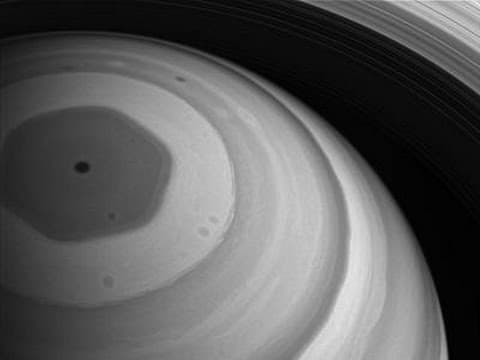
As far as types of planets go, our solar system is fairly diverse. We have two gas giants, one with a prominent ring system, two ice giants, and even a planet close enough to the sun as to be outside the sun’s habitable zone for being too close, and of course three other rocky worlds including earth, all of which at some time had liquid water on th... Read More
Key Insights
- 🪐 Our solar system has diverse types of planets, each with unique characteristics.
- 🦸 Super earths, which are planets larger than Earth, could potentially be habitable environments for life.
- 🌍 The rare earth hypothesis suggests that Earth possesses specific attributes necessary for complex life and civilization.
- 💪 Super earths could have advantages such as thicker atmospheres and stronger magnetic fields.
- 🥺 The higher gravity of super earths could lead to flatter topography and increased surface erosion rates.
- 🦸 Super earths with longer-lasting plate tectonics could be more conducive to the development of complex life.
- 🤩 Stability provided by long-lived stars within habitable zones is important for the potential emergence of life.
Install to Summarize YouTube Videos and Get Transcripts
Explore YouTube Video Summarizer or Get YouTube Transcript Extractor
Questions & Answers
Q: What types of planets are found in our solar system?
Our solar system has gas giants, ice giants, and rocky worlds with liquid water on their surfaces.
Q: Why is studying these planets important for exobiology?
By studying our own planets, we can gain insights into the potential conditions and environments of exoplanets.
Q: What are super earths?
Super earths are planets larger than Earth, which could potentially have a rocky surface and atmosphere similar to ours.
Q: Why could super earths be better environments for life?
Super earths with higher gravity and thicker atmospheres could provide better shielding from harmful cosmic rays and more stable conditions for life to thrive.
Summary & Key Takeaways
-
Our solar system consists of various types of planets, including gas giants, ice giants, and rocky worlds with liquid water on their surfaces.
-
Studying these planets is important for understanding exoplanets and the potential for life.
-
Super earths, which are larger than Earth, could offer a better environment for the development of life.
Read in Other Languages (beta)
Share This Summary 📚
Summarize YouTube Videos and Get Video Transcripts with 1-Click
Try YouTube Summary with ChatGPT & Claude or YouTube Transcript Generator
Explore More Summaries from John Michael Godier 📚





Summarize YouTube Videos and Get Video Transcripts with 1-Click
Try YouTube Summary with ChatGPT & Claude or YouTube Transcript Generator