Nikesh Arora on AI Security and Enterprise Guardrails
TL;DR
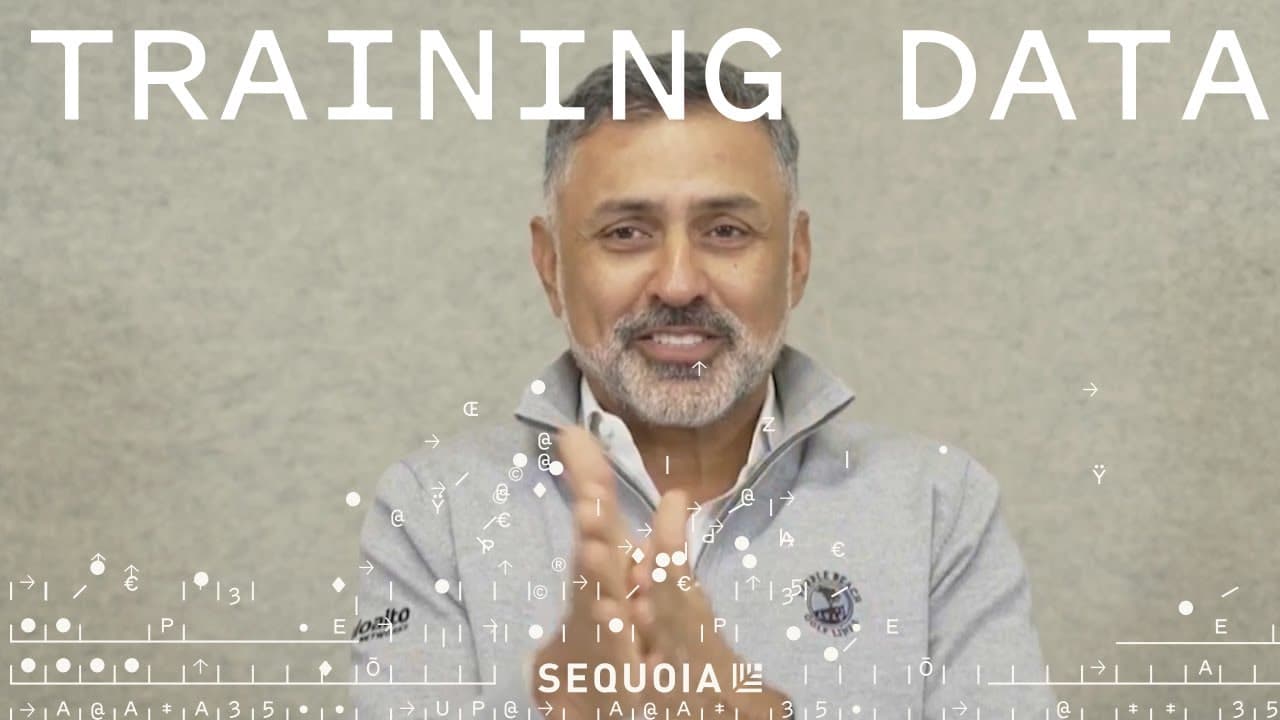
No matter which AI model you deploy, safety comes from the controls you superimpose, not the model itself. Palo Alto Networks CEO Nikesh Arora argues that once you give an AI 'arms and legs' to act, you must wrap it in an AI firewall that restricts it to task-specific work. Cheap models like DeepSeek simply widen who can build such agents.
Transcript
like I I have a principle that I was joke even on our All Hands say I've never met a person who comes to work to screw up I W up morning let's go sunshine it's time to go to work let's me see how badly I can do today everybody walks in with the right attitude it's something that happens at work that we create that causes the unintended outcomes it'... Read More
Key Insights
- The real safety layer is the guardrails superimposed around a model, not the model's own defenses. Arora argues that whichever model you deploy for a precision use case, you must add a firewall and 'straight jacket' so it only responds to task-specific requests.
- Danger rises when AI gets 'arms and legs' to take actions rather than just generate content. Arora cites agents that gave away free cars or refunded airline tickets as their version of hallucinating, versus safe narrow tasks like self-driving.
- A report found DeepSeek R1 succumbed to 50 out of 50 prompt injections, a 100% success rate. Arora frames this as a guardrail question, noting cheaply built raw models arrive with fewer controls than more expensive ones.
- Cheap model-building expands opportunity rather than threatening incumbents. Arora says if someone builds a brain cheaply and makes it available cheaply, it lets more startups deploy task-specific models, a major shift from spending heavily on amazing general models.
- Palo Alto Networks focuses on two AI use cases: controlling employee use of AI tools to prevent private data leakage, and its AI firewall that inspects everything going into and out of a deployed model.
- Model behavior is the model maker's responsibility, but preventing hijacking is the security vendor's job. Arora says his role is ensuring the model does not get hijacked, intercepted, taken over, or manipulated so people lose control of their AI brain.
- Attackers are already using LLMs to move faster. Arora says with roughly 3,000 models on Hugging Face, bad actors can pick a model without guardrails and ask it for the steps to exploit a known CVE vulnerability.
- Arora rejects blaming individuals for failures, saying he has never met someone who comes to work to screw up. With the right domain knowledge, intelligence, and attitude hired, the rest of the outcome is on the organization's systems.
Install to Summarize YouTube Videos and Get Transcripts
Explore YouTube Video Summarizer or Get YouTube Transcript Extractor
Questions & Answers
Q: What is Palo Alto Networks' approach to securing AI models?
Palo Alto Networks superimposes controls around whatever model a customer deploys rather than relying on the model's built-in defenses. Arora describes putting a firewall and a 'straight jacket' around the model so it only responds to task-specific requests. Their AI firewall inspects everything going into and out of the model, ensures it has no back doors, and prevents data from being sent elsewhere. It can run on-premises or in a protected cloud instance, keeping the model from being hijacked or manipulated.
Q: How successful were prompt injection attacks against DeepSeek R1?
A report cited in the conversation found that 50 out of 50 prompt injections worked against DeepSeek R1, a 100% success rate on attacking the model. Arora treats this largely as a guardrail question rather than a fundamental flaw, noting that raw models arrive without deep controls and that building guardrails is what costs money. He points out that early versions of ChatGPT and Gemini were also jailbreakable before guardrails were built around them, so cheaply built models simply tend to have fewer controls.
Q: Why does giving AI 'arms and legs' make it dangerous?
Arora says AI can be used safely today for creative work, search, data aggregation, and data regurgitation, but risk rises sharply when you give the brain 'arms and legs' and let it take actions. He cites examples where agents given control too soon started giving away free cars or refunding airline tickets, which he calls their version of hallucinating. The exception is narrow, precision, task-specific use cases such as self-driving cars, where letting the model act is more controlled and acceptable.
Q: How are attackers already using AI to launch attacks faster?
Arora confirms attackers are already using LLMs to attack faster. With roughly 3,000 models on Hugging Face, a bad actor can select a model that was never given guardrails or morals and ask it how to exploit a critical vulnerability. Given a known CVE, such a model will output the steps an attacker could take. This is a real, present threat rather than an academic one, and it forces defenders to match the accelerated pace of AI-powered attacks.
Q: What does the 'New World Order' from cheap AI models mean for startups?
Arora declines to take a position on whether a model cost $6 million or more to build. His point is that if someone builds a brain cheaply and makes it available cheaply, it expands the opportunity for many startups and people to deploy that brain for various tasks. He sees this as a major shift away from the assumption that everyone must spend heavily to build amazing general models, toward task-specific models that can be built far more cheaply.
Q: What are the two main AI use cases Palo Alto Networks addresses for enterprises?
The first is employee use of AI: workers use AI tools to augment their day jobs, and enterprises fear private data being fed into models and later leaked or absorbed into general knowledge. Palo Alto intercepts that usage, providing visibility and control so companies can govern how employees use AI apps. The second is enterprises experimenting with AI projects, from customer service chatbots to workflow automation, where Palo Alto's AI firewall protects the deployed model from being hijacked, intercepted, or manipulated.
Q: Who is responsible for an AI model's behavior versus its security?
Arora draws a clear line: the behavior of the model, including whether it hallucinates or gives wrong answers, is the responsibility of the people who generate the model. Palo Alto's job is different, ensuring the deployed model does not get hijacked, intercepted, taken over, or manipulated so that customers lose control of their AI brain. In other words, model makers own accuracy and behavior, while the security vendor owns protecting the deployment from external attack and takeover.
Q: What is Nikesh Arora's philosophy on leadership and workplace failures?
Arora shares a principle he repeats even at company All Hands: he has never met a person who comes to work intending to screw up. Nobody wakes up planning to do badly. Instead, it is something in how work is structured that causes unintended outcomes, not the individual. He argues that if you hire the right person with the right domain knowledge, intelligence, and attitude, then the rest of the outcome is upon the organization rather than the employee.
Summary & Key Takeaways
-
Nikesh Arora, CEO of Palo Alto Networks since 2018, has built it into the largest and most valuable cybersecurity company with 70,000 customers and over $120 billion in market value. He previously spent a decade as Google's chief business officer while revenue grew from $3 billion to about $65 billion.
-
Arora frames LLMs as an early 'brain' with immense capacity to remember, process, and pattern-match, but susceptible to wrong conclusions and hallucination. Real risk appears when the brain is given 'arms and legs' to take actions too soon, as with agents that gave away free cars or refunded airline tickets.
-
Because raw models lack deep guardrails, security must be superimposed. Palo Alto's AI firewall inspects traffic in and out of a deployed model, blocks back doors and data exfiltration, and constrains it to task-specific work, while attackers already exploit unguarded Hugging Face models to accelerate attacks on known vulnerabilities.
Read in Other Languages (beta)
Share This Summary 📚
Summarize YouTube Videos and Get Video Transcripts with 1-Click
Try YouTube Summary with ChatGPT & Claude or YouTube Transcript Generator
Explore More Summaries from Sequoia Capital 📚
Summarize YouTube Videos and Get Video Transcripts with 1-Click
Try YouTube Summary with ChatGPT & Claude or YouTube Transcript Generator