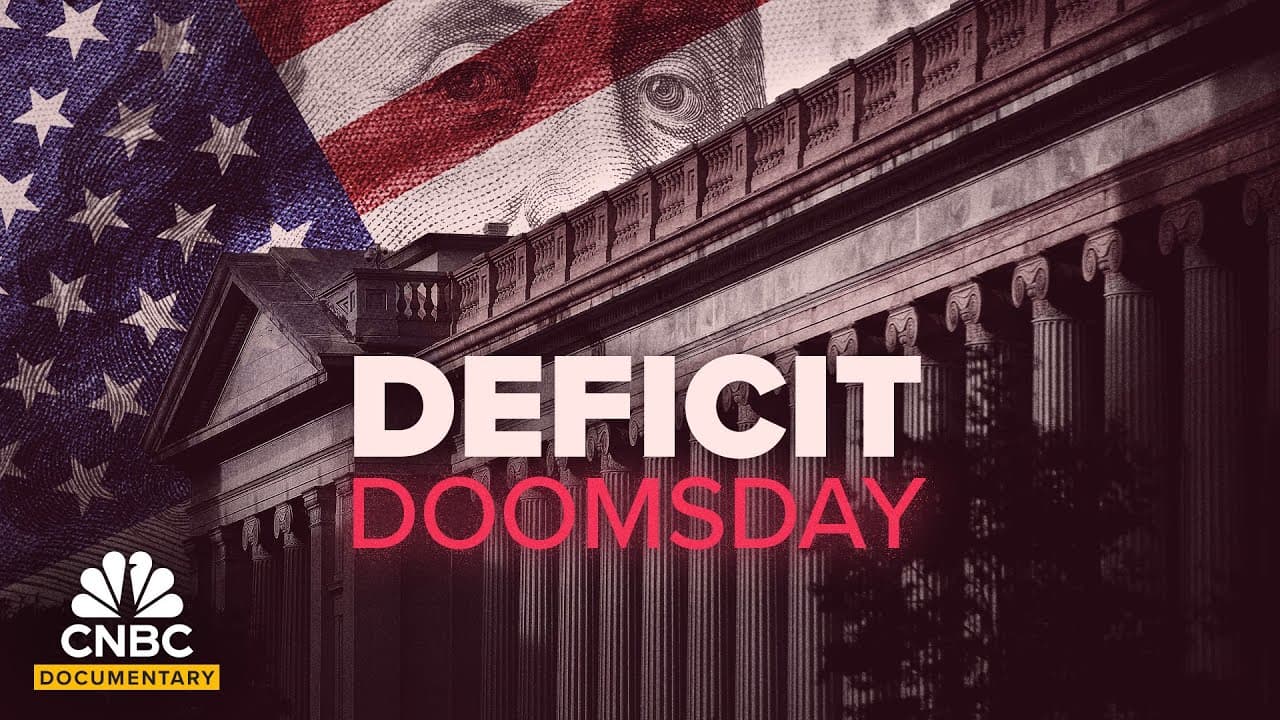
How America's Debt Spiral Could Spark The Next Crisis
TL;DR
America's growing debt may trigger a financial crisis.
Transcript
Our fiscal situation is a 350 pound, two-pack-a-day smoker on the ICU table. The U.S. federal budget is on an unsustainable path. We're going to be broke really quickly unless we get serious about dealing with our spending issues. There's no shortage of voices sounding the alarm about the national debt. America's borrowing levels are currently... Read More
Key Insights
- The U.S. federal budget is on an unsustainable path, with debt levels matching the economy's size and expected to rise further, leading to potential economic instability.
- Historical attempts to balance the U.S. budget have been overshadowed by tax cuts, wars, financial crises, and emergencies, contributing significantly to the national debt.
- Experts warn that without addressing the deficit, the U.S. could face a financial crisis within 20 years, as fixed income and bond markets may collapse.
- The U.S. can avoid default by printing money, but this could lead to inflation, as seen in other countries with high debt levels.
- Rising interest payments on the national debt could surpass spending on crucial areas like Medicare, Medicaid, and defense, squeezing the federal budget further.
- Foreign holders of U.S. treasuries, like China and Japan, could potentially use their bonds as leverage in geopolitical disputes, though this is unlikely due to potential losses.
- Political division in the U.S. exacerbates the debt issue, making bipartisan solutions challenging, as both parties favor tax cuts and increased spending.
- The growing debt burden limits the government's ability to respond to future emergencies, posing risks to economic stability and national security.
Install to Summarize YouTube Videos and Get Transcripts
Explore YouTube Video Summarizer or Get YouTube Transcript Extractor
Questions & Answers
Q: What are the main factors contributing to the U.S. national debt?
The main factors contributing to the U.S. national debt include tax cuts, increased spending on wars and financial crises, and emergencies like the COVID-19 pandemic. These factors have created a significant fiscal hole, with tax cuts, spending increases, and emergencies each contributing roughly one-third to the debt.
Q: How does the U.S. manage its debt without defaulting?
The U.S. manages its debt without defaulting by printing money, as it can pay any debt it has by issuing bonds in its own currency. This approach avoids default but can lead to inflation, as increasing the money supply results in more dollars chasing the same amount of goods and services.
Q: What are the potential consequences of rising interest payments on the national debt?
Rising interest payments on the national debt could surpass spending on critical areas like Medicare, Medicaid, and defense, squeezing the federal budget. This would limit the government's ability to fund other priorities, such as tax cuts, social spending, or defense, as interest payments consume a growing share of the budget.
Q: How might foreign holders of U.S. treasuries impact the national debt situation?
Foreign holders of U.S. treasuries, such as China and Japan, could theoretically use their bonds as leverage in geopolitical disputes. However, this is unlikely as they would incur steep losses by dumping treasuries. Nonetheless, the large foreign holdings of U.S. debt highlight the interconnectedness of global economies.
Q: What role does political division play in addressing the U.S. debt issue?
Political division in the U.S. exacerbates the debt issue by making bipartisan solutions challenging. Both parties favor tax cuts and increased spending, which complicates efforts to address the deficit. The current political climate prioritizes partisan interests over effective governance, hindering fiscal responsibility.
Q: How does the growing debt burden affect the government's emergency response capabilities?
The growing debt burden limits the government's ability to respond to future emergencies, as it reduces fiscal flexibility. In past crises, the U.S. used debt to stimulate recovery, but as debt itself becomes a problem, this approach becomes less viable, posing risks to economic stability and national security.
Q: What historical attempts have been made to balance the U.S. budget?
Historically, the U.S. has made attempts to balance the budget, with notable efforts in the late 20th century, such as during Bill Clinton's presidency. However, these efforts have been overshadowed by subsequent tax cuts, wars, and financial crises, which have significantly contributed to the national debt.
Q: What is the likelihood of a financial crisis due to the U.S. deficit?
Experts suggest there is a more than 50% chance of a financial crisis related to the U.S. deficit within the next few years if corrective measures are not taken. The potential collapse of fixed income and bond markets within 20 years underscores the urgency of addressing the deficit to avoid such outcomes.
Summary & Key Takeaways
-
The U.S. faces an unsustainable fiscal path, with debt levels matching the economy's size and expected to rise, risking economic instability. Historical budget balancing efforts have been undermined by tax cuts, wars, and financial crises, contributing significantly to the national debt.
-
Experts warn of a potential financial crisis within 20 years if the deficit is not addressed, as fixed income and bond markets may collapse. The U.S. can avoid default by printing money, but this risks inflation, similar to other countries with high debt levels.
-
Rising interest payments on the national debt could surpass spending on Medicare, Medicaid, and defense, squeezing the federal budget. Political division exacerbates the debt issue, making bipartisan solutions difficult, while the growing debt limits the government's emergency response capabilities.
Read in Other Languages (beta)
Share This Summary 📚
Summarize YouTube Videos and Get Video Transcripts with 1-Click
Try YouTube Summary with ChatGPT & Claude or YouTube Transcript Generator
Explore More Summaries from CNBC 📚




Summarize YouTube Videos and Get Video Transcripts with 1-Click
Try YouTube Summary with ChatGPT & Claude or YouTube Transcript Generator