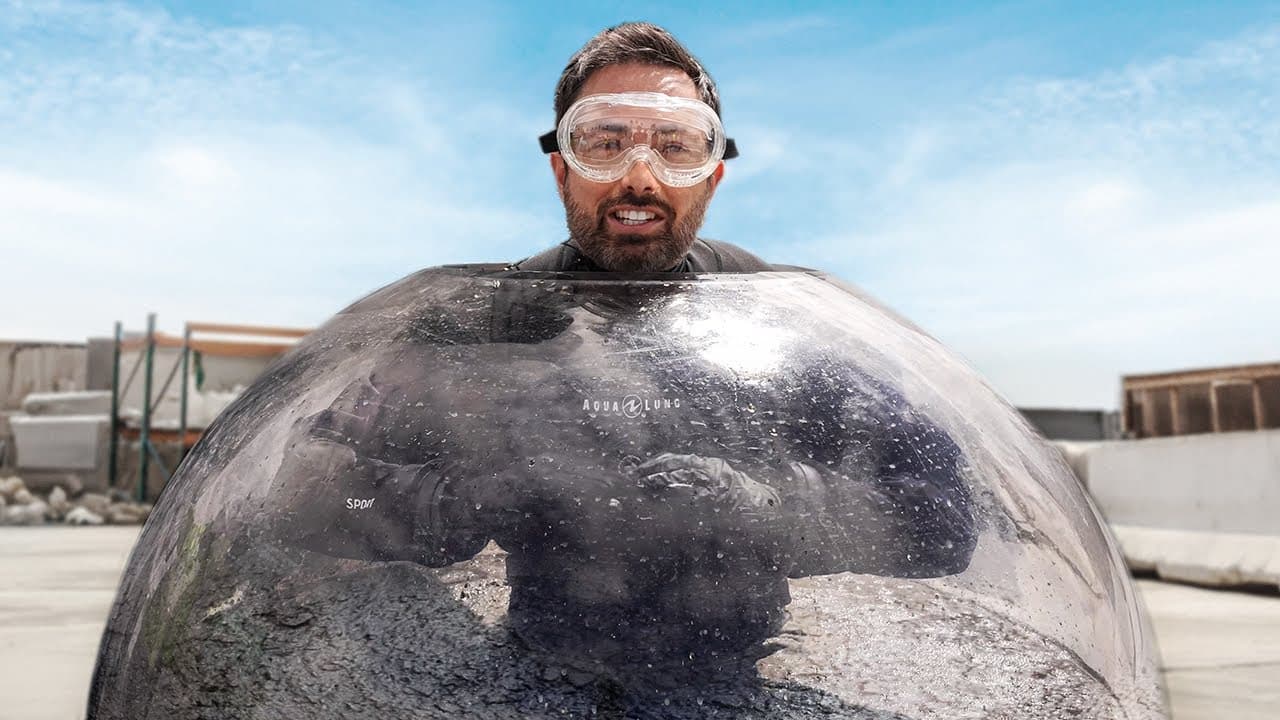
Getting Buried In Concrete To Explain How It Works
TL;DR
Concrete works by combining cement, the binding matrix, with aggregate such as sand and gravel, while water enables the mixture to harden. It is strong, durable, inexpensive, pourable into many shapes, and produced at enormous scale: 500 kilograms of cement are created annually for every person on Earth. Read on to understand its chemistry, Roman innovations, curing process, strength testing, and environmental impact.
Transcript
I am about to get buried in concrete. And while that's happening, I'm going to explain everything you need to know about this substance. So the first thing that I want to clear up is the difference between cement and concrete, because people often mix these up, okay? Cement is like the glue. It's the matrix of stuff. Oh there, I feel it. Okay, that... Read More
Key Insights
- 👷 Cement is crucial in making concrete, the most widely used construction material globally.
- 📢 The Romans discovered the benefits of adding pozzolana to cement, which improved its strength and durability.
- 👷 Concrete continues to be the preferred choice for construction due to its versatility, durability, and cost-effectiveness.
- 💁 The chemistry of cement and concrete involves the reaction and formation of crystals, which contribute to their hardening.
- 📢 The strength of concrete can be adjusted by varying the amount of cement and aggregate.
- 🫗 Freshly poured concrete should be kept damp to facilitate its proper hardening.
- 💱 Concrete production is a significant contributor to CO2 emissions, but individual actions and systemic changes are necessary to mitigate its environmental impact.
Install to Summarize YouTube Videos and Get Transcripts
Explore YouTube Video Summarizer or Get YouTube Transcript Extractor
Questions & Answers
Q: What is the difference between cement and concrete?
Cement is the binding matrix that acts like glue. Concrete is the finished mixture of cement and aggregate, including gravel and sand.
Q: How does concrete work and harden?
Water reacts with cement and helps form interlocking crystals that solidify the concrete. Silica changes the chemistry so the cement does not need to dry to harden; water becomes part of the hardened material.
Q: Why is concrete used so widely?
Concrete behaves like liquid rock, so it can be poured into many shapes. It is strong, durable, inexpensive, and easy to produce, and people have made versions of it for thousands of years.
Q: How much cement is produced each year?
Every year, 500 kilograms of cement are created for every man, woman, and child on Earth. That quantity can make two cubic meters of concrete.
Q: How was primitive cement made from limestone?
Limestone, which is mainly calcium carbonate, was heated to around 1,000 degrees Celsius to release CO2 and leave calcium oxide, or quicklime. Grinding the quicklime and mixing it with water created calcium hydroxide, which gradually absorbed atmospheric CO2 and returned to calcium carbonate as the water evaporated.
Q: How did the Romans improve concrete?
The Romans added volcanic ash called pozzolana to crushed limestone before heating it. This produced stronger, more durable cement that could harden underwater and was used for the Pantheon and concrete sea piers.
Q: Can concrete harden underwater?
Yes. Silica from materials such as pozzolana, clay, or shale changes cement chemistry so it does not need to dry, and the water becomes an integral part of the hardened concrete. The transcript says this concrete can achieve maximum strength when it sets underwater.
Q: How is concrete strength tested after pouring?
Suppliers collect some concrete from a job-site pour and cast it into compressive cylinders. The samples are maintained at 100% humidity, sometimes submerged in a lime bath, and tested for strength at 7, 14, and 28 days.
Summary & Key Takeaways
-
Cement is the glue that holds concrete together, while concrete is a mixture of cement, aggregate (gravel and sand), and water.
-
Cement is the most important man-made substance worldwide and is used more than any other material except water.
-
Concrete is liquid rock that can be poured into any shape, it is strong, durable, inexpensive, and has been used for thousands of years.
Read in Other Languages (beta)
Share This Summary 📚
Summarize YouTube Videos and Get Video Transcripts with 1-Click
Try YouTube Summary with ChatGPT & Claude or YouTube Transcript Generator
Explore More Summaries from Veritasium 📚




Summarize YouTube Videos and Get Video Transcripts with 1-Click
Try YouTube Summary with ChatGPT & Claude or YouTube Transcript Generator