How to build ETL pipelines in Databricks for bronze to silver to gold
TL;DR
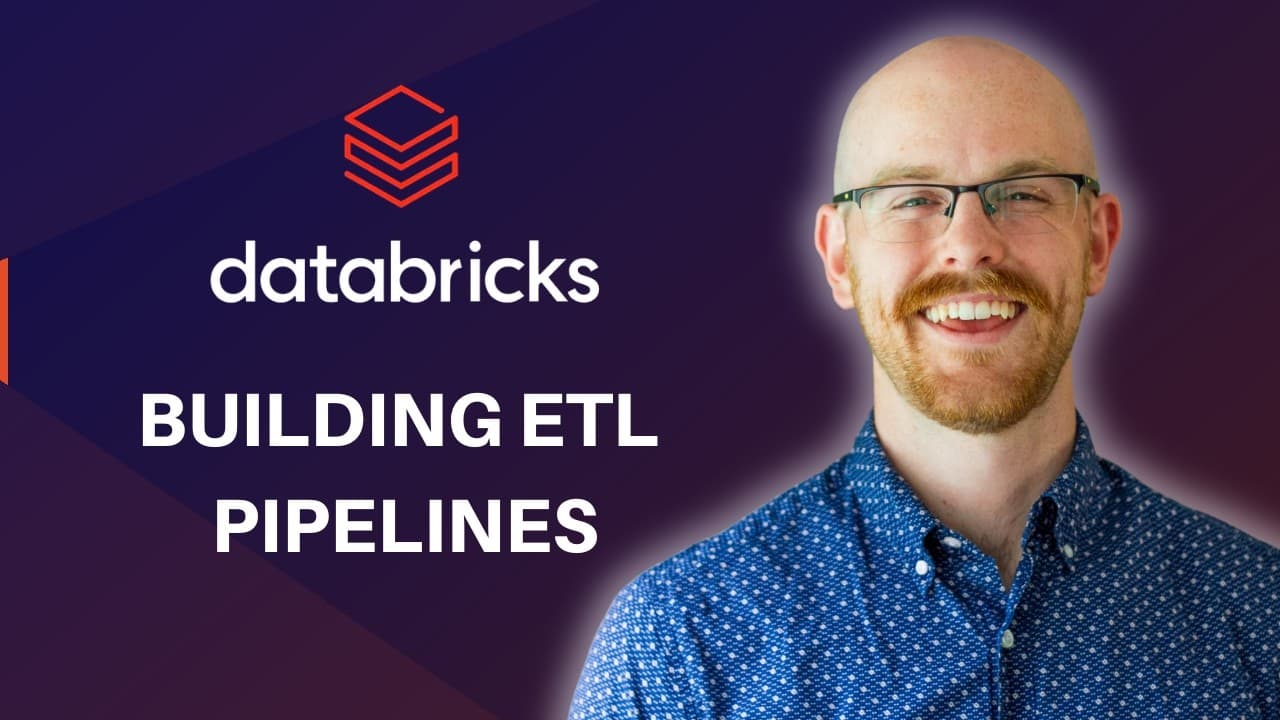
ETL pipelines are built by transforming raw bronze data into cleaned silver data and then producing production ready gold data. The video demonstrates creating separate notebooks for bronze to silver and silver to gold, using AI assistance to fix data issues, and writing cleaned data to silver storage, with notes on bronze silver gold architecture and orchestration basics.
Transcript
What's going on everybody? Welcome back to another video. Today we're going to be building an ETL pipeline in datab bricks. [music] Now, in the last lesson, we worked on data ingestion into data bricks. So, we were able to connect to just a local file, just kind of reading that file in and then we were also able to connect to an AWS S3 bucket. Now ... Read More
Key Insights
- Bronze to silver to gold architecture is a standard data pipeline pattern where raw data is cleaned and transformed into production ready outputs.
- Silver data represents a cleaned and deduplicated state suitable for downstream consumption such as dashboards and apps.
- Gold data is production ready and used for reporting and operational use cases.
- ETL pipelines in Databricks are organized with dedicated notebooks for each transformation stage to improve maintainability.
- Raw data is ingested from sources like S3 and then transformed to reduce duplicates and normalize formats.
- Date columns are commonly converted from strings to proper date or timestamp types during transformation.
- A data engineering catalog can be structured into bronze, silver, and gold catalogs to reduce cross-project confusion.
- Automation and jobs orchestration are future topics that will build on the two notebooks shown for end-to-end workflows.
Install to Summarize YouTube Videos and Get Transcripts
Explore YouTube Video Summarizer or Get YouTube Transcript Extractor
Questions & Answers
Q: What is the bronze silver gold architecture in Databricks and why use it?
The bronze silver gold architecture is a three layer data organization pattern where raw data is stored in bronze, transformed and cleansed in silver, and then made production ready in gold. This structure helps separate concerns, improves data quality, and supports scalable data pipelines. Bronze preserves raw inputs for traceability, silver performs cleansing and deduplication, and gold provides ready for use datasets for dashboards and apps.
Q: How does the video propose organizing ETL notebooks for a Databricks project?
The video recommends creating two notebooks for the ETL process: bronze to silver and silver to gold. This separation mirrors real-world practices, making it easier to manage, test, and reuse code. It also sets up a clear path for subsequent orchestration and job automation, reducing complexity when scaling projects.
Q: What role does AI play in the data cleaning process shown in the video?
AI is shown as a helper to identify data quality issues such as incorrect date formats and duplicates, and to generate transformation code. The approach emphasizes using AI to handle heavy lifting while providing the user control to refine or accept generated code, ensuring transparency and reproducibility in ETL steps.
Q: What are common data quality issues addressed in the demo?
Common issues include date fields stored as strings, inconsistent date formats, and duplicate user IDs. The transformation workflow converts dates to proper types, standardizes formats, and removes duplicates to ensure the integrity of the silver dataset before loading into the gold layer.
Q: Why is it important to partition the workflow into bronze, silver, and gold within a single schema in the video example?
Partitioning into bronze, silver, and gold helps keep raw data separate from cleaned data and production ready data, reducing confusion and risk of accidental overwrites. It also clarifies the data lifecycle, aids in governance, and mirrors best practices for scalable data engineering in Databricks, even if the example uses a single schema for simplicity.
Q: What is the purpose of creating two notebooks in this lesson, bronze to silver and silver to gold?
Creating two notebooks isolates the transformation steps and aligns with real-world ETL practices where each stage has distinct goals. This separation improves readability, enables independent testing, and facilitates orchestration and automation in later lessons, while still allowing a compact, in-progress view for the tutorial.
Q: How does the video address production readiness of transformed data?
The video defines gold as production ready data intended for dashboards, reports, and apps. It emphasizes delivering a trusted, clean, deduplicated dataset that can be consumed by downstream systems, and acknowledges the importance of designing for future orchestration and automation to support robust production pipelines.
Q: What lessons are highlighted about data schema management in Databricks?
The lesson highlights the importance of organizing schemas into bronze, silver, and gold catalogs and suggests separating catalogs by data engineering domains. This practice reduces cross-project confusion, supports governance, and helps teams manage multiple projects and customers without overlapping data.
Summary & Key Takeaways
-
This video introduces the bronze silver gold medallion architecture used in Databricks, starting with raw data in bronze and moving to cleaned silver for quality control before producing gold tables for production use.
-
It demonstrates setting up separate notebooks for each ETL phase, discusses schema organization and catalog separation, and provides guidance on notebook naming and project structure for larger data engineering efforts.
-
The speaker showcases an AI-assisted approach to data cleaning, highlighting common issues like date parsing and duplicate IDs, and emphasizes validating results before writing to silver tables and planning for future orchestration.
Read in Other Languages (beta)
Share This Summary 📚
Summarize YouTube Videos and Get Video Transcripts with 1-Click
Try YouTube Summary with ChatGPT & Claude or YouTube Transcript Generator
Explore More Summaries from Alex The Analyst 📚


Summarize YouTube Videos and Get Video Transcripts with 1-Click
Try YouTube Summary with ChatGPT & Claude or YouTube Transcript Generator