How to Transcribe Audio Files to Text Using Python
TL;DR
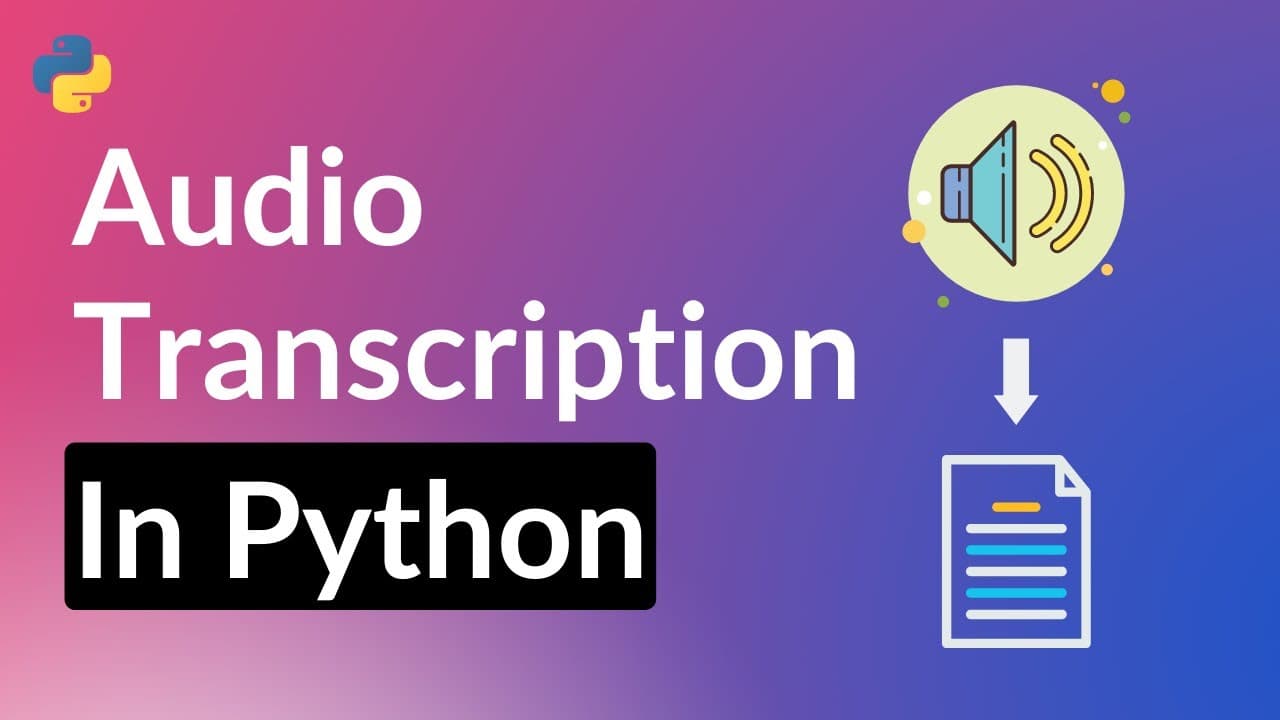
To transcribe audio files to text using Python, leverage Assembly AI's API with the requests library. The process includes uploading the audio file, starting the transcription, polling the API to check the status, and finally saving the generated transcript to a text file. This streamlined approach allows for efficient speech recognition in Python.
Transcript
hey and welcome in this project we are going to learn how to do speech recognition in python it's going to be very simple what we're going to do is to take the audio file that we recorded in the previous project and turn it into a text file let me show you how the project works so here is the audio file that we recorded in the previous project hi i... Read More
Key Insights
- 😯 Utilize Assembly AI's API and the request library in Python for speech recognition.
- 😯 Implement speech recognition in Python by following four main steps: uploading, transcription, polling, and saving.
- 😒 Use polling to check the status of transcription and retrieve the final text transcript.
- 👨💻 Organize code into reusable functions and separate API communication functions for cleaner code.
Install to Summarize YouTube Videos and Get Transcripts
Explore YouTube Video Summarizer or Get YouTube Transcript Extractor
Questions & Answers
Q: How can you convert audio to text in Python?
You can convert audio to text in Python by using Assembly AI's API for speech recognition and Python's request library to interact with the API. The process involves uploading a local audio file, starting transcription, polling the API for the status, and saving the transcript to a text file.
Q: What are the main steps involved in implementing speech recognition in Python?
The main steps involved in implementing speech recognition in Python include uploading a local audio file to Assembly AI's API, starting the transcription process, polling the API to check for completion, and saving the transcript to a text file.
Q: How does the polling process work in speech recognition implementation?
The polling process in speech recognition implementation involves continuously checking the status of the transcription job with Assembly AI's API. By sending requests at intervals, you can determine when the transcription is completed and retrieve the text transcript.
Q: What are the key components required for speech recognition in Python?
The key components required for speech recognition in Python include using Assembly AI's API for speech recognition, Python's request library for API communication, uploading local audio files, starting transcription, polling the API for status, and saving the transcript to a text file.
Summary & Key Takeaways
-
Learn how to implement speech recognition in Python by converting audio files to text.
-
Use Assembly AI's API for speech recognition and Python's request library to interact with Assembly AI's API.
-
The process involves uploading a local file, starting transcription, polling API for status, and saving the transcript.
Read in Other Languages (beta)
Share This Summary 📚
Summarize YouTube Videos and Get Video Transcripts with 1-Click
Try YouTube Summary with ChatGPT & Claude or YouTube Transcript Generator
Explore More Summaries from AssemblyAI 📚



Summarize YouTube Videos and Get Video Transcripts with 1-Click
Try YouTube Summary with ChatGPT & Claude or YouTube Transcript Generator