What Is Cold Fusion and Why Is It Controversial?
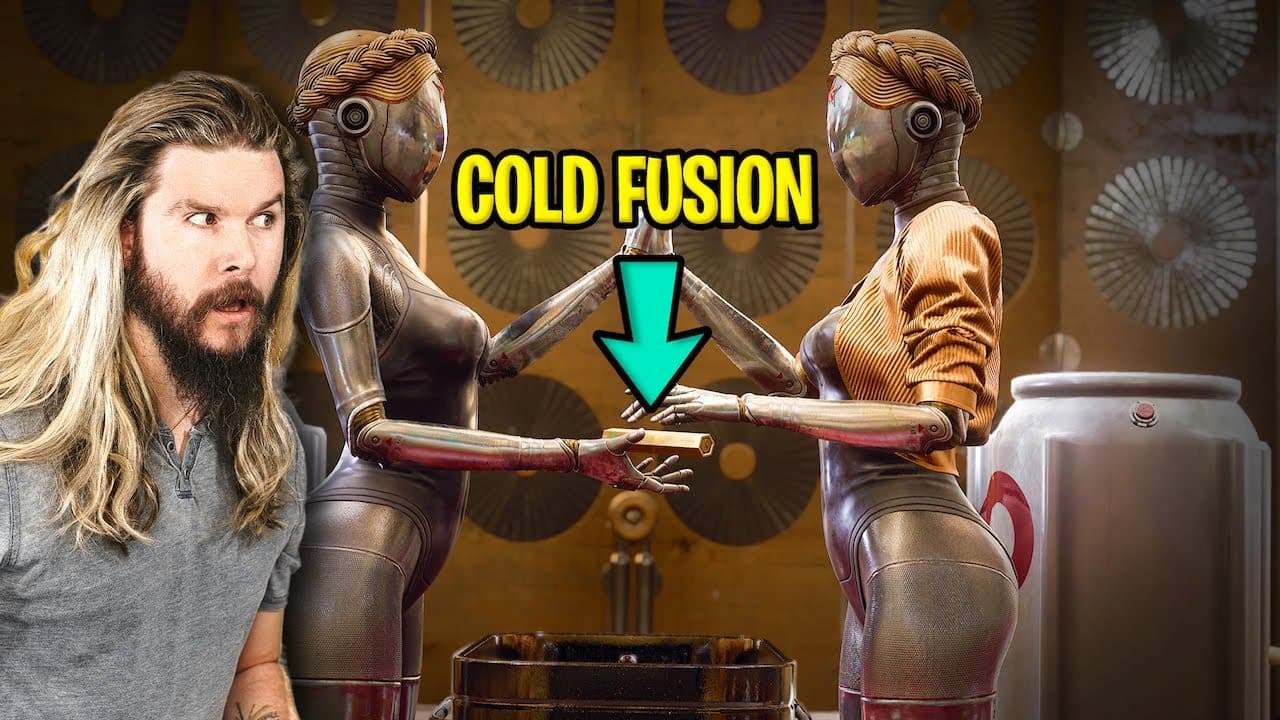
TL;DR
Cold fusion is a proposed method of generating energy through nuclear fusion at room temperature, advocating for clean, unlimited power. While scientists like Pons and Fleischmann initially claimed success in the late 1980s, their results lacked reproducibility and theoretical foundation, leading the scientific community to dismiss cold fusion as largely a pipe dream.
Transcript
imagine an alternative past where this technology Fusion became reality a past where science and Innovation created a robot enabled Utopia free from menial labor and filled with the pursuit of knowledge and uh um Beauty this never seems to play out too well in the video games that Envision it but it is fun to think about how Grand advances in techn... Read More
Key Insights
- 🥶 Cold fusion is a theoretical process of nuclear fusion at room temperature, promising clean and abundant energy.
- 🥶 Pons and Fleischmann's controversial claims of achieving cold fusion in 1989 sparked global attention but lacked solid evidence.
- 🥶 The scientific community remained skeptical of cold fusion due to the absence of replicable results and theoretical support.
- 🥶 Cold fusion experiments faced scrutiny for lacking a solid theoretical basis and empirical evidence.
- 🥶 Cold fusion experiments, such as those conducted by Pons and Fleischmann, were unable to provide reproducible results.
- 🥶 The failure of cold fusion experiments led to the dismissal of the technology as a scientific pipe dream.
- 🥶 Scientists like Pons and Fleischmann faced challenges in proving the feasibility of cold fusion due to experimental errors and lack of evidence.
Install to Summarize YouTube Videos and Get Transcripts
Explore YouTube Video Summarizer or Get YouTube Transcript Extractor
Questions & Answers
Q: What is cold fusion, and how does it differ from hot fusion?
Cold fusion is a hypothetical process of nuclear fusion at room temperature, unlike hot fusion that requires star-like conditions. It promises clean, abundant energy with significant implications for power production.
Q: Who were Pons and Fleischmann, and why were their cold fusion claims controversial?
Martin Fleischmann and Stanley Pons were scientists who claimed to achieve cold fusion in 1989, sparking global interest. However, their lack of solid experimental evidence and failed replication led to skepticism from the scientific community.
Q: Why did cold fusion experiments face scrutiny from the scientific community?
Cold fusion experiments lacked a solid theoretical basis and empirical evidence, leading to skepticism. Pons and Fleischmann's failure to provide reproducible results and the absence of nuclear processes cast doubt on their claims.
Q: How did the scientific community respond to Pons and Fleischmann's cold fusion claims?
Scientists attempted to replicate Pons and Fleischmann's experiments but failed to produce the same results. The lack of substantial evidence and theoretical backing ultimately led to the dismissal of cold fusion as a viable technology.
Summary & Key Takeaways
-
Cold fusion, a theoretical process of generating energy without star-like temperatures, is explored in historical experiments.
-
Scientists like Pons and Fleischmann claimed success in cold fusion but faced skepticism and failed replication.
-
Despite the potential for a world-changing technology, cold fusion remains a scientific pipe dream.
Read in Other Languages (beta)
Share This Summary 📚
Summarize YouTube Videos and Get Video Transcripts with 1-Click
Try YouTube Summary with ChatGPT & Claude or YouTube Transcript Generator
Explore More Summaries from Kyle Hill 📚
![🔴 Viral "Hanger Reflex" Explained! | [OFFICE HOURS] Podcast 090 thumbnail](/_next/image?url=https%3A%2F%2Fi.ytimg.com%2Fvi%2F-GQPNu0erKc%2Fhqdefault.jpg&w=750&q=75)
![What Made MEGALODON So Huge? | [OFFICE HOURS] Podcast #025 thumbnail](/_next/image?url=https%3A%2F%2Fi.ytimg.com%2Fvi%2F2F_zCTfPt-I%2Fhqdefault.jpg&w=750&q=75)
Summarize YouTube Videos and Get Video Transcripts with 1-Click
Try YouTube Summary with ChatGPT & Claude or YouTube Transcript Generator