Why Are Cat Claws So Sharp?
TL;DR
Cat claws are so sharp because scratching sheds the old outer keratin layer and exposes a fresh claw beneath, rather than filing the existing claw to an edge. Each claw grows directly from a vascularized center on the bone, producing a curved, conical structure from the inside out. Retractability then helps preserve the exposed point. Read on to understand how growth, shedding, scratching and use work together.
Transcript
administrator your kitten delivery has arrived oh oh it's happening oh my god oh my god oh my god oh my god oh my god oh my god oh my god you're gonna be so cute and we're gonna play and we're gonna oh my god oh my god oh my god oh my god gotta touch guy i want to touch it gonna touch it okay and a pet guy and a pet okay and a pet this is the disti... Read More
Key Insights
- Sharpness comes from renewal: The central mechanism is replacement at the surface, not abrasion against an object. During scratching, an older keratin layer is pulled away and a newer, sharper claw is revealed. This distinction explains how cats repeatedly regain a fine point without treating their claws like knives against a sharpening stone.
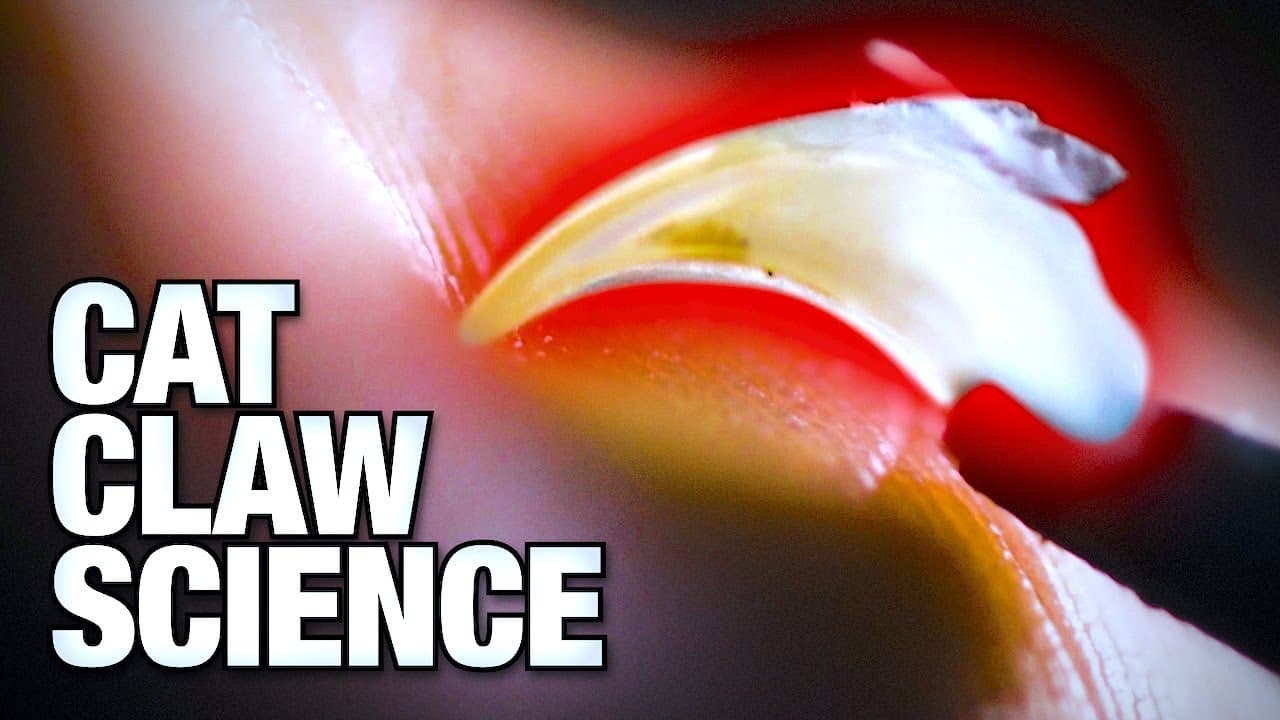
- Claws begin at bone: A cat claw grows directly from a vascularized growth center on the bone. The transcript notes that the red, blood-fed tissue can sometimes be seen beneath and through a semi-transparent claw. This anatomical connection distinguishes a cat claw from the speaker's description of a human fingernail and its separate nail-producing matrix.
- Three-dimensional growth shapes claws: Direct growth from the bone allows a cat claw to form and develop in three dimensions. The resulting structure is curved, cone-like and built from the inside out. Its sharp geometry therefore follows from the claw's growth pattern, not merely from something the cat does after the claw has formed.
- Human nails provide contrast: Fingernails are described as keratin structures that push outward from the cuticle while growing in the nail bed. Their nail and producing matrix remain separate from the distal, or end, digit. Comparing this flatter growth arrangement with the cat's bone-linked growth center makes the claw's distinctive conical form easier to understand.
- Scratching is a pulling action: Cats typically scratch by digging into material and then grabbing and pulling. That motion is well suited to loosening and removing an outer claw layer. It is unlike the repeated rubbing against an abrasive surface that would be expected if the goal were to file the existing keratin into a sharper edge.
- Soft surfaces challenge the myth: Scratching posts and furniture are relatively soft surfaces, yet cats repeatedly choose them. If cats sharpened claws in the same way people sharpen knives or file nails, rock, stone or another abrasive material would make more sense. Their preference for material they can penetrate supports the explanation based on shedding.
- Discarded layers reveal the process: The small claw-like pieces found near a cat's regular scratching location are evidence that the outer structure is being shed. They are not proof that the whole claw has fallen out. Their presence connects the visible scratching behavior with the biological process that uncovers a fresh point beneath.
- Microscope evidence shows no filing: A simple smartphone microscope is used to inspect a shed claw structure closely. The speaker reports seeing no damage or scuffs that would indicate abrasion-based sharpening, at least in the ordinary meaning of that phrase. This observation strengthens the case that scratching removes a layer rather than grinding the same claw.
- Distance from blood supply matters: The keratin farthest from the vascularized growth center is the material encouraged to shed during scratching. Removing that outermost portion reveals the newer claw beneath it. The process links claw renewal to the inside-out growth pattern and explains why the exposed structure can remain as sharp as possible.
- Retractability protects the point: Shedding exposes a fresh, sharp claw, and retractability helps preserve it afterward. The transcript presents these features as complementary parts of the explanation. One process renews the cutting and piercing structure, while the other helps prevent the newly revealed point from being continuously exposed and worn down.
- Front and hind claws differ: The hind claws are described as much duller than the front claws. The proposed explanation is use: front claws are employed more often for grabbing, climbing, catching a person's leg, shredding pants and killing mice. Their greater involvement in pulling actions also fits the shedding account better than deliberate knife-like sharpening.
- Sharp claws serve several tasks: The claw's point is valuable for climbing, piercing prey and holding onto it firmly. These functions explain why maintaining a sharp structure matters to a cat. The transcript ties those capabilities to cats' effectiveness as hunters, including the stated annual toll of 20 billion small animals killed by domestic cats in the United States.
Install to Summarize YouTube Videos and Get Transcripts
Explore YouTube Video Summarizer or Get YouTube Transcript Extractor
Questions & Answers
Q: Why are cat claws so sharp?
Cat claws are so sharp because cats shed the older outer keratin layer and reveal a fresh point underneath. They do not keep one claw sharp by grinding it against a surface like a knife. The claw's curved, conical form develops from a vascularized growth center directly on the bone. Scratching encourages shedding, and retractability helps the newly exposed claw remain sharp.
Q: Do cats sharpen their claws on scratching posts?
No, the transcript says scratching posts are not used to sharpen claws through abrasion. Cats dig into softer material with a grabbing and pulling movement, which encourages the outer claw layer to shed. This exposes a newer and sharper structure underneath. The distinction matters because the cat is renewing the exposed claw rather than filing the same piece of keratin.
Q: How do cat claws grow?
Cat claws grow directly from a vascularized growth center on the bone. This blood-fed center allows each claw to form in three dimensions and develop from the inside out. The process produces the curved, cone-like shape described in the transcript. As growth continues, older keratin becomes farther from the blood supply and can eventually be shed.
Q: How are cat claws different from human fingernails?
Human fingernails push outward from the cuticle as they grow in the nail bed. Their nail and producing matrix are separate from the distal, or end, digit. Cat claws instead grow directly from the bone through a center with blood flow. That arrangement enables three-dimensional, conical development rather than the more two-dimensional growth imposed by a human nail bed.
Q: Why do cats prefer soft scratching surfaces?
Soft material lets a cat dig in and perform the grabbing and pulling motion associated with shedding. If the cat were filing the claw into an edge, an abrasive surface such as rock or stone would fit that purpose better. The transcript notes that cats are not commonly observed trying to sharpen their claws on stone. Their surface preference therefore supports removal of the outer layer rather than abrasion-based sharpening.
Q: What are the claw-shaped pieces near a scratching area?
They are shed outer layers of the cat's claws. Cats leave these structures near places where they scratch because the pulling motion helps loosen older keratin. Finding them provides visible evidence that scratching renews the exposed claw. A newer, sharper structure remains after the outer material comes away.
Q: Why are a cat's hind claws duller than its front claws?
The transcript explains that hind claws are likely duller because cats use them less for grasping and related actions. Front claws are used more for climbing, grabbing, catching a person's leg, shredding clothing and killing mice. Those repeated pulling uses align with the shedding process that reveals newer points. The difference would be harder to explain if cats simply sharpened every claw like a knife.
Q: What makes cat claws effective for hunting and climbing?
Their curved, sharp form helps cats pierce prey and hold onto it in a strong grip. The same claws also support climbing, an activity at which cats are described as highly proficient. Shedding keeps exposing a sharp point, while retractability helps preserve it. Together, the claw's shape, renewal and protection maintain a tool suited to both climbing and hunting.
Summary & Key Takeaways
-
Introducing the claw mystery: A five-month-old tortoiseshell kitten named Jane Marie Franz Tessier Ash Pool prompts the central question after shredding the speaker's legs with her 18 claws. The episode begins by separating the familiar observation that claws are sharp from the biological question of why they remain that way. It first connects claws with climbing, hunting, piercing prey and maintaining a grip, establishing why sharp claws are effective tools for cats.
-
Explaining their evolutionary function: Cats use claws to climb, hunt, pierce prey and hold onto it in a death grip. The transcript emphasizes their effectiveness by stating that domestic cats in the United States kill 20 billion small animals each year and have recently contributed to dozens of extinctions. These consequences frame claws as more than irritating household features. Their sharpness supports the actions that make cats proficient climbers, capable hunters and significant forces in their environments.
-
Comparing claws with fingernails: Human fingernails and cat claws both involve keratin, but they develop differently. A fingernail pushes outward from the cuticle as it grows in the nail bed, with the nail-producing matrix separate from the end digit. A cat claw instead grows directly from the bone through a vascularized growth center. Because this blood-fed center supports development in three dimensions, the claw forms as a curved, cone-like structure that grows from the inside out.
-
Correcting the sharpening misconception: Damaged furniture often leads people to say that cats scratch to sharpen their claws, yet their preferred surfaces and movements do not resemble filing. Cats commonly dig into softer material with a grabbing and pulling action rather than rubbing their claws against abrasive rock or stone. A smartphone microscope examination described in the transcript shows no damage or scuffs suggesting knife-like sharpening. The evidence instead appears around scratching areas as discarded outer claw layers.
-
Revealing the shedding mechanism: Scratching encourages keratin farthest from the claw's blood supply to shed, exposing the sharpest available structure underneath. Cats therefore do not maintain one claw by repeatedly grinding an edge onto it. They continually reveal a newer point, while claw retractability helps that point stay sharp. The duller hind claws support this explanation because cats use them less for grabbing, climbing, catching legs, shredding clothing and killing mice than they use their front claws.
Read in Other Languages (beta)
Share This Summary 📚
Summarize YouTube Videos and Get Video Transcripts with 1-Click
Try YouTube Summary with ChatGPT & Claude or YouTube Transcript Generator
Explore More Summaries from Kyle Hill 📚
![What Made MEGALODON So Huge? | [OFFICE HOURS] Podcast #025 thumbnail](/_next/image?url=https%3A%2F%2Fi.ytimg.com%2Fvi%2F2F_zCTfPt-I%2Fhqdefault.jpg&w=750&q=75)


![🔴 Viral "Hanger Reflex" Explained! | [OFFICE HOURS] Podcast 090 thumbnail](/_next/image?url=https%3A%2F%2Fi.ytimg.com%2Fvi%2F-GQPNu0erKc%2Fhqdefault.jpg&w=750&q=75)

Summarize YouTube Videos and Get Video Transcripts with 1-Click
Try YouTube Summary with ChatGPT & Claude or YouTube Transcript Generator