What Are 10 Harsh Truths to Learn in Your 20s?
TL;DR
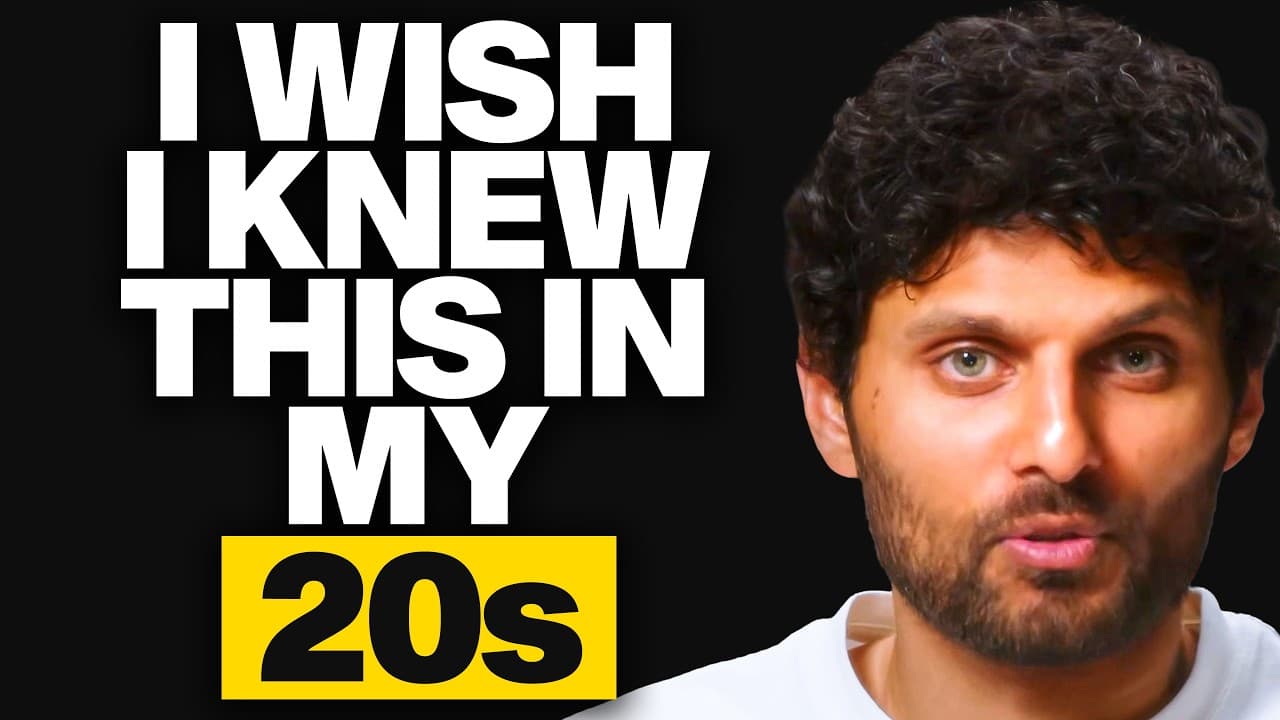
The harsh truths to learn in your 20s are that inherited beliefs, avoidance, inauthenticity, misplaced discipline, social influence, busyness, unnecessary suffering, and present choices can quietly shape your future. The speaker argues that people may spend years chasing goals they never chose and warns that the right time to face frightening but meaningful work may never arrive. Read on to examine these beliefs and build a life around genuine desires.
Transcript
I'm going to tell you something right now that's going to stay with you for the rest of the day. Every single thing you're currently stressed about, the career you're trying to build, the relationship you're trying to figure out, the body you're trying to fix, the money you're trying to make, the person you're trying to become, every single one of ... Read More
Key Insights
- Invisible beliefs, often inherited, shape our lives without our conscious choice.
- Avoidance in our 20s often masks fear and prevents us from pursuing genuine goals.
- Authenticity is crucial; pretending to be someone else limits true connection and growth.
- Discipline isn't about doing hard things but prioritizing actions that truly matter.
- Our social circles program our behaviors and beliefs, impacting our growth.
- Busyness is a distraction from confronting deeper life issues and priorities.
- Suffering is not a virtue; enduring unnecessary hardships doesn't guarantee rewards.
- Our 30s are a reflection of the choices and habits formed in our 20s.
Install to Summarize YouTube Videos and Get Transcripts
Explore YouTube Video Summarizer or Get YouTube Transcript Extractor
Questions & Answers
Q: What are the harsh truths to learn in your 20s?
Your goals may come from inherited beliefs rather than genuine desires, and thoughtful-sounding preparation may actually be avoidance. Authenticity, intentional priorities, supportive social circles, and present choices matter because the habits formed in your 20s shape your 30s. Busyness and suffering should not be mistaken for progress or virtue.
Q: How do invisible beliefs shape your life in your 20s?
Beliefs absorbed from parents, culture, school, social media feeds, and peers can shape your career, relationships, body image, finances, and identity. Because these beliefs were installed early and reinforced often, they can feel like personal ambition even when they are not. The result may be years spent pursuing someone else’s scorecard.
Q: How can you tell whether you genuinely want a goal?
Ask whether you would still pursue it if nobody knew about the achievement and there were no family, friends, social media audience, or metric to impress. If the answer is no, the speaker argues that you may want the reaction, status, or proof rather than the goal itself. Proof is performance, not purpose.
Q: Why are the things you avoid often the things you most need to do?
Fear can disguise itself as waiting for the right time, doing more research, being strategic, or planning without executing. The transcript argues that the frightening task may be the one most aligned with who you genuinely are. Since the right time may never arrive, avoiding it can cost years.
Q: What does the electric-shock study illustrate about avoidance?
Participants were left alone with their thoughts and a button that delivered a mild electric shock they had already said they disliked. According to the transcript, 67% of men and 25% of women shocked themselves rather than remain alone with their thoughts. The speaker uses this result to show how strongly people may avoid confronting their inner lives.
Q: Why is authenticity important for meaningful relationships?
Pretending to be someone else creates a barrier that keeps people from knowing the real person behind the performance. Others may accept the mask while the person wearing it still feels lonely. Vulnerability and authenticity make genuine connection possible.
Q: What does discipline really mean?
Discipline is not simply forcing yourself to do difficult things. It means prioritizing actions that support what genuinely matters and saying no to distractions or low-value tasks. This directs time and energy toward authentic goals rather than inherited expectations.
Q: How do choices in your 20s affect your 30s?
The habits and choices formed in your 20s establish the trajectory that continues into your 30s. Decisions involving relationships, finances, priorities, and daily behavior compound over time. Intentional living therefore means experimenting, learning, and repeatedly aligning your actions with what you genuinely value.
Summary & Key Takeaways
-
Our 20s are influenced by invisible, inherited beliefs that shape our stress and ambitions. True growth begins when we question these beliefs and align our actions with genuine desires, rather than societal expectations. Avoidance, busyness, and pretending to be someone else are barriers to authenticity and fulfillment.
-
Discipline is about prioritizing what matters, not forcing ourselves to do hard things. Our social circles and environments program our behaviors, affecting our growth. Embracing vulnerability and authenticity is essential for forming genuine connections and achieving personal fulfillment.
-
Suffering is not inherently virtuous; enduring hardships doesn't ensure rewards. Our 30s reflect the habits and choices made in our 20s, emphasizing the importance of intentional living. Building a life is an iterative process of experimentation, learning, and aligning actions with true desires.
Read in Other Languages (beta)
Share This Summary 📚
Summarize YouTube Videos and Get Video Transcripts with 1-Click
Try YouTube Summary with ChatGPT & Claude or YouTube Transcript Generator
Explore More Summaries from Jay Shetty Podcast 📚





Summarize YouTube Videos and Get Video Transcripts with 1-Click
Try YouTube Summary with ChatGPT & Claude or YouTube Transcript Generator