Why Do Founders Choose a Hands-On Accelerator?
TL;DR
Early-stage accelerators remain valuable when they provide hands-on, founder-led support that startups cannot get from capital alone. Gutter Capital’s Elbow Grease program brings small cohorts into its New York office, helps recruit their early teams, and stays involved in foundational decisions, while giving graduates the option to continue working alongside the broader portfolio community.
Transcript
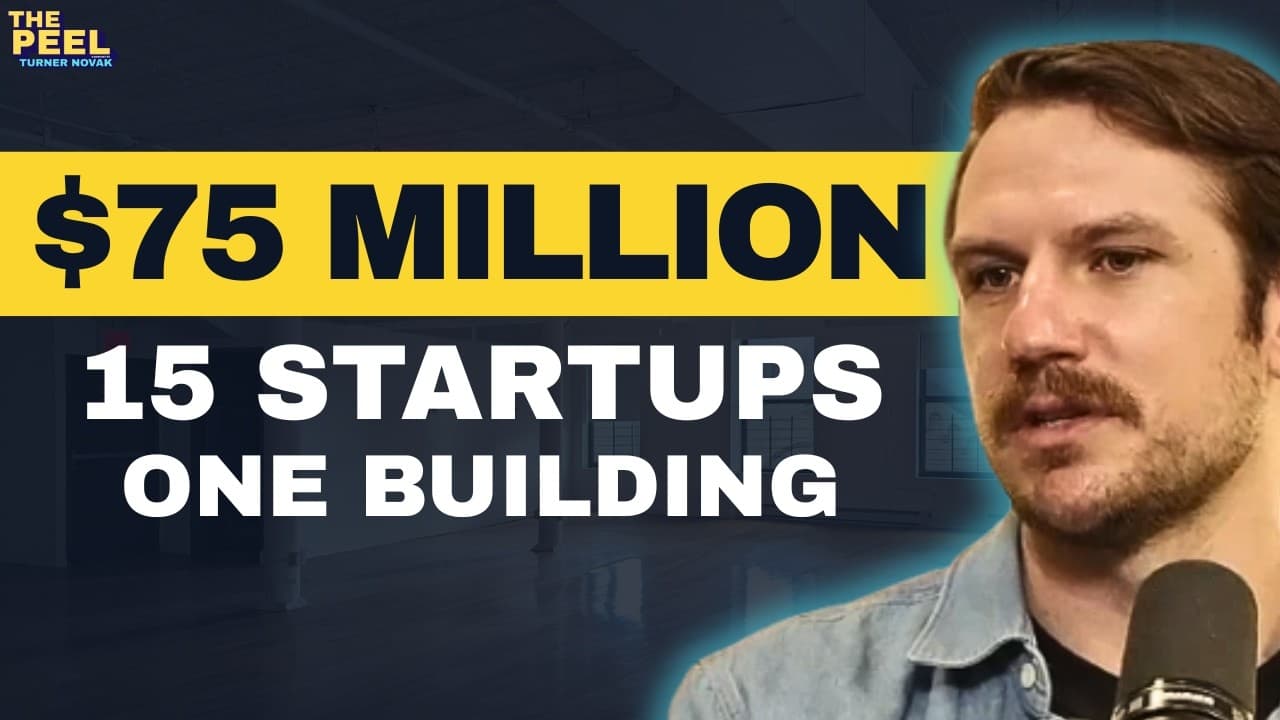
Dan, welcome to the show. >> Thank you. So excited to be here. >> Uh you guys just announced something that was pretty big news. What did you guys just announce? >> Yeah, so we announced uh earlier this week uh that we have closed our third fund. So we raised a $75 million fund 3 and uh as of this week applications are open for Elbow Grease um whic... Read More
Key Insights
- Gutter Capital closed a $75 million third fund and opened applications for the second Elbow Grease cohort after running its first cohort earlier that year. Applications were scheduled to remain open until the end of July, according to the episode description.
- Capital alone is becoming a weaker pitch to founders because companies can accomplish more with fewer resources. Dan Teran argues that some startups can reach $1 million in annual recurring revenue without outside capital, forcing early-stage investors to demonstrate practical value beyond financing.
- Elbow Grease is designed around Gutter Capital’s existing hands-on investment style. The firm helps portfolio companies recruit and assemble early teams, so the accelerator formalizes that work and allows the investors to participate before important company-building decisions have already been made.
- Earlier investor involvement can increase an investor’s operational impact because foundational choices remain open. Gutter Capital created its accelerator to work with founders from the first stage of company formation, help reinforce good decisions, and assist in correcting weak ones before they become embedded.
- Elbow Grease operates in person at Gutter Capital’s Canal Street headquarters in Chinatown. Two floors host approximately 15 companies and 70 to 80 people, creating a shared environment for founders and teams at stages ranging from newly started companies to Series B and beyond.
- Graduation from Elbow Grease does not require companies to leave the shared office. About half of the first cohort’s eight companies continued working there, and two participating companies relocated to New York after Gutter Capital argued they could build larger companies faster through close collaboration.
- The accelerator distinguishes itself through founder-led guidance, physical proximity, small cohorts, and one-to-one mentorship. Teran believes the number of programs combining recent operating experience with daily, in-person support and fewer than 20 participating companies is considerably smaller than the total accelerator market.
- Many capable founders need access rather than basic ambition because they may come from outside technology, lack established industry networks, or have no previous company-building experience. Gutter Capital’s thesis is that focused assistance can help these founders convert strong potential into more capable companies.
Install to Summarize YouTube Videos and Get Transcripts
Explore YouTube Video Summarizer or Get YouTube Transcript Extractor
Questions & Answers
Q: Why did Gutter Capital start the Elbow Grease accelerator?
Gutter Capital started Elbow Grease because startups can now achieve substantial progress with very little capital, making funding alone a less persuasive reason to choose an investor. The firm wanted to remain relevant at the earliest stage and increase its impact by helping with foundational decisions, recruiting, and early team construction before those choices became difficult to change.
Q: How does Elbow Grease differ from other startup accelerators?
Elbow Grease differentiates itself through a small, hands-on, in-person format led by investors with company-building experience. Participants work from Gutter Capital’s New York headquarters and receive one-to-one mentorship and practical support. The program targets fewer than 20 companies rather than operating at the scale of accelerators that process thousands of applications and accept hundreds of startups.
Q: Where is the Elbow Grease accelerator located?
Elbow Grease is hosted at Gutter Capital’s headquarters on Canal Street in New York City’s Chinatown. The firm occupies two floors that collectively house about 15 companies and 70 to 80 people, depending on the day. The shared workspace includes businesses ranging from companies founded very recently to portfolio companies at Series B and later stages.
Q: What support does Gutter Capital provide to accelerator companies?
Gutter Capital provides direct operational help rather than limiting its role to financing. Its team assists companies with recruiting, building early teams, evaluating foundational decisions, and resolving choices that may prove weak. Founders also work alongside the investors and other portfolio companies, giving them continuing access to a community of builders at multiple stages of development.
Q: Can Elbow Grease companies stay after the program ends?
Elbow Grease companies are not required to leave Gutter Capital’s office when the formal program ends. Of the eight companies in the first cohort, about half continued working from the space. This approach treats graduation as the end of a scheduled program rather than the end of the relationship, allowing founders to remain connected to investors and peers.
Q: Why does Gutter Capital believe in-person acceleration matters?
Gutter Capital believes physical proximity makes sustained, hands-on involvement possible. Working in the same building allows investors, founders, and employees to interact throughout the company-building process rather than relying only on occasional advice. The shared office also places newly formed startups near more developed companies, creating a concentrated community that supports recruiting, collaboration, and practical problem-solving.
Q: What types of founders does Elbow Grease aim to help?
Elbow Grease aims to support promising founders who may not come from the technology industry, possess deep technology networks, or have previous experience building a company. Gutter Capital believes these founders can create significant businesses when they receive practical assistance, close mentorship, recruiting support, and access to an established community during the earliest stages of company formation.
Q: Why are accelerators still useful when so many exist?
Accelerators remain useful when demand for substantive founder support exceeds the supply of programs capable of providing it. Teran points to scaled programs receiving roughly 20,000 applications for 200 positions as evidence of strong demand. He argues that far fewer accelerators combine small cohorts, daily in-person work, one-to-one mentorship, and leadership by experienced company builders.
Summary & Key Takeaways
-
Gutter Capital created Elbow Grease because startups can now reach meaningful traction with fewer resources, weakening capital alone as an investor’s value proposition. The firm believes that joining founders at the earliest stage allows it to influence foundational choices and provide the recruiting, team-building, and operational assistance it already offered seed-stage portfolio companies.
-
Elbow Grease is an in-person accelerator hosted at Gutter Capital’s Canal Street headquarters in New York City. The office accommodates companies ranging from newly formed startups to businesses at Series B and beyond. Participants complete the formal program without being forced to leave, preserving access to an active community of founders and builders.
-
The program differentiates itself through small cohorts, direct mentorship, physical proximity, and guidance from investors with recent company-building experience. Gutter Capital argues that many promising founders lack established technology networks or prior startup experience. Its concentrated, hands-on approach is designed to help those founders recruit teams, make stronger early decisions, and build faster.
Read in Other Languages (beta)
Share This Summary 📚
Summarize YouTube Videos and Get Video Transcripts with 1-Click
Try YouTube Summary with ChatGPT & Claude or YouTube Transcript Generator
Explore More Summaries from The Peel with Turner Novak 📚



Summarize YouTube Videos and Get Video Transcripts with 1-Click
Try YouTube Summary with ChatGPT & Claude or YouTube Transcript Generator