How to Synthesize Hexanoic Acid Using a Grignard Reaction
TL;DR
To synthesize hexanoic acid using a Grignard reaction, first create a Grignard reagent by combining magnesium filings with 1-bromopentane in dry ether. Then react this reagent with CO2 gas to form the magnesium bromide salt of caproic acid, which is subsequently treated with acid to yield hexanoic acid. The overall yield achieved in this process was approximately 45%.
Transcript
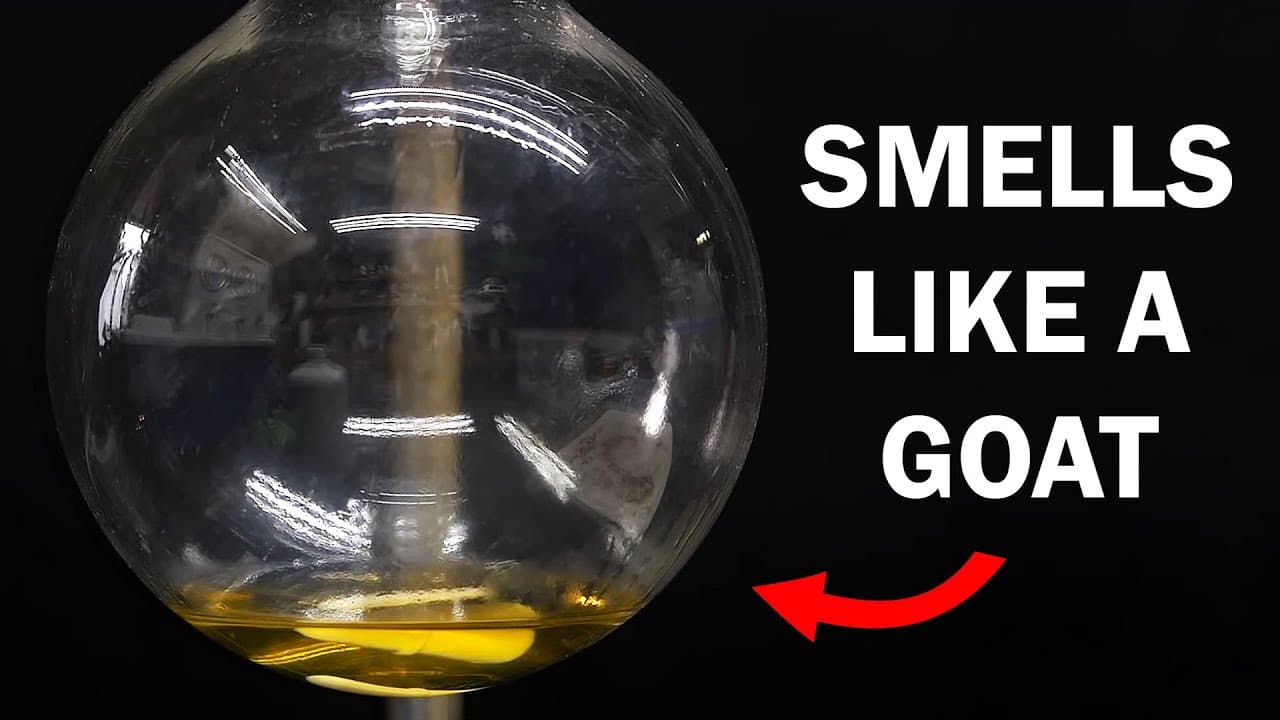
hexanoic acid which is also known as caproic acid is a pretty stinky compound it's a colourless oily liquid and it's odor is often described as goat-like or like other barnyard animals I think its odor is pretty similar to that of butyric acid which is responsible for the smell of vomit one major use of caproic acid is surprisingly in the perfume i... Read More
Key Insights
- 😒 Hexanoic acid, also known as caproic acid, is a compound with a stinky smell but finds use in the perfume industry due to its pleasant ester derivatives.
- 👶 Grignard reactions are valuable for creating new carbon-carbon bonds and are widely used in organic synthesis.
- 🥺 Troubles and setbacks are not uncommon in chemical experiments, but improvisation and adaptation can lead to unexpected discoveries.
Install to Summarize YouTube Videos and Get Transcripts
Explore YouTube Video Summarizer or Get YouTube Transcript Extractor
Questions & Answers
Q: What is hexanoic acid and why is it used in the perfume industry?
Hexanoic acid, also known as caproic acid, is a compound known for its unpleasant odor described as "goat-like" or like other barnyard animals. However, in ester derivatives, it can have a pleasant fruity smell like blackberries or pineapples. The perfume industry uses ester derivatives of hexanoic acid for their pleasant fragrances.
Q: What is a Grignard reaction and how does it allow the creation of new carbon-carbon bonds?
A Grignard reaction involves the reaction of a Grignard reagent (an organo-magnesium compound) with a carbonyl compound, typically a carbon-oxygen double bond of a carbonyl group. This reaction forms a new carbon-carbon bond, allowing for the synthesis of various organic compounds.
Q: How did the chemist overcome the setback caused by a failed reagent?
Instead of abandoning the experiment, the chemist decided to adjust their plan and make hexanoic acid instead. They improvised and used CO2 gas to react with the Grignard reagent, resulting in the formation of hexanoic acid.
Q: What were the challenges faced during the experiment?
The challenges included difficulty starting the Grignard reaction, encountered due to the nature of the reaction. The chemist had to add extra iodine and increase stirring speed to initiate the reaction. Another challenge was the unexpected polymerization of a reagent they initially planned to use, requiring them to find an alternative method to obtain hexanoic acid.
Summary & Key Takeaways
-
Hexanoic acid, also known as caproic acid, is a smelly compound commonly used in the perfume industry.
-
The chemist initially set out to make a different compound but had to change their plans due to a failed reagent.
-
Using a Grignard reaction, the chemist successfully created the grignard reagent needed for the synthesis of hexanoic acid.
-
After some modifications and improvisations, hexanoic acid was obtained with a 45% yield.
Read in Other Languages (beta)
Share This Summary 📚
Summarize YouTube Videos and Get Video Transcripts with 1-Click
Try YouTube Summary with ChatGPT & Claude or YouTube Transcript Generator
Explore More Summaries from NileRed 📚
Summarize YouTube Videos and Get Video Transcripts with 1-Click
Try YouTube Summary with ChatGPT & Claude or YouTube Transcript Generator