How to Learn PostgreSQL for Beginners Effectively
TL;DR
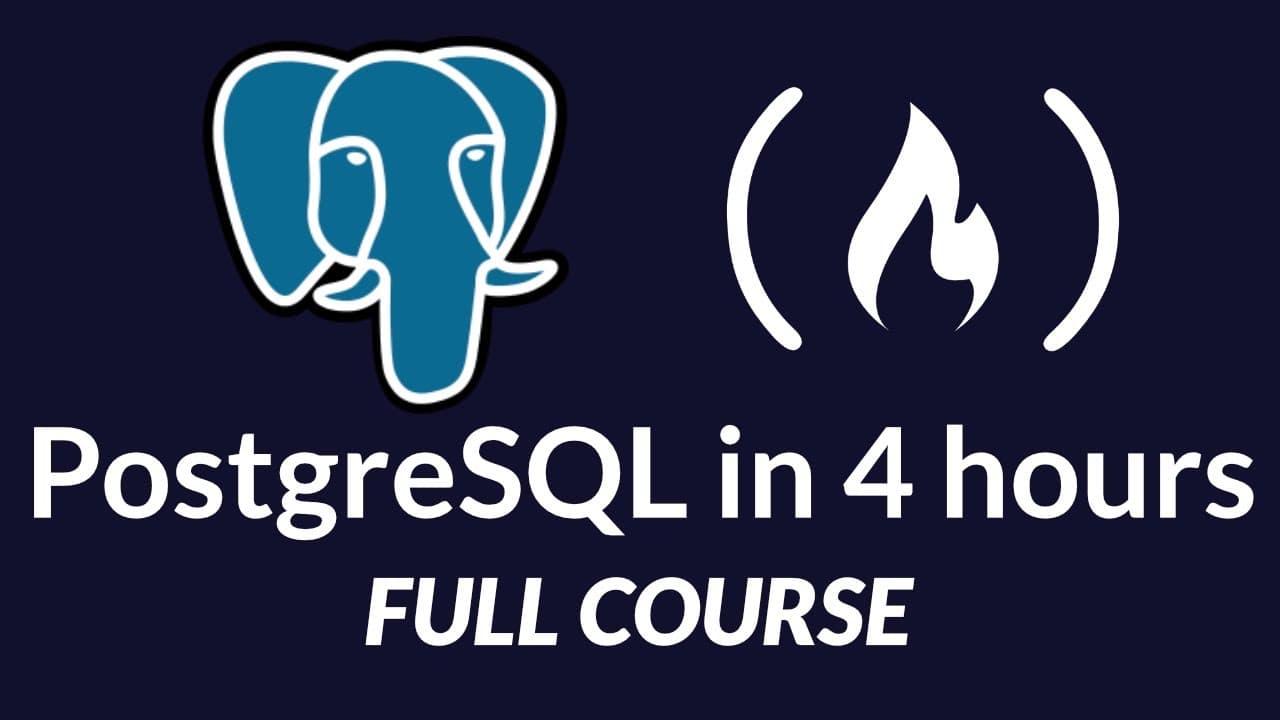
To effectively learn PostgreSQL, start by understanding the database's core functionalities through the command line instead of relying on graphical interfaces. Focus on key operations such as creating databases and tables, managing relationships with foreign keys, and using SQL commands to manipulate data. Building command line proficiency will enhance your database management skills.
Transcript
My name is Nelson. And in this course, you will learn about a database called Postgres. Postgres is by far one of the most popular databases out there. And the cool thing about it is that it's open source, robust, high performance. And it comes with a lot of great features. And for that reason, a lot of startups are using it for their back end appl... Read More
Key Insights
- 🤗 PostgreSQL is an advanced open-source relational database popular among startups, ensuring developers understand its usage.
- 🫥 Command line proficiency in SQL enhances a developer's capability to manage databases effectively.
- 🤩 Foreign keys are used to create relationships between tables, allowing for complex data queries.
- 💨 UIDs provide a globally unique way to identify records, beneficial in distributed systems.
- 🪚 The ON CONFLICT clause enriches data insertion by managing duplicate entries effectively.
- ✅ CHECK constraints ensure data integrity by enforcing specific conditions on column values.
- 👻 The COPY command allows for easy data export to CSV format, facilitating data sharing.
Install to Summarize YouTube Videos and Get Transcripts
Explore YouTube Video Summarizer or Get YouTube Transcript Extractor
Questions & Answers
Q: What is the main focus of the course on PostgreSQL?
The course focuses on teaching PostgreSQL as a key tool for software developers, emphasizing command line usage and understanding database logic without relying on graphical interfaces. This approach helps learners gain practical skills applicable to real-world projects.
Q: Why is it essential to learn SQL commands through the command line?
Learning SQL through the command line ensures a thorough understanding of database operations. It allows developers to grasp the underlying logic of database management, which can be obscured by graphical user interfaces that prioritize aesthetics over functionality.
Q: How does PostgreSQL manage relationships between tables?
PostgreSQL uses foreign keys to establish relationships between tables. A foreign key in one table points to a primary key in another table, ensuring data integrity and enabling complex queries that can combine data from multiple tables.
Q: What are the advantages of using UID as primary keys in PostgreSQL?
Using universally unique identifiers (UIDs) as primary keys helps eliminate the risk of ID collisions when merging databases. UIDs are globally unique, making them ideal for distributed systems where data integrity is crucial.
Q: How does the ON CONFLICT clause work in PostgreSQL?
The ON CONFLICT clause allows you to handle duplicate key errors during insert operations. It can either ignore conflicts or perform an update on the existing row, ensuring that the latest data is preserved while preventing errors from duplicate entries.
Q: What is the role of CHECK constraints in PostgreSQL?
CHECK constraints allow you to enforce specific conditions on column values, ensuring that only valid data is entered into the table. This can help maintain data integrity by restricting entries to a defined range or set of values.
Q: How can you generate CSV files in PostgreSQL?
CSV files can be generated in PostgreSQL using the COPY command. By selecting the desired data and directing the output to a specified file path, you can create CSV files that include headers and formatted data suitable for import into other applications.
Q: Why are sequences important in PostgreSQL for managing primary keys?
Sequences are crucial for generating unique, auto-incrementing values for primary keys. They ensure that each new record can be uniquely identified without manual intervention, thus streamlining record creation and avoiding conflicts.
Summary & Key Takeaways
-
The course introduces PostgreSQL, highlighting its popularity as an open-source, robust database used in many startups and applications.
-
It emphasizes learning database commands through the command line instead of graphical interfaces to build a deeper understanding of database logic.
-
Key functionalities of PostgreSQL, including creating databases, managing relationships between tables, and executing commands, are covered extensively alongside best practices like using unique constraints.
Read in Other Languages (beta)
Share This Summary 📚
Summarize YouTube Videos and Get Video Transcripts with 1-Click
Try YouTube Summary with ChatGPT & Claude or YouTube Transcript Generator
Explore More Summaries from freeCodeCamp.org 📚



Summarize YouTube Videos and Get Video Transcripts with 1-Click
Try YouTube Summary with ChatGPT & Claude or YouTube Transcript Generator