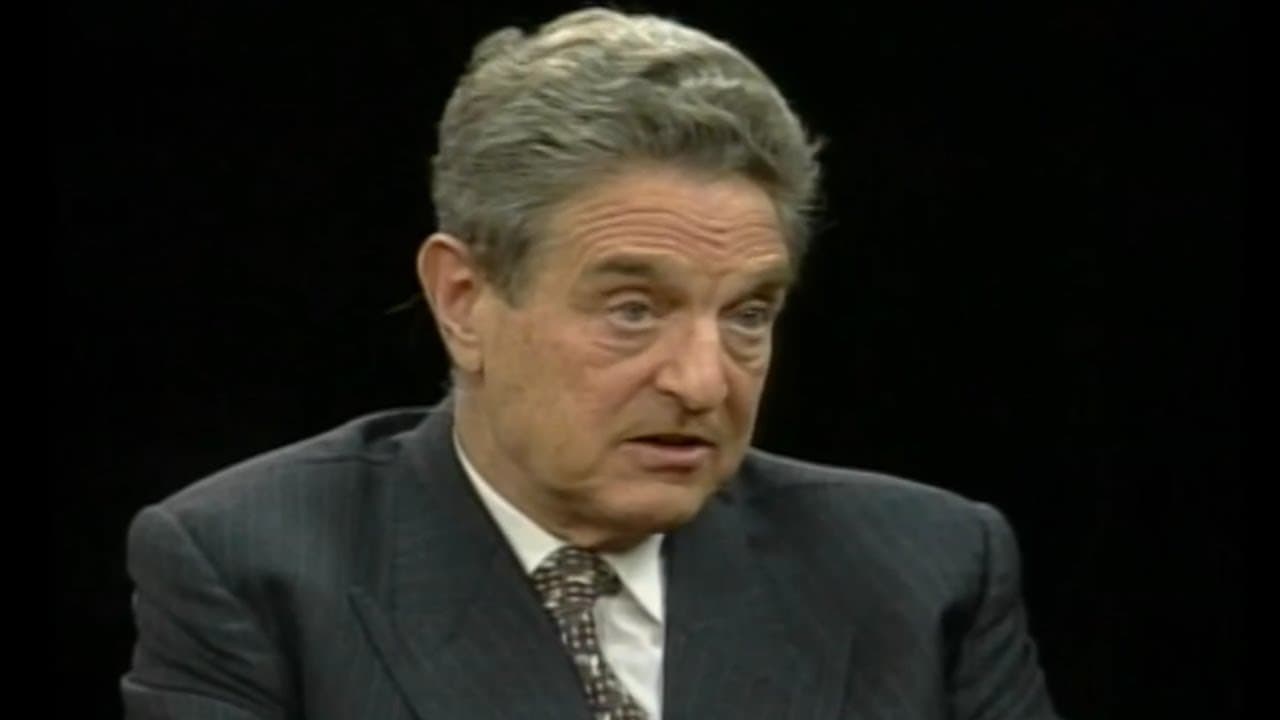
George Soros | Charlie Rose | 1995 #2
TL;DR
The Bosnian peace agreement deserved strong support because it offered a realistic chance to preserve Bosnia as a civic, multiethnic state rather than formalize permanent partition. Military forces could separate the factions, but lasting peace depended on reconstruction, police training, elections, war crimes prosecutions, refugee returns, and sustained international pressure to enforce compliance.
Transcript
the international financier and philanthropist George Soros has a long-standing interest in the politics and future of Eastern Europe he is the founder and funer of the open Society foundation in 1992 George sorus gave $50 million to assist the victims of the Bosnian War it is the largest private donation ever made there he now joins us to talk abo... Read More
Key Insights
- The peace agreement was, in Soros's assessment, about as favorable as circumstances allowed. Izetbegović believed continued fighting would worsen conditions, while Soros became more hopeful after reviewing the settlement, speaking with negotiators, and discussing whether Bosnia could remain a genuine state rather than a diplomatic cover for partition.
- Bosnia could survive as a civic state if the agreement were properly implemented. Soros viewed Izetbegović as committed to citizenship rather than ethnic division, and he believed the treaty's provisions could help that principle prevail despite the destruction, displacement, and hostility produced by the war.
- Sarajevo's future was an early test of multiethnic reintegration. The agreement placed Serb suburbs within Sarajevo, creating a choice between continued residence and departure. Soros argued that the Bosnian government needed to reassure and protect Serb residents so the city could recover its multiethnic character.
- American military participation was necessary to preserve the peace. Soros strongly supported the proposal to send 20,000 American personnel because the United States had participated in the arms embargo and therefore carried responsibility for helping create and sustain a peaceful settlement after the slaughter.
- Military separation was not the same as nation building. Soros said troops could keep the factions apart but could not bring them together. Reconstruction, police training, war crimes proceedings, and elections would determine whether the agreement produced an integrated Bosnia or merely left an effective partition.
- A multiethnic society remained difficult but possible to rebuild. Soros cited the reduced Serb population in Bosnia, the prospect of displaced people returning, and the continued presence of about 6,000 Bosnians in Banja Luka as reasons the ethnic composition and political future were not permanently fixed.
- War crimes accountability was essential to political stability. Soros wanted Radovan Karadžić and Ratko Mladić tried, while acknowledging that arrests would be difficult. He emphasized that compliance could be encouraged through renewed sanctions, conditional reconstruction, and access for war crimes investigators.
- International enforcement depended on sustained political will. Soros warned that the agreement could slide if governments and the public stopped applying pressure. He believed the legal and economic mechanisms existed, but their effectiveness depended on whether the international community consistently demanded compliance.
Install to Summarize YouTube Videos and Get Transcripts
Explore YouTube Video Summarizer or Get YouTube Transcript Extractor
Questions & Answers
Q: Why did George Soros support the Bosnian peace agreement?
George Soros supported the agreement because he believed peace had become necessary and further fighting would make conditions worse. After examining the treaty and speaking with Izetbegović and American negotiators, he concluded that it was about as good a settlement as the available possibilities allowed. He also saw a genuine chance to preserve Bosnia as a civic, multiethnic state rather than accept permanent ethnic partition.
Q: Did the Bosnian peace agreement amount to partition?
Soros treated partition as the central unresolved question. He asked whether the unified state described by the agreement was merely a cover for an effective ethnic division. After reviewing the situation, he became more hopeful that Bosnia could remain a real state. He argued that proper implementation could advance civic citizenship, but failure in reconstruction, elections, policing, and reintegration could still leave partition as the practical result.
Q: What role would American troops play in Bosnia?
American troops would primarily keep the opposing factions apart and maintain the peace. Soros agreed that their mission was not to bring the communities together or conduct nation building. He strongly supported sending 20,000 American military personnel, but said the settlement's deeper success required separate civilian measures, including reconstruction, police training, elections, war crimes prosecutions, and the rebuilding of a multiethnic society.
Q: Why did Soros believe the United States had responsibility in Bosnia?
Soros argued that the United States carried a grave responsibility because it had participated in the arms embargo and was therefore involved, in one way or another, in the circumstances surrounding the slaughter. Having gained a chance to establish and maintain peace, the country should not fail to act. For that reason, he strongly supported the president's request for American military participation in implementing the agreement.
Q: How could Sarajevo become a multiethnic city again?
Sarajevo could recover its multiethnic character if Serb residents remained in the suburbs transferred to the city and received credible protection. Soros recognized that fear after extensive killing might lead them to leave. He therefore said the Bosnian government needed to reassure and protect those residents immediately. Their decision to stay or depart would become one of the first practical tests of the peace agreement.
Q: Why was the war crimes tribunal important to the peace process?
The war crimes tribunal was important because Soros believed accountability would help reestablish political stability in Bosnia and create a significant legal precedent. He wanted Karadžić and Mladić brought to trial, although he acknowledged the difficulty of arresting them. The agreement provided leverage through possible renewed sanctions and conditional reconstruction assistance, while requiring acceptance of war crimes investigators in the Serbian part of Bosnia.
Q: How could reconstruction aid encourage compliance with the agreement?
Reconstruction assistance could be made conditional on cooperation, unlike humanitarian aid, which Soros said would remain unconditional. The Serbian part of Bosnia would need to accept war crimes investigators and comply with the settlement to benefit from reconstruction. The agreement also allowed sanctions on Yugoslavia to be reimposed for noncompliance, giving international officials economic tools to support the tribunal and enforce the peace terms.
Q: What would determine whether peace in Bosnia succeeded?
Success would depend on more than keeping armed factions separated. Soros identified reconstruction, police training, elections, war crimes proceedings, refugee returns, protection of minorities, and the restoration of multiethnic communities as decisive tasks. He also stressed that enforcement mechanisms required public pressure and international will. If the international community relaxed its attention, the settlement could slide toward failure or become an effective partition.
Summary
In this interview, George Soros discusses the Bosnian peace agreement and his support for it. He talks about his conversations with negotiators and his dinner with Zilajit, who is in favor of the treaty. Soros expresses his hope for a unified Bosnia and the challenges that the treaty may face, particularly in regards to the city of Sarajevo. He supports the deployment of American military forces and acknowledges the divided public opinion on this issue. Soros emphasizes the importance of reconstruction, the war crimes tribunal, and the role of the international community in ensuring the success of the peace agreement.
Questions & Answers
Q: What was Zilajit's view on the peace agreement?
Zilajit was strongly in favor of the peace agreement. He believed that it was necessary to have peace and that the treaty was the best possible outcome given the circumstances. Additionally, he supported the principle of civic citizenship over ethnic divisions.
Q: Is the peace agreement a partition or a unified Bosnia?
The possibility of a partition was a concern when Soros initially met with Zilajit. However, after discussing the situation, Soros became more hopeful that a unified Bosnia could be achieved. Zilajit's stance on civic citizenship and the potential implementation of the treaty were factors that led Soros to support the settlement.
Q: What will happen to Sarajevo?
Sarajevo has been preserved as an entity, with the serb suburbs becoming part of the city. The challenge, however, is whether the serbs will choose to stay or leave due to fears for their safety. Soros believes it is up to the Bosnian government to reassure and protect the serbs if Sarajevo is to be re-established as a multi-ethnic city.
Q: Are you in support of sending American military forces to Bosnia?
Soros is enthusiastically in support of sending American military forces to Bosnia. He believes that the international community has a grave responsibility for what happened in Bosnia, and now there is a chance to build and maintain peace. Soros emphasizes that the United States must not fail in this opportunity.
Q: Do you think the American public has the will to support the deployment of troops?
While public opinion is divided on the issue, Soros expresses hope that the American public will support the deployment of troops. He acknowledges that there is strong opposition, especially from those who have recently entered Congress. However, he believes that responsible leaders, including those within the Republican Party, will ultimately support the president's decision.
Q: What is the exit strategy for American troops in Bosnia?
The date of the upcoming presidential election is significant as an assurance that the troops will be brought back home before that time. While some may argue that this is only motivated by politics, Soros believes that it is the greatest assurance that the troops will be safely withdrawn. He emphasizes the need for a coherent strategy beyond politics to ensure the success of the peace agreement.
Q: What can the American troops do in Bosnia?
The primary role of American troops in Bosnia is to keep the factions apart. Their mission does not involve bringing the factions together or engaging in nation-building. The emphasis should be on reconstruction, training the police, establishing a war crimes tribunal, and facilitating fair elections, as these factors will determine the success of the peace agreement.
Q: Do you believe there will be a build-down of the Serbian military capability?
Soros believes that there will be a build-down of the Serbian military capability in Bosnia. The exhaustion of the Serbian forces and the significant number of Serbs who have already left Bosnia indicate a change in the ethnic composition. If some of the displaced Serbs return, the mixture of the population will shift, and the process of rebuilding a multi-ethnic society may be challenging but not impossible.
Q: Do you expect to see Karadzic and Mladic on trial at the war crimes tribunal?
Soros expects to see Karadzic and Mladic on trial at the war crimes tribunal. The terms of the treaty give the power to the commander and the main civilian implementation officer to reimpose the embargo on Yugoslavia if non-compliance is found. This includes the potential arrest of individuals like Karadzic and Mladic. Soros suggests that their arrest may also implicate Milosevic, making it difficult for them to resist trial.
Q: What can be done to ensure the implementation of the peace agreement?
Soros believes that applying pressure and garnering public support is crucial for the implementation of the peace agreement. He emphasizes that the mechanism for success is already in place and that the will of the international community, driven by public opinion, will determine the outcome. Soros states his commitment to doing whatever he can to make sure the agreement is implemented successfully.
Takeaways
The interview highlights George Soros' support for the Bosnian peace agreement and his belief in the possibility of a unified Bosnia. He emphasizes the importance of American military intervention, reconstruction efforts, the war crimes tribunal, and international pressure to ensure the success of the peace agreement. Soros expresses hope that the American public will support the deployment of troops and discusses his change of support from Clinton to Dole based on the latest developments. Furthermore, he acknowledges the potential positive impact of economic forces in bringing about change in Bosnia. Overall, the interview sheds light on the complex dynamics and challenges involved in achieving peace in the region.
Summary & Key Takeaways
-
George Soros endorsed the Bosnian peace agreement after reviewing its terms and speaking with Bosnian President Alija Izetbegović and American negotiators. He concluded that the settlement was probably the best available outcome and could preserve Bosnia if its civic principles, territorial arrangements, and protections for different ethnic communities were implemented effectively.
-
Soros strongly supported sending 20,000 American military personnel to maintain the peace. He argued that the United States bore responsibility because it participated in the arms embargo during the slaughter. However, he emphasized that troops could only separate factions, while reconstruction, policing, elections, prosecutions, and political integration required a broader civilian effort.
-
The agreement's success depended on international resolve after the fighting stopped. Soros highlighted Sarajevo's reintegration, the return of displaced people, conditional reconstruction assistance, and cooperation with war crimes investigators. He believed prosecutions could strengthen political stability and establish an important legal precedent, but only if public pressure sustained international enforcement mechanisms.
Read in Other Languages (beta)
Share This Summary 📚
Summarize YouTube Videos and Get Video Transcripts with 1-Click
Try YouTube Summary with ChatGPT & Claude or YouTube Transcript Generator
Explore More Summaries from Investor Archive 📚
Summarize YouTube Videos and Get Video Transcripts with 1-Click
Try YouTube Summary with ChatGPT & Claude or YouTube Transcript Generator