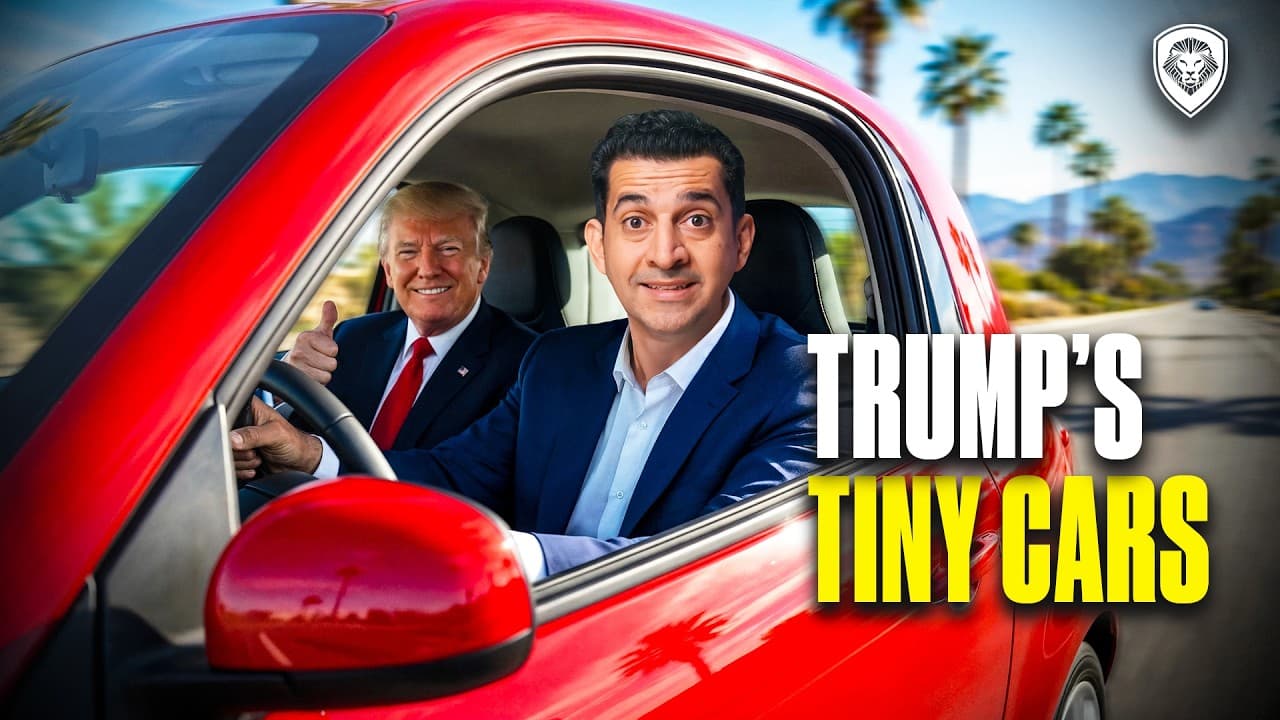
How Trump's Tiny Cars Could Transform Auto Industry
TL;DR
The rise of large, expensive vehicles in America has made car ownership challenging for young buyers. President Trump's proposal for tiny cars aims to address affordability and size concerns. However, regulatory hurdles and safety concerns present significant challenges to implementing these changes.
Transcript
You ever ask the question, why are trucks getting so much bigger? Like, did you know the average truck in 1980 was 4T smaller on average and 2,000 lb lighter? Why are we making 4t bigger trucks and 2,000 lb heavier trucks and they're costing an arm and a leg? And did you know out of all the cars we registered in 2024, do you know 75% of everything ... Read More
Key Insights
- American trucks have grown by 4 feet and 2,000 pounds since 1980, contributing to higher costs.
- 75% of vehicles registered in 2024 were trucks and SUVs, highlighting a trend towards larger cars.
- The average car price in America reached $50,000 in September 2025, raising affordability issues.
- President Trump proposed tiny cars to address affordability, but regulatory challenges hinder progress.
- Tiny cars, like Japan's K cars, are small and fuel-efficient but face safety and regulatory concerns.
- Footprint-based regulations incentivize larger cars by imposing stricter emission standards on smaller vehicles.
- Fatality concerns with small cars arise due to higher risks in accidents compared to larger vehicles.
- Automakers face federal and state regulatory challenges, affecting their willingness to produce tiny cars.
Install to Summarize YouTube Videos and Get Transcripts
Explore YouTube Video Summarizer or Get YouTube Transcript Extractor
Questions & Answers
Q: Why are American vehicles getting larger?
American vehicles have grown larger due to regulatory incentives and market demand. Footprint-based regulations impose stricter emission standards on smaller vehicles, encouraging automakers to produce larger cars. Additionally, consumer preferences for SUVs and trucks have driven this trend, resulting in a significant increase in the size and weight of vehicles over the years.
Q: What is President Trump's proposal for tiny cars?
President Trump proposed the production of tiny cars in America to address issues of affordability and efficiency. These cars, inspired by models like Japan's K cars, are intended to be inexpensive, safe, and fuel-efficient. However, the proposal faces challenges due to regulatory hurdles and safety concerns associated with smaller vehicles.
Q: How do footprint-based regulations affect car sizes?
Footprint-based regulations incentivize the production of larger vehicles by imposing stricter emission standards on smaller cars. This regulatory framework makes it more challenging for automakers to produce small, fuel-efficient cars, as they must meet higher emission standards compared to larger vehicles. Consequently, this has contributed to the trend of producing larger cars in America.
Q: What are the safety concerns with tiny cars?
Safety concerns with tiny cars primarily revolve around higher fatality rates in accidents. Due to their smaller size and lower weight, tiny cars are more vulnerable in collisions, leading to increased risks of severe injuries or fatalities. This concern has been a significant barrier to the widespread adoption of tiny cars in markets like the United States.
Q: What challenges do automakers face in producing tiny cars?
Automakers face several challenges in producing tiny cars, including regulatory compliance, safety standards, and market acceptance. Federal and state regulations often conflict, creating uncertainty for manufacturers. Additionally, safety concerns and the need for significant investment in new production lines deter automakers from committing to tiny car production without clear regulatory support.
Q: How do current car prices affect young buyers?
Current car prices, which have reached an average of $50,000, significantly impact young buyers by making car ownership less affordable. With nearly 30% of car payments exceeding $1,000, young adults find it challenging to purchase vehicles, affecting their ability to achieve financial independence and participate in traditional life milestones such as buying homes or starting families.
Q: What historical factors contributed to the rise of large cars?
The rise of large cars can be traced back to historical factors such as the oil crisis of the 1970s and subsequent regulatory changes. The establishment of corporate average fuel economy (CAFE) standards aimed to reduce oil dependency, but over time, regulatory shifts towards footprint-based standards encouraged larger vehicle production. These factors, combined with market demand, have led to the dominance of large cars in America.
Q: What potential solutions exist for introducing tiny cars in America?
Potential solutions for introducing tiny cars in America include regulatory reforms to create a more favorable environment for small vehicle production, addressing safety concerns through advanced technology, and fostering collaboration between policymakers and automakers. Additionally, focusing on urban areas where small cars are more practical and promoting consumer awareness of their benefits could facilitate their adoption.
Summary & Key Takeaways
-
The rise of large vehicles in America, driven by regulatory and market forces, has resulted in higher costs, making car ownership difficult for young buyers. President Trump's tiny car proposal aims to address these issues by promoting smaller, affordable, and fuel-efficient vehicles. However, regulatory challenges and safety concerns pose significant obstacles to implementing such changes.
-
Footprint-based regulations encourage the production of larger cars by imposing stricter emission standards on smaller vehicles. This regulatory environment, coupled with safety concerns about tiny cars, complicates efforts to introduce smaller vehicles in the American market. Automakers are hesitant to invest in tiny cars without clear regulatory support and protection.
-
Despite the potential benefits of tiny cars, including affordability and efficiency, significant barriers remain. The automotive industry faces challenges related to regulatory compliance, safety standards, and market acceptance. Addressing these issues requires collaboration between policymakers and automakers to create a conducive environment for the production and adoption of tiny cars.
Read in Other Languages (beta)
Share This Summary 📚
Summarize YouTube Videos and Get Video Transcripts with 1-Click
Try YouTube Summary with ChatGPT & Claude or YouTube Transcript Generator
Explore More Summaries from Valuetainment 📚






Summarize YouTube Videos and Get Video Transcripts with 1-Click
Try YouTube Summary with ChatGPT & Claude or YouTube Transcript Generator