How to Pronounce 10 Common English Words
TL;DR
Clear pronunciation depends on being understood, while acceptable forms can vary across British, North American, and regional accents. In Modern Received Pronunciation, common trouble spots include saying pronunciation without the vowel sound in pronounce, keeping the final sounds of asterisk in the correct order, and pronouncing penguin as /ˈpeŋɡwɪn/.
Transcript
Hello, lovely students, and welcome back to English with Lucy. Are you mispronouncing these common English words? I know — English pronunciation is so confusing! We have silent letters, a lack of fixed rules, lots of different accents, I could go on. But today you will find out if you're mispronouncing these 10 very commonly mispronounced words ... Read More
Key Insights
- Pronunciation is /prəˌnʌnsiˈeɪʃn/ in Modern RP, without the /aʊ/ diphthong heard in the verb pronounce. Rapid speech can obscure this distinction, and some speakers also insert a soft /t/ before the /s/ sound.
- Data has more than one acceptable pronunciation. Both DAY-tuh and DAH-tuh are described as correct, although DAY-tuh is more common in British English, while North American speakers generally use a pronunciation represented in the lesson as /ˈdædə/.
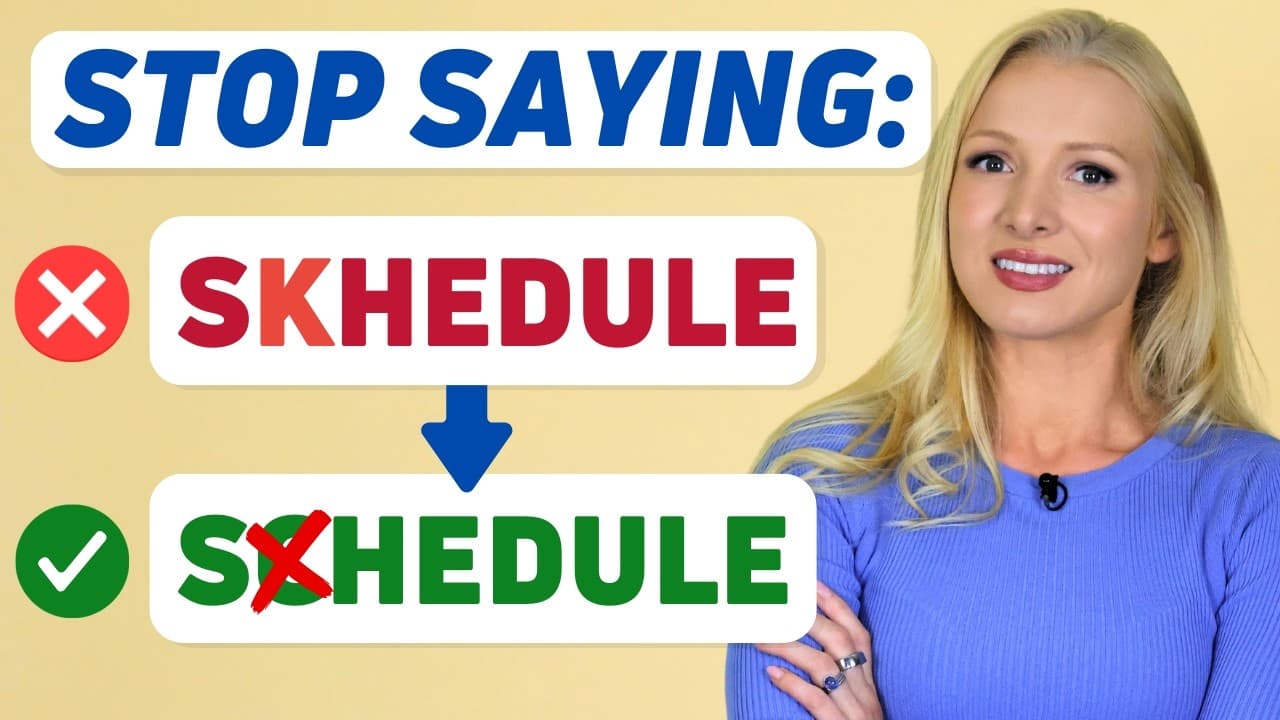
- Schedule varies across accents and even among British speakers. Dictionaries generally show British preference for the /ʃ/ opening in /ˈʃedʒuːl/, yet the presenter also heard many British speakers use /sk/, which is favored in North America.
- Garage has at least three common British pronunciations, all stressed on the first syllable: /ˈɡærɪdʒ/, /ˈɡærɑːʒ/, and /ˈɡærɑːdʒ/. Many North American accents instead tend to stress the final syllable, producing forms like guh-RAHZH or guh-RAJ.
- Scone can rhyme with gone or phone, and both forms occur in the United Kingdom. The presenter prefers /skɒn/, the version that rhymes with gone, while acknowledging regional differences and rejecting the claim that the alternative is necessarily incorrect.
- Spinach is pronounced by the presenter as /ˈspɪnɪtʃ/, with a short /ɪ/ in its second syllable and /tʃ/ at the end. Some speakers voice that final sound as /dʒ/, a variation also heard in sandwich, Norwich, and Greenwich.
- Luxury and luxurious differ in both consonant sound and stress in Modern RP. The noun is /ˈlʌkʃəri/, while the adjective is /lʌɡˈʒʊəriəs/, changing /k/ to /g/ and moving the stress to a later syllable.
- Asterisk and penguin require careful sound sequencing. Asterisk is technically ASS-tuh-risk rather than ASS-tuh-ricks, while penguin is /ˈpeŋɡwɪn/, not PING-win or a form ending with an extra ng sound.
Install to Summarize YouTube Videos and Get Transcripts
Explore YouTube Video Summarizer or Get YouTube Transcript Extractor
Questions & Answers
Q: How do you pronounce pronunciation correctly?
Pronunciation is modeled as /prəˌnʌnsiˈeɪʃn/ in Modern Received Pronunciation. It does not retain the /aʊ/ diphthong found in the related verb pronounce, even though that analogy makes the common error understandable. In fast speech, the correct form may sound less distinct, and some speakers add a soft /t/ before the /s/ sound.
Q: Are DAY-tuh and DAH-tuh both correct pronunciations of data?
Both DAY-tuh and DAH-tuh are presented as correct pronunciations of data. DAY-tuh is identified as the more common form in British English, but speakers can use the long /ɑː/ vowel in /ˈdɑːtə/ if it works better for them. North American speakers generally use the pronunciation represented in the lesson as /ˈdædə/.
Q: How is schedule pronounced in British and North American English?
British dictionaries generally favor schedule with an initial /ʃ/ sound, represented as /ˈʃedʒuːl/. Actual British usage is mixed, and the presenter reports hearing many people in Bedfordshire use an opening /sk/ sound. North American English favors the /sk/ version, although speakers there may also use the pronunciation beginning with /ʃ/.
Q: What are the common pronunciations of garage?
British English has at least three common forms of garage: /ˈɡærɪdʒ/, /ˈɡærɑːʒ/, and /ˈɡærɑːdʒ/. Each places stress on the first syllable. Many North American accents tend to move the stress to the final syllable, producing versions described as guh-RAHZH or guh-RAJ. The presenter personally prefers /ˈɡærɪdʒ/ because it is her family pronunciation.
Q: Should scone rhyme with gone or phone?
Scone can rhyme with either gone or phone, and the lesson does not declare either established form universally incorrect. The presenter prefers /skɒn/, rhyming with gone, and says speakers using that version are in the majority. The /skəʊn/ form, rhyming with phone, also occurs, with regional differences contributing to pronunciation choices across the United Kingdom.
Q: How should spinach and eccentric be pronounced?
Spinach is modeled as /ˈspɪnɪtʃ/, with a short /ɪ/ vowel in the second syllable and an unvoiced /tʃ/ ending, although some speakers use a voiced /dʒ/ ending. Eccentric uses an unvoiced /k/, not the voiced /g/ heard in the mistaken egg-SEN-trick. Both /ɪkˈsentrɪk/ and /ekˈsentrɪk/ are offered as suitable forms.
Q: Why are luxury and luxurious pronounced differently?
In the Modern RP forms taught here, the noun luxury is /ˈlʌkʃəri/, with a /k/ sound and stress at the beginning. The adjective luxurious is /lʌɡˈʒʊəriəs/, changing /k/ to /g/ and shifting the stress. Some North American speakers instead use /k/ followed by /ʃ/ in luxurious, represented as /ləkˈʃʊriəs/.
Q: How do you pronounce asterisk and penguin correctly?
Asterisk is technically pronounced ASS-tuh-risk, so the final consonants follow the order in risk rather than ricks. Variants such as ASS-tuh-ricks or ASS-tuh-rick may still be understood, but they are not presented as the technical form. Penguin is /ˈpeŋɡwɪn/, not PING-win and not a version ending with an additional ng sound.
Summary & Key Takeaways
-
English pronunciation includes silent letters, inconsistent rules, multiple accents, and legitimate regional variations. The lesson models Modern Received Pronunciation rather than presenting every accent as identical. Its central standard is intelligibility: variations such as DAY-tuh or DAH-tuh can both be acceptable when listeners clearly understand the intended word.
-
Several words have multiple established pronunciations. British speakers may vary on schedule, garage, and scone, while North American patterns can differ in stress or individual sounds. Garage alone has several British and North American forms, showing why accent context matters before labeling a familiar pronunciation as incorrect.
-
Other words contain specific sound or sequencing problems. Pronunciation differs from pronounce, eccentric begins with an unvoiced /k/ rather than /g/, and luxury changes in sound and stress when it becomes luxurious. Asterisk preserves the risk sequence, while penguin contains /peŋɡwɪn/, not PING-win or pengwiNG.
Read in Other Languages (beta)
Share This Summary 📚
Summarize YouTube Videos and Get Video Transcripts with 1-Click
Try YouTube Summary with ChatGPT & Claude or YouTube Transcript Generator
Explore More Summaries from English with Lucy 📚





Summarize YouTube Videos and Get Video Transcripts with 1-Click
Try YouTube Summary with ChatGPT & Claude or YouTube Transcript Generator