How to Earn From a New YouTube Channel
TL;DR
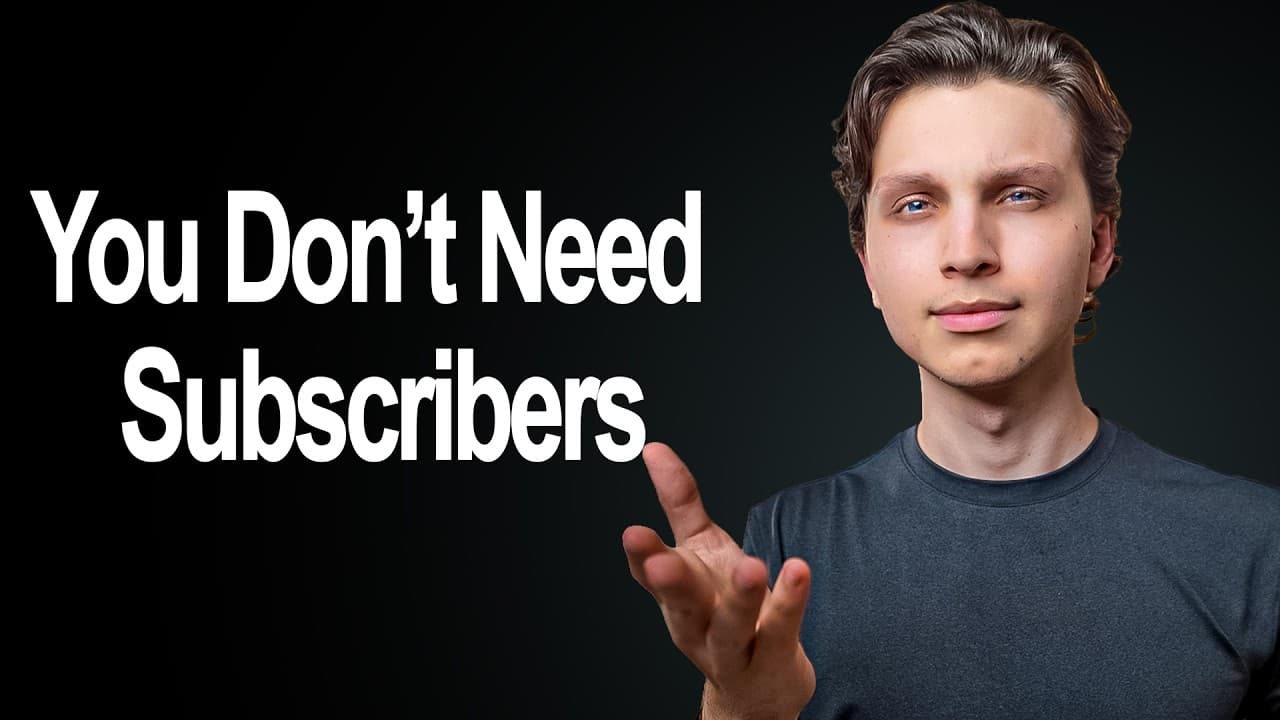
Monetize a new YouTube channel by promoting relevant affiliate products, services, software, or your own paid solution instead of waiting for ad eligibility. Choose a niche where viewers actively seek solutions, publish a valuable long-form money video, and direct every supporting video toward it through end screens, pinned comments, descriptions, and verbal calls to action.
Transcript
So, monetizing your YouTube channel is one of the most frustrating things that a new creator has to go through. Getting a th000 subscribers, getting 4,000 hours of watch time, it can be a painstaking thing. And I know this from experience. But what if I told you that you could actually monetize your channel the very first day that you start it? Mos... Read More
Key Insights
- Ad revenue is presented as an inefficient starting point because creators must first meet YouTube Partner Program requirements and then generate substantial viewing volume. The transcript says creators keep 55% of advertising revenue after YouTube takes its cut, limiting earnings even when videos attract many views.
- Day-one monetization is based on earning outside the YouTube Partner Program through affiliate offers, owned products, coaching, communities, or software promotions. This approach does not require waiting for 1,000 subscribers or 4,000 hours of watch time before presenting viewers with a relevant paid solution.
- A problem-rich niche is a market where viewers have meaningful problems and are willing to spend money on solutions. The recommended broad categories are money, health, relationships, technology, and travel, but creators are advised to choose a narrower subject within one of them.
- Buyer intent is more valuable than general viewing volume for this strategy. Someone watching entertainment, such as a cat video, may have little interest in purchasing, while a person searching for help with investing, fitness, dating, software, or travel may be actively evaluating solutions.
- A money video is a long-form, high-value video that guides viewers toward a paid solution. The suggested length is usually 15 to 30 minutes, although the transcript also cites a 10-hour compiled guide that included advertisements, affiliate links, and promotion for a paid community.
- Recurring software commissions can create continuing income while customers remain subscribed. The example uses software priced at $99 per month with a 30% recurring commission, producing about $30 monthly per customer and approximately $3,000 per month if 100 customers sign up.
- A content funnel connects every supporting upload to the central money video. End screens, pinned comments, description links, and verbal references can move interested viewers toward the longer resource while keeping them on YouTube and increasing channel watch time and session time.
- A focused channel can operate as a flywheel because one successful video can expose viewers to related uploads within the same niche. Those videos can then direct traffic toward the money video, where viewers receive more value and may purchase the recommended solution.
Install to Summarize YouTube Videos and Get Transcripts
Explore YouTube Video Summarizer or Get YouTube Transcript Extractor
Questions & Answers
Q: How can a new YouTube channel earn money before joining the Partner Program?
A new channel can earn money by connecting useful content to a relevant paid solution instead of relying exclusively on advertisements. The solution may be an affiliate product, digital course, coaching service, paid community, or software subscription. Because these offers operate outside YouTube ad eligibility, creators can present them from the beginning without first reaching 1,000 subscribers and 4,000 hours of watch time.
Q: What is the day-one YouTube monetization system?
The day-one monetization system has three stated principles: sell before scaling, solve audience problems instead of chasing vanity metrics, and create a structured funnel rather than posting unrelated videos. In practice, the creator selects a problem-rich niche, produces a central long-form money video with a relevant offer, and uses every later upload to send qualified viewers toward that video.
Q: Which niches are suitable for affiliate monetization on YouTube?
The transcript identifies money, health, relationships, technology, and travel as broad problem-rich categories. It recommends narrowing them into specific subjects such as business, investing, personal finance, fitness, weight loss, wellness, dating, marriage advice, social skills, software tutorials, productivity tools, travel guides, destinations, or travel tips. The central requirement is an audience willing to pay for solutions.
Q: What is a money video on YouTube?
A money video is a substantial, value-focused video that educates viewers and then leads them toward a paid solution. It is usually described as 15 to 30 minutes long, although longer formats can also be used. The offer can be an affiliate recommendation, an original digital product, a coaching service, a community, or software that pays recurring commissions.
Q: How should supporting YouTube videos promote a money video?
Supporting videos should direct interested viewers toward the central money video through YouTube end screens, pinned comments, links in descriptions, and verbal calls to action. A creator can describe the destination as free training hosted directly on YouTube. This organized path gives viewers additional value, increases viewing across the channel, and creates more opportunities for the central video to generate sales.
Q: Why can affiliate offers earn more than YouTube ads?
Affiliate offers can produce more revenue per qualified viewer because earnings are tied to purchases rather than advertising impressions alone. The transcript contrasts modest ad income with the possibility of earning $100 to $1,000 per 1,000 views through its proposed system. These results are presented as potential outcomes, not guarantees, and depend on matching relevant solutions with buyers.
Q: How do recurring software commissions work for YouTube creators?
Recurring commissions pay the creator repeatedly while a referred customer continues subscribing to the promoted software. The transcript gives an example of a service charging $99 per month and paying a 30% recurring commission. That equals about $30 per customer each month, so 100 retained sign-ups would produce approximately $3,000 in monthly passive income under the example.
Q: Why is buyer intent more important than views for YouTube monetization?
Buyer intent matters because viewers searching for a solution are more likely to consider a relevant purchase than viewers consuming general entertainment. The transcript contrasts someone watching a cat video with someone watching targeted guidance about a pressing problem. A smaller audience seeking help with money, health, relationships, technology, or travel may therefore present stronger monetization opportunities than a larger unfocused audience.
Summary & Key Takeaways
-
The proposed strategy replaces dependence on YouTube ads with direct monetization through affiliate products, digital courses, coaching, communities, or software commissions. It is based on selling before scaling, solving costly audience problems instead of chasing views, and designing every piece of content as part of an intentional monetization funnel.
-
The first step is selecting a specific problem-rich niche where viewers are willing to purchase solutions. The transcript identifies money, health, relationships, technology, and travel as broad categories, then recommends narrowing them into areas such as investing, weight loss, dating advice, software tutorials, productivity tools, destination guides, or travel tips.
-
The channel should publish a substantial money video that delivers extensive value and introduces a relevant paid solution. Subsequent videos should direct viewers to that central resource using end screens, pinned comments, descriptions, and verbal calls to action, creating a flywheel of watch time, session time, product sales, and cross-video discovery.
Read in Other Languages (beta)
Share This Summary 📚
Summarize YouTube Videos and Get Video Transcripts with 1-Click
Try YouTube Summary with ChatGPT & Claude or YouTube Transcript Generator
Explore More Summaries from Make Money Matt 📚


Summarize YouTube Videos and Get Video Transcripts with 1-Click
Try YouTube Summary with ChatGPT & Claude or YouTube Transcript Generator